All species › Cranes, rails and allies › Rails, gallinules and coots › Ecuadorian Rail
Ecuadorian Rail | Rallus aequatorialis
Ecuadoraanse ral | Rascón ecuatoriano | Saracura-equatoriana
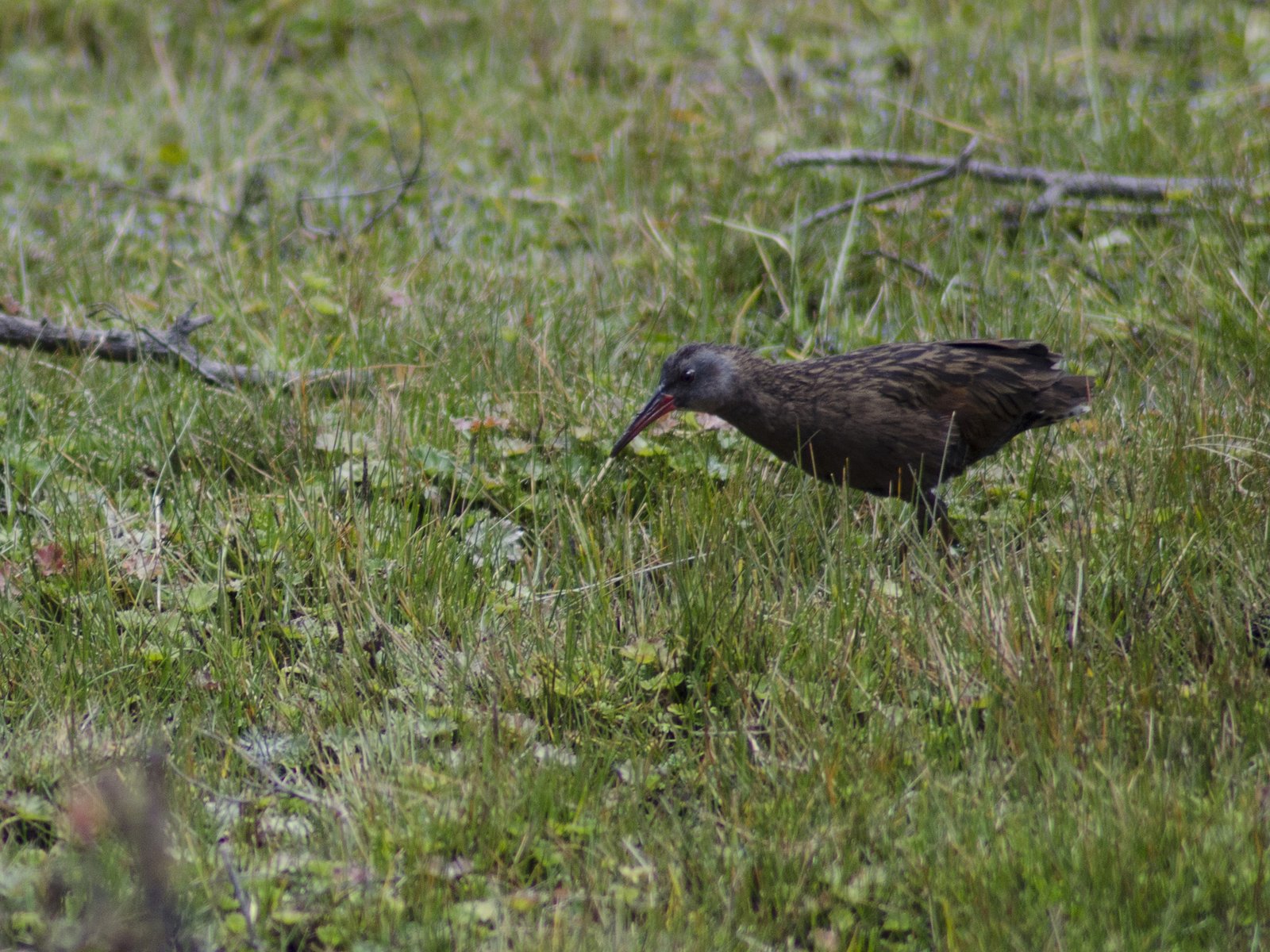
The Ecuadorian Rail is a small, rufous and grey rail with a long, red bill, formerly included in Virginia Rail. It lives in reed marshes in the Andes of Ecuador and the extreme south of Colombia, and with a separate form in coastal marshes in Peru. It hides in dense vegetation and is mostly heard.
Voice
A descending series of squeals and grunts, higher pitched than in Virginia Rail; few recordings exist.
Recording: José María Loaiza B. — CC BY-NC-SA 4.0 · xeno-canto
Identification
20–22 cm, with a long, slightly decurved, red bill with a dark culmen and tip. The crown is dark brown, the cheeks grey, the throat white. The breast and neck are warm cinnamon, the wing coverts rufous. The back is brown with black streaks. The flanks and belly are barred black and white. The legs are reddish brown. The sexes are alike; juveniles are darker, with much black on the underparts.
Confusion species
Bogota Rail Rallus semiplumbeus is larger, with a grey breast and neck and a red bill, and lives only in the Eastern Andes of Colombia. Plumbeous Rail Pardirallus sanguinolentus is larger and uniformly leaden grey, with a green bill with a red and blue base and red legs. Sora Porzana carolina has a short, yellow bill and a black face. Virginia Rail Rallus limicola from North America is almost identical, but is not well documented in the guide area.
Habitat
Reed marshes, totora beds, wet grassland and the vegetated shores of lakes in the Andes, roughly between 2000 and 3500 m; in Peru in reed marshes and brackish lagoons along the coast, close to sea level. It searches shallow water and mud for insects, snails, worms and seeds. The nest is a cup of plant material in dense vegetation above the water.
Where the bird is most at home, classified by the vegetation units of the Andes and the west coast.


Range and movements
In Colombia only in the extreme south, in the Andes of Nariño. In Ecuador locally in the Andes, in marshes in the inter-Andean valleys. In Peru along the coast, between La Libertad and Arequipa. Absent from Bolivia and the Galápagos. Does not occur outside the guide area.
- Resident
- dark = core range, pale = thinly spread
How and when to look
In Peru in coastal reed marshes, for example at Pantanos de Villa near Lima, especially in the early morning; in Ecuador in reedbeds around Andean lakes. Birds sometimes briefly leave cover at the edge of open mud.
Conservation status
Not Evaluated as a separate species. Locally threatened by drainage and disturbance of marshes in the Andes and along the coast.
Scientific name
Rallus aequatorialis | Sharpe, 1894
Sharpe described the species in 1894 and placed it straight away in the genus where it still stands. The genus Rallus was introduced in 1758 by Linnaeus. The genus name is New Latin rallus, 'rail', from Old French rasle; Linnaeus introduced the genus in 1758. The species name is Latin aequatorialis, 'equatorial', referring to Ecuador. The specimen the first description was based on came from Colombia to Peru.