All species › Cranes, rails and allies › Rails, gallinules and coots › Bogota Rail
Bogota Rail | Rallus semiplumbeus
Bogotáwaterral | Rascón de Bogotá | Saracura-de-bogotá
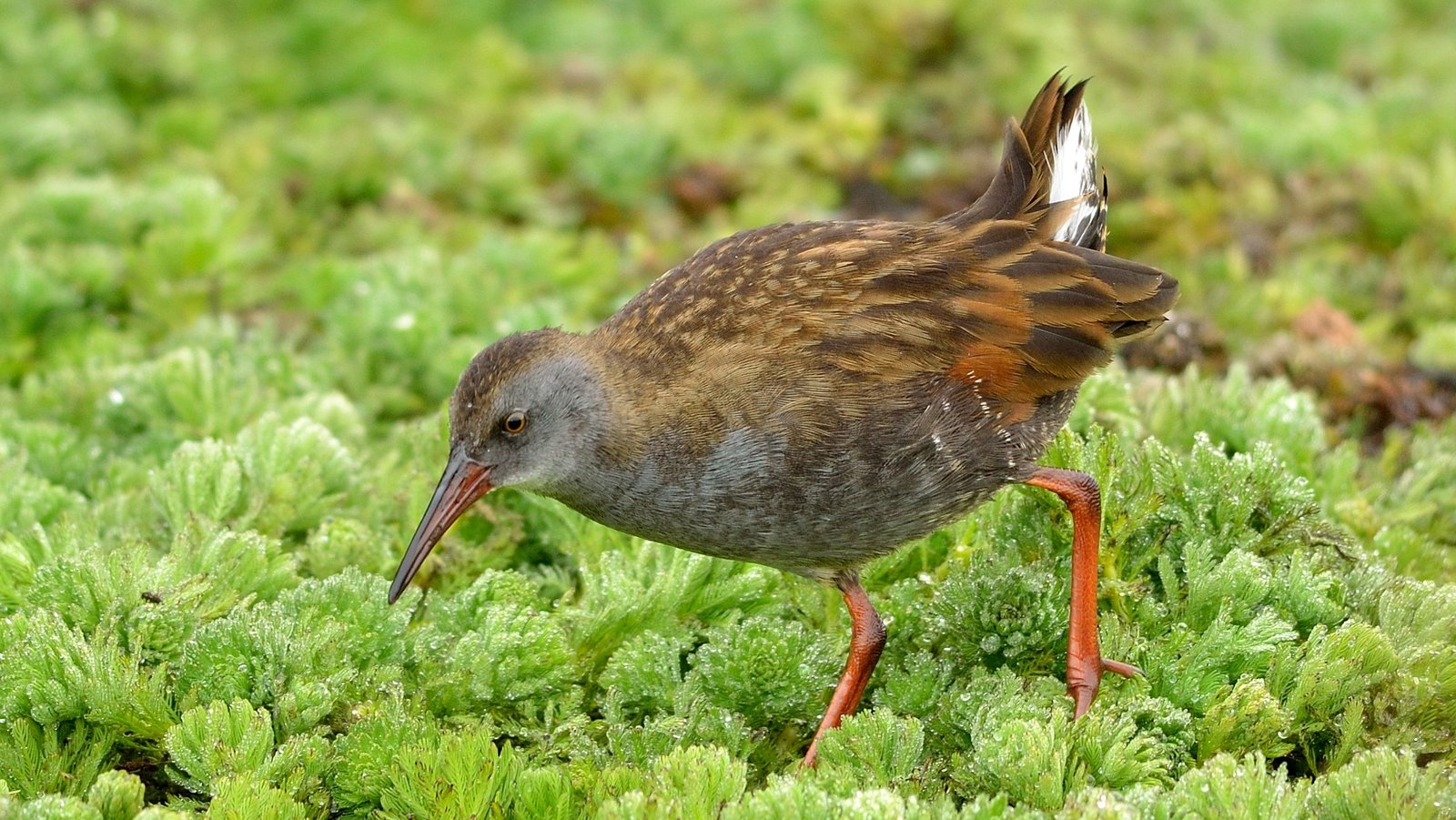
The Bogota Rail is a medium-sized rail with a long red bill, found only in the marshes of the high plateaus of Colombia's Eastern Andes. It lives hidden in reeds and rushes along lakes and in wet meadows. Drainage of the marshes around Bogotá has greatly reduced its habitat.
Voice
A series of high, piping and squealing notes, often as a duet, and sharp keek calls; also grunting sounds from the vegetation.
Recording: Mauricio Cuéllar Ramírez — CC BY-NC-SA 4.0 · xeno-canto
Identification
25–30 cm, with a long, slightly decurved red bill and red legs. The head, neck and underparts are plain slate grey. The upperparts are olive-brown with broad black streaks. The flanks and lower belly are black with narrow white bars; the undertail coverts are white and black. The sexes are alike. Juveniles are duller, with a dark bill and dingy grey to brownish underparts.
Confusion species
Ecuadorian Rail Rallus aequatorialis is smaller, with a cinnamon breast and grey cheeks, and occurs in south-western Colombia and Ecuador, not in the Eastern Andes. Blackish Rail Pardirallus nigricans is darker and uniform, without streaks on the back, with a greenish bill, and lives lower. Spot-flanked Gallinule Porphyriops melanops shares the same marshes, but has a short greenish-yellow bill and white spots on the flanks, and often swims in open water.
Habitat
Marshes with reeds, cattails and rushes along lakes and lagoons, wet meadows, ditches and boggy shores on the high plateaus, roughly between 2500 and 4000 m, locally into the páramo. It probes mud and shallow water for insects, larvae, worms, small molluscs, tadpoles and seeds. The nest is a cup of plant material in dense waterside vegetation.
Where the bird is most at home, classified by the vegetation units of the Andes and the west coast.


Range and movements
Endemic to Colombia, in the Eastern Andes in Cundinamarca and Boyacá, mainly on the Sabana de Bogotá and the Ubaté–Chiquinquirá plateau, at Laguna de Fúquene and Laguna de Tota, and in adjacent páramo marshes. Absent from Ecuador, Peru, Bolivia and the Galápagos.
- Resident
- dark = core range, pale = thinly spread
How and when to look
Visit the protected marshes (humedales) in and around Bogotá, for example La Conejera or Parque La Florida, or the shores of Laguna de Tota. Wait at the edge of reedbeds in the early morning, when birds sometimes come out onto open mud.
Conservation status
Vulnerable. The population is declining because of drainage and urbanisation of the high-plateau marshes, pollution, grazing and burning of waterside vegetation, and predation by dogs and cats.
Scientific name
Rallus semiplumbeus | Sclater, 1856
Sclater described the species in 1856 and placed it straight away in the genus where it still stands. The genus Rallus was introduced in 1758 by Linnaeus. The genus name is New Latin rallus, 'rail', from Old French rasle; Linnaeus introduced the genus in 1758. The species name comes from Latin semi, 'half', and plumbeus, 'leaden'. The specimen the first description was based on came from Bogotá, Colombia.