All species › Passerines › Tanagers and allies › Ibera Seedeater
Ibera Seedeater | Sporophila iberaensis
Iberadikbekje | Capuchino iberá | Caboclinho-do-iberá
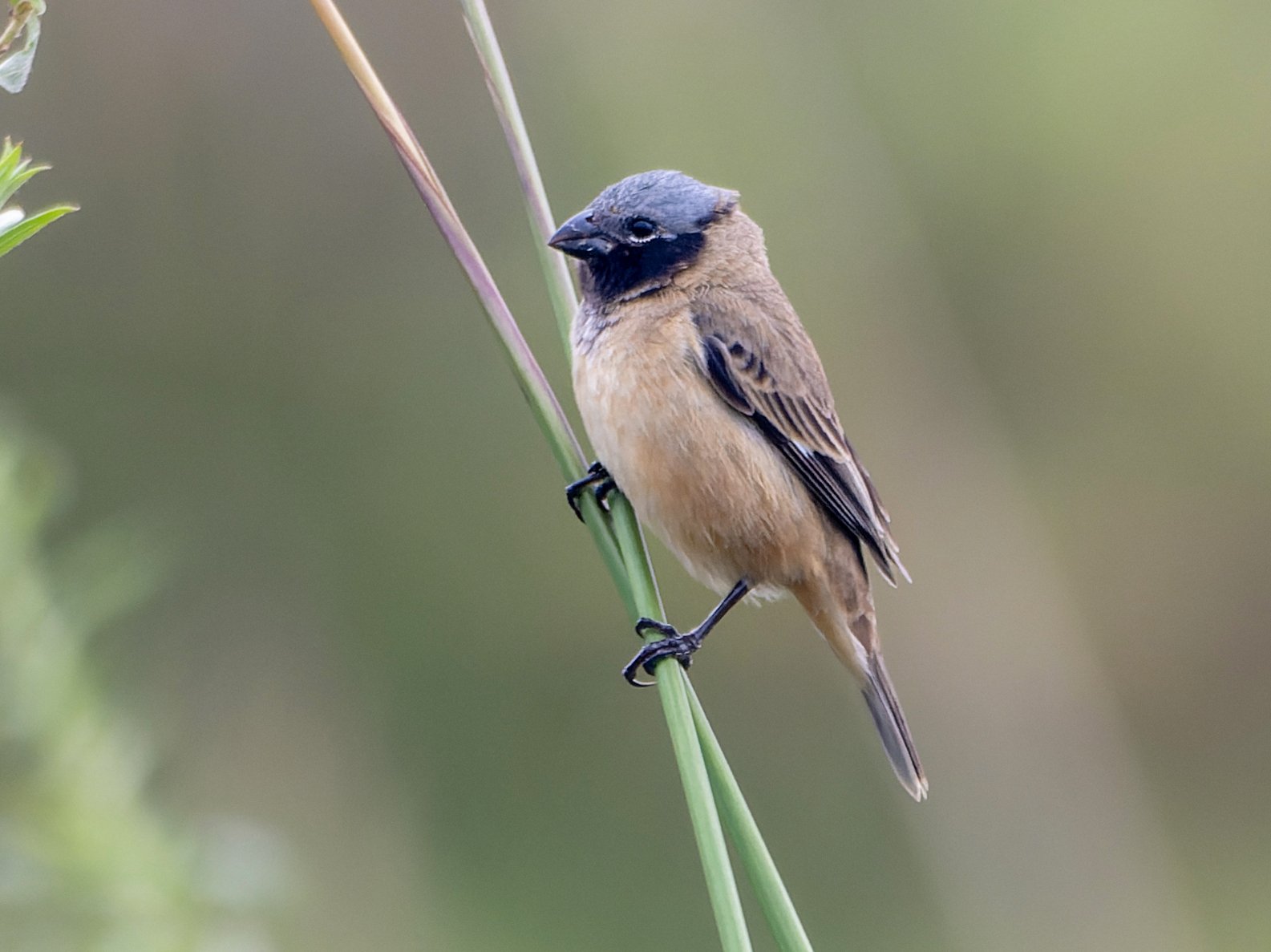
The Ibera Seedeater is a capuchino described only in 2016, from the Iberá marshes in north-eastern Argentina. The male differs from related species in the grey crown above a dark throat and collar. Where the species winters is not yet well known; there are records from the lowlands of Bolivia.
Voice
In the breeding season males sing from high perches a song of their own, different from that of other capuchinos in the same area. Little is known about the voice in the wintering areas.
No recording with a suitable Creative Commons licence is available for this species yet.
Identification
10 cm, with a short, thick, black bill. The male has a grey crown; the nape, cheeks, chin and throat are dark brown, and the dark colour continues as a narrow collar around the neck. The back and rump are olive-brown, the wings dark with a large white wing speculum, the breast and belly pale cinnamon to cream. The female is brown above and paler buff-brown below, without markings. Young males resemble the female.
Confusion species
Dark-throated Seedeater Sporophila ruficollis has a grey nape and back, and the dark throat extends onto the breast; young males of that species can closely resemble Ibera Seedeater. Tawny-bellied Seedeater Sporophila hypoxantha has a grey back and no dark throat. Females of this group cannot be reliably told apart in the field.
Habitat
Breeds in seasonally and permanently wet grassland and marshes with tall tussocks of grass and sedge; outside the breeding season probably in similar grassland and savanna in the lowlands. It eats mainly grass seeds. The nest is a small cup low in the grass.
Where the bird is most at home, classified by the vegetation units of the Andes and the west coast.


Range and movements
In Bolivia there are records from the lowlands, mainly from the savannas of Beni; how regularly the species occurs there and at what time of year is not well known. Absent from Colombia, Ecuador, Peru and the Galápagos. Outside the guide area it breeds in north-eastern Argentina (Corrientes) and Paraguay; the wintering areas are presumably in central Brazil and possibly in Bolivia.
- Winter visitor (c. Oct–Mar)
- dark = core range, pale = thinly spread
How and when to look
Check flocks of capuchinos in the savannas of Beni carefully: males with a grey crown, dark throat and olive-brown back may be this species. A photograph and a sound recording help to confirm it.
Conservation status
Near Threatened. The population probably numbers fewer than 10,000 mature birds. Threats are the conversion and burning of grassland, grazing, tree plantations, the drying out of marshes and possibly trapping for the cage-bird trade.
Scientific name
Sporophila iberaensis | Di Giacomo & Kopuchian, 2016
Di Giacomo & Kopuchian described the species in 2016 and placed it straight away in the genus where it still stands. The genus Sporophila was introduced in 1844 by Cabanis. The genus name combines Greek sporos, 'seed', and philos, 'fond of'. The species name refers to the Esteros del Iberá in Corrientes, Argentina; Iberá is Guaraní for 'glittering waters'. The specimen the first description was based on came from Esteros del Iberá, Corrientes, Argentina.