All species › Passerines › Ovenbirds and woodcreepers › Lesser Hornero
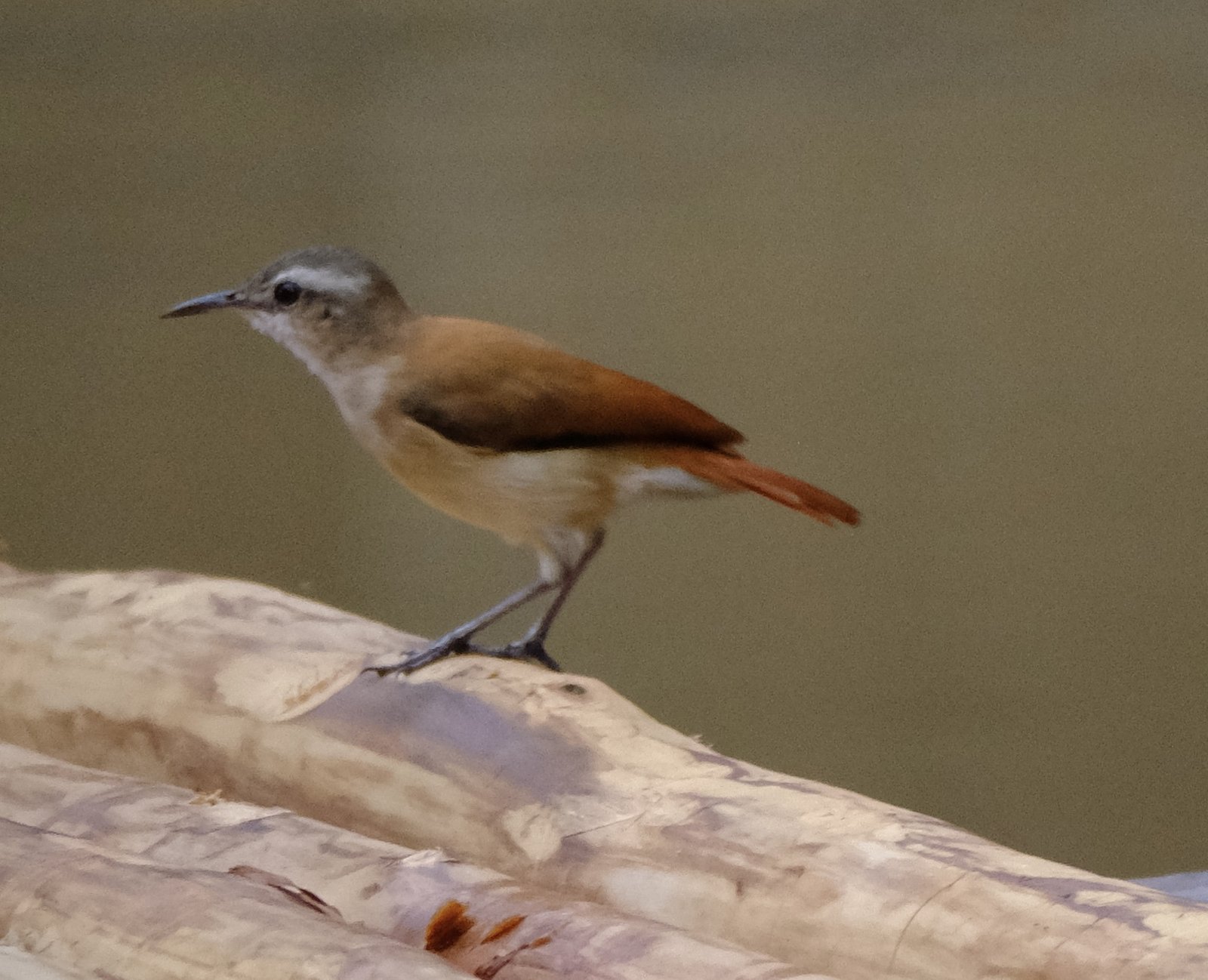
Lesser Hornero | Furnarius minor
Kleine ovenvogel | Hornero menor | Joãozinho
The Lesser Hornero is the smallest hornero of the genus Furnarius in the guide area and a specialist of young river islands in the Amazon basin. It lives in the first shrubby growth that springs up on new sandbars, together with other species tied to river islands.
Voice
A rapid, high duet of shrill, rattling notes, shorter and thinner than in the larger horneros. The call is a dry, short chek.
Recording: Brayan Coral Jaramillo — CC BY-NC-SA 4.0 · xeno-canto
Identification
14–15 cm, with a thin, slightly decurved bill. The upperparts are rufous-brown, the crown grey to greyish brown and contrasting with the back. A faint, pale supercilium. The throat is whitish, the underparts pale buff, warmer on the flanks. The tail is rufous. The legs are greyish to flesh-coloured. The sexes are alike.
Confusion species
Bay Hornero Furnarius torridus is larger and much darker chestnut, with a pale bill, and lives in older river-edge forest. Pale-legged Hornero Furnarius leucopus is larger, with a clear white supercilium and warmer underparts. River-island spinetails (Synallaxis, Cranioleuca) have a longer, graduated tail and a shorter bill.
Habitat
Young vegetation on river islands and sandbars in the large whitewater rivers: scrub of Tessaria and willows, tall grass and young Cecropia trees, below 300 m. It forages on the ground and in low bushes for insects. The mud nest is placed low in a bush or on a stump.
Where the bird is most at home, classified by the vegetation units of the Andes and the west coast.


Range and movements
Colombia: only on river islands in the Amazon near Leticia. Ecuador: on islands in the Napo in the east. Peru: in the north-east, along the Amazon, the Napo, the Marañón and the Ucayali. Absent from Bolivia and the Galápagos. Outside the guide area along the Amazon and its tributaries in Brazil.
- Resident
- dark = core range, pale = thinly spread
How and when to look
Visit by boat the young, shrub-covered river islands near Iquitos, Leticia or along the Napo, ideally early in the morning. Search the low bushes and the edges of sandbars, where pairs answer each other with duets.
Conservation status
Least Concern. Its habitat is naturally dynamic and constantly re-formed; locally it is under pressure from farming on the islands.
Scientific name
Furnarius minor | Pelzeln, 1858
Pelzeln described the species in 1858 and placed it straight away in the genus where it still stands. The genus Furnarius was introduced in 1816 by Vieillot. The genus name comes from Latin furnarius, 'baker' (from furnus, 'oven'), for the oven-shaped mud nest. The species name comes from Latin minor, 'smaller'. The specimen the first description was based on came from Madeira River, Brazil.