All species › Tubenoses › Northern storm petrels › Markham's Storm Petrel
Markham's Storm Petrel | Hydrobates markhami
Humboldtstormvogeltje | Paíño de Markham | Painho-de-markham
Markham's Storm Petrel is a large, dark brown storm petrel of the Humboldt Current. It breeds not on islands but in the coastal desert of Peru and Chile, in cavities in salt crusts far inland. The first nests were found only in the 1990s, on the Paracas Peninsula in Peru; the largest colonies, in the Atacama Desert of northern Chile, were discovered later still.
Voice
Silent at sea. The calls at the colonies, which are visited only at night, are poorly described.
Recording: Cristian Pinto Fernandez — CC BY-NC-SA 4.0 · xeno-canto
Identification
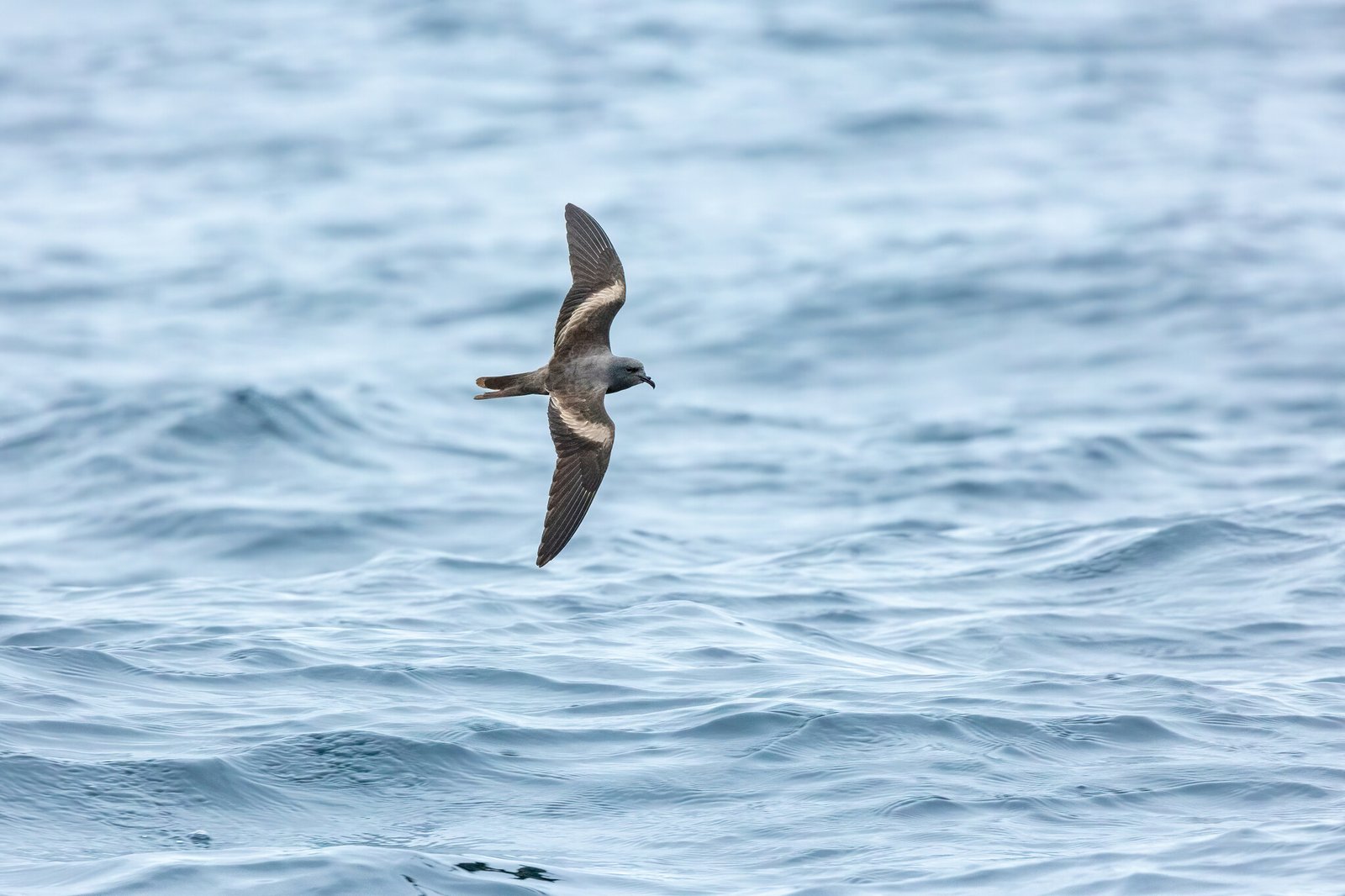
21–23 cm, a large, all-dark storm petrel with long wings and a long, deeply forked tail. The plumage is dark sooty brown, slightly browner and less black than in Black Storm Petrel. A broad pale bar crosses the upperwing, reaching close to the leading edge of the wing. Flight is calm, with shallow wingbeats and long glides on slightly bowed wings. The sexes are alike.
Confusion species
Black Storm Petrel Hydrobates melania is blacker, with a less prominent wing bar that does not reach the leading edge, and flies with deeper, slower wingbeats. Least Storm Petrel Hydrobates microsoma is much smaller, with a short, wedge-shaped tail. Dark-rumped Leach's Storm-Petrels Hydrobates leucorhous are smaller, with a shorter tail and a bounding, erratic flight.
Habitat
At sea over the cold Humboldt Current, both over the continental shelf and farther offshore. It picks small fish, squid and crustaceans from the surface in flight. It breeds in natural cavities and cracks in the hard salt crust of dry flats in the coastal desert, where birds arrive and leave only at night.
Where the bird is most at home, classified by the vegetation units of the Andes and the west coast.


Range and movements
In Peru present year-round at sea along the entire coast; breeds on the Paracas Peninsula and possibly at other sites in the desert of southern Peru. Scarce off Ecuador, mainly far offshore; very rare off Colombia. Absent from Bolivia. Outside the guide area it breeds in the Atacama Desert of northern Chile, where the largest colonies are.
- Resident
- dark = core range, pale = thinly spread
How and when to look
On pelagic trips from Callao, Pucusana or Paracas the species is often seen, mixed with Black Storm Petrels. Compare the wing bar and wingbeat of the two species side by side.
Conservation status
Near Threatened. Artificial light from towns, roads and mines disorients young birds heading to sea when they fledge; they then come down on land and die. Salt extraction, mining and the construction of roads and solar farms in the desert also threaten the colonies.
Scientific name
Hydrobates markhami | (Salvin, 1883) (GBIF: Oceanodroma markhami)
Salvin described the species in 1883 as Cymochorea markhami; because it was later moved to another genus, the author and year stand in brackets. The genus Hydrobates was introduced in 1822 by Boie. The genus name comes from Greek hudro-, 'water-', and batēs, 'walker', for the pattering over the water surface while feeding. The species name honours Albert Hastings Markham (1841–1918), a British naval officer and explorer who collected the type specimen off Peru. The specimen the first description was based on came from Off the coast of Peru (19°40′ S, 75° W).