All species › Passerines › Antpittas › Ochre-striped Antpitta
Ochre-striped Antpitta | Grallaria dignissima
Roestkeelmierpitta | Tororoí ocrelistado | Tovacuçu-de-listras-ocre
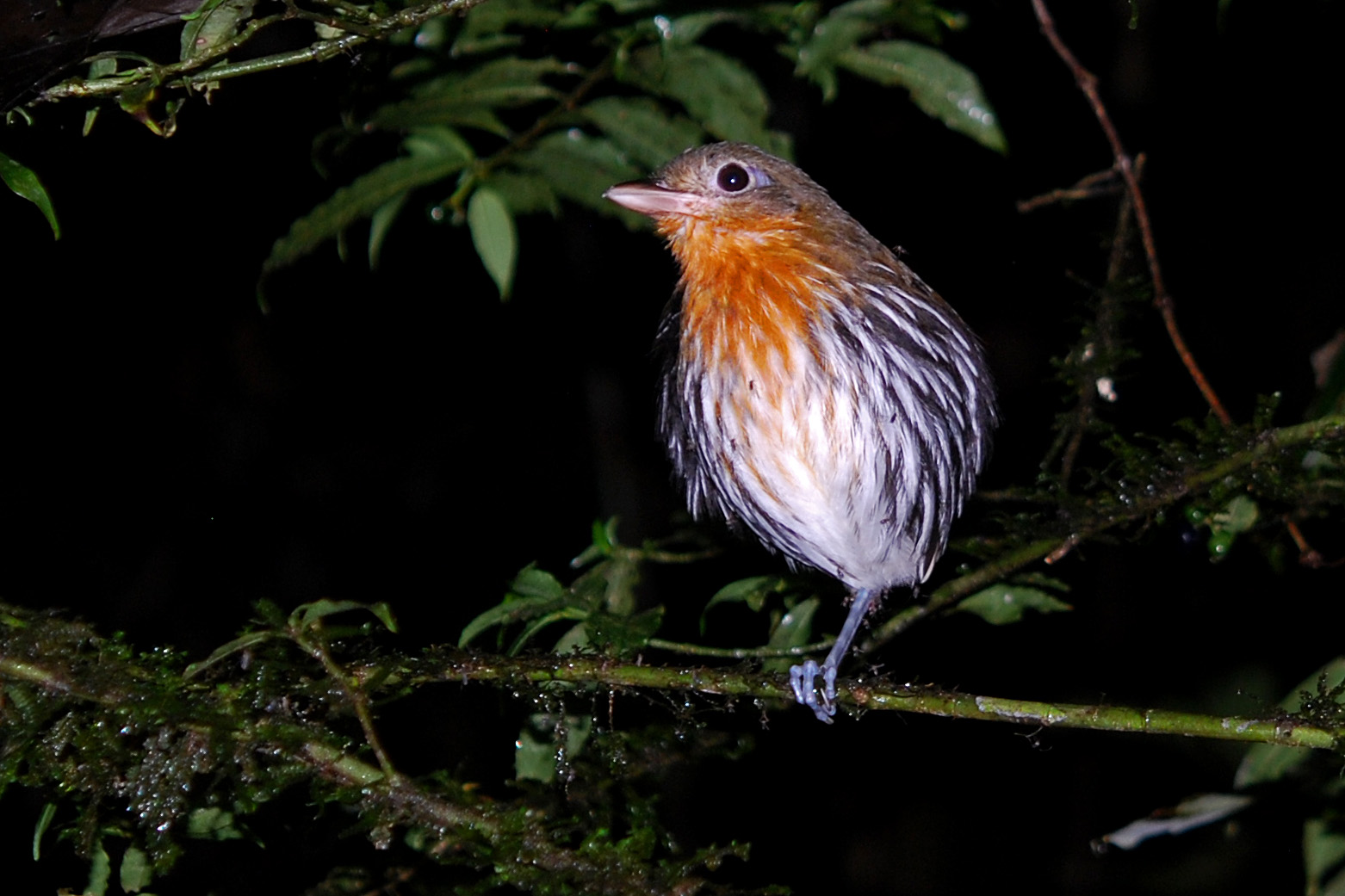
The Ochre-striped Antpitta is an antpitta of lowland rainforest in the western Amazon basin, with a rufous-orange throat and breast and black-and-white streaked flanks. It lives on the floor of undisturbed terra firme forest and is usually detected only by its call.
Voice
A slow, hollow, two-note whistle, the second note longer and slightly rising, repeated at intervals. Heard mainly at dawn and dusk.
Recording: Paul Coopmans — CC BY-NC-SA 4.0 · xeno-canto
Identification
19 cm, plump and almost tailless, on long pinkish-grey legs. The upperparts are olive-brown, the crown and nape slightly greyer. The lores, throat and breast are warm rufous-orange to ochre. The belly is white; the flanks and sides of the breast are white with broad black streaks. The sexes are alike.
Confusion species
Elusive Antpitta Grallaria eludens lives south of the Amazon and lacks the rufous-orange on the throat and breast; its underparts are pale buff with black streaks. Thrush-like Antpitta Myrmothera campanisona is smaller and browner, with a faintly streaked, greyish-white breast. White-lored Antpitta Myrmothera fulviventris is smaller, with white lores and unstreaked buffy underparts.
Habitat
Humid lowland terra firme forest, often in hilly terrain with a fairly open floor, up to about 600 m. It lives on the forest floor, feeding on insects and other invertebrates.
Where the bird is most at home, classified by the vegetation units of the Andes and the west coast.

Range and movements
In Colombia in the south-east (Caquetá, Putumayo and Amazonas). In Ecuador in the eastern lowlands. In Peru in the north-east, mainly north of the Amazon and the Marañón in Loreto. Absent from Bolivia and the Galápagos. Outside the guide area possibly in adjacent far western Brazil.
- Resident
- dark = core range, pale = thinly spread
How and when to look
Listen at dawn in undisturbed terra firme forest for the slow, two-note whistle. A singing bird often stands motionless on the forest floor or on a fallen log.
Conservation status
Least Concern. The species depends on undisturbed lowland forest and disappears locally through deforestation.
Scientific name
Grallaria dignissima | Sclater & Salvin, 1880
Sclater & Salvin described the species in 1880 and placed it straight away in the genus where it still stands. The genus Grallaria was introduced in 1816 by Vieillot. The genus name comes from New Latin grallarius, 'stilt-walker', referring to the long legs. The species name comes from Latin dignissimus, 'most worthy'. The specimen the first description was based on came from Sarayacu, Pastaza, Ecuador.