All species › Passerines › Antpittas › Oxapampa Antpitta
Oxapampa Antpitta | Grallaria centralis
Oxapampamierpitta | Tororoí de Oxapampa | Tovacuçu-de-oxapampa
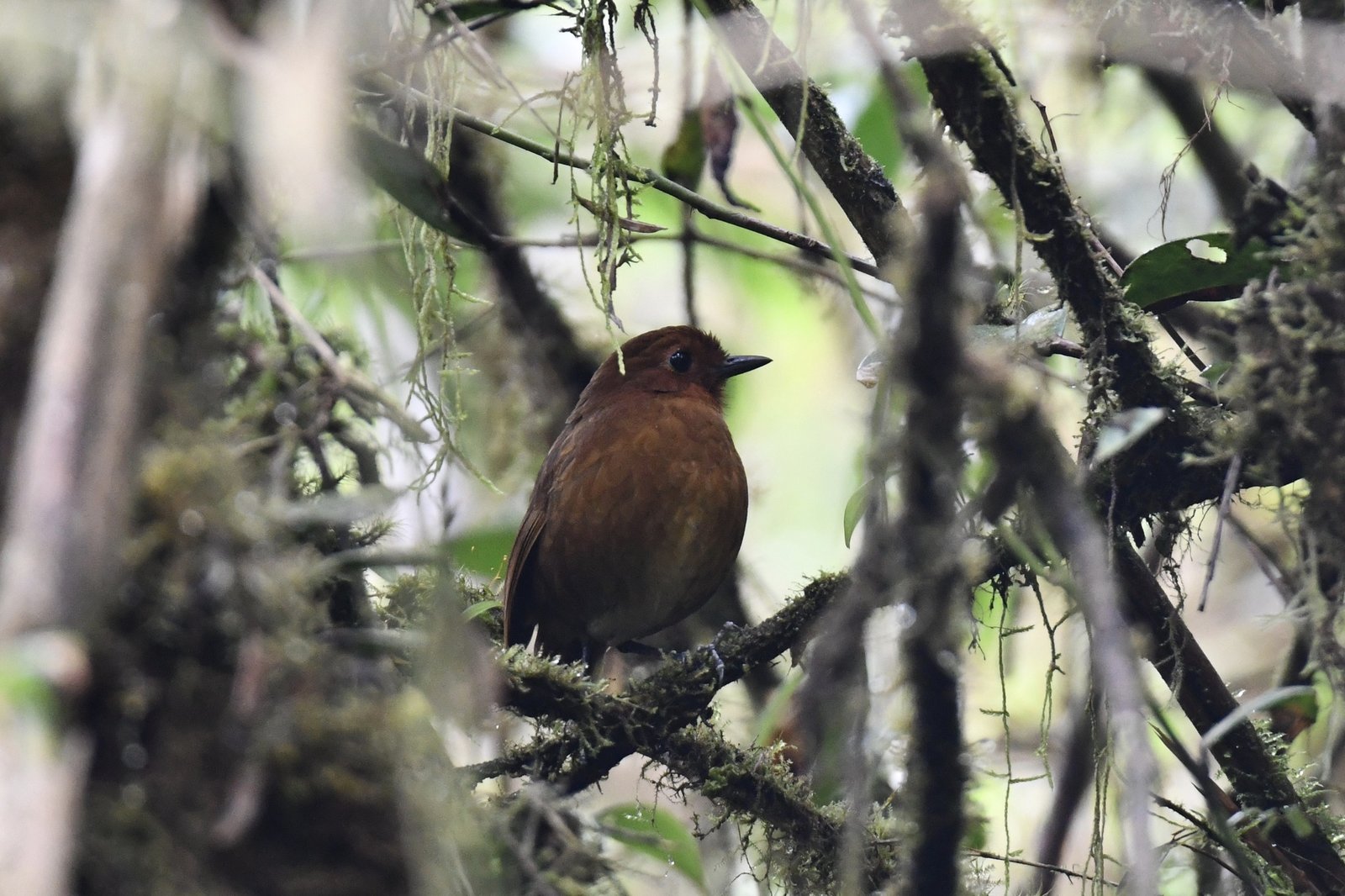
The Oxapampa Antpitta was described as a new species in 2020, when Rufous Antpitta was split. It is named after Oxapampa Province in Pasco, where the first sound recordings and specimens were collected. It is a small, rufous ground bird of montane forest on the east slope in central Peru.
Voice
The long song is a fast trill of short, ringing notes lasting about 2 to 2.5 seconds. The short song is a single short, descending note. It sings mainly at dawn and in the early morning, usually from a low perch.
Recording: Guy Kirwan — CC BY-NC-SA 4.0 · xeno-canto
Identification
14–15 cm, small, round and short-tailed, on blackish to dark grey legs, with a black bill. The head and upperparts are dark rufous. The throat, breast, sides and flanks are yellowish rufous, the belly centre yellower and the lower belly pale buff. The sexes are alike.
Confusion species
Bay Antpitta Grallaria capitalis in the same area is larger and darker chestnut, with a hollow whistled song of a few notes. Panao Antpitta Grallaria oneilli, Junin Antpitta Grallaria obscura and Chestnut Antpitta Grallaria blakei look very similar; they are separated mainly by song and range.
Habitat
Undergrowth of humid montane and secondary forest, roughly between 2400 and 2700 m; presumably mainly dense undergrowth and bamboo, as in related species. Almost nothing is known about its diet and breeding.
Where the bird is most at home, classified by the vegetation units of the Andes and the west coast.


Range and movements
Only in Peru, on the east slope of the Andes, from the Huallaga in Huánuco south through Pasco into Junín, north of the Mantaro. Absent from Colombia, Ecuador, Bolivia and the Galápagos. Does not occur outside the guide area.
- Resident
- dark = core range, pale = thinly spread
How and when to look
Listen at dawn in montane forest around Oxapampa and elsewhere in Pasco for the fast trill. Because the species was recognized only recently, its exact range is still incompletely known.
Conservation status
Not evaluated as a separate species. The range is small and montane forest on the east slope of central Peru is being cleared for agriculture; the species is probably at least Near Threatened.
Scientific name
Grallaria centralis | Hosner, Robbins, Isler & Chesser, 2020
Hosner, Robbins, Isler & Chesser described the species in 2020 and placed it straight away in the genus where it still stands. The genus Grallaria was introduced in 1816 by Vieillot. The genus name comes from New Latin grallarius, 'stilt-walker', referring to the long legs. The species name comes from Latin centralis, 'central', referring to its range near the geographic centre of Peru. The specimen the first description was based on came from Río Satipo above Calabaza, Junín, Peru.