All species › Passerines › Antpittas › Muisca Antpitta
Muisca Antpitta | Grallaria rufula
Muiscamierpitta | Tororoí rufo | Tovacuçu-muísca
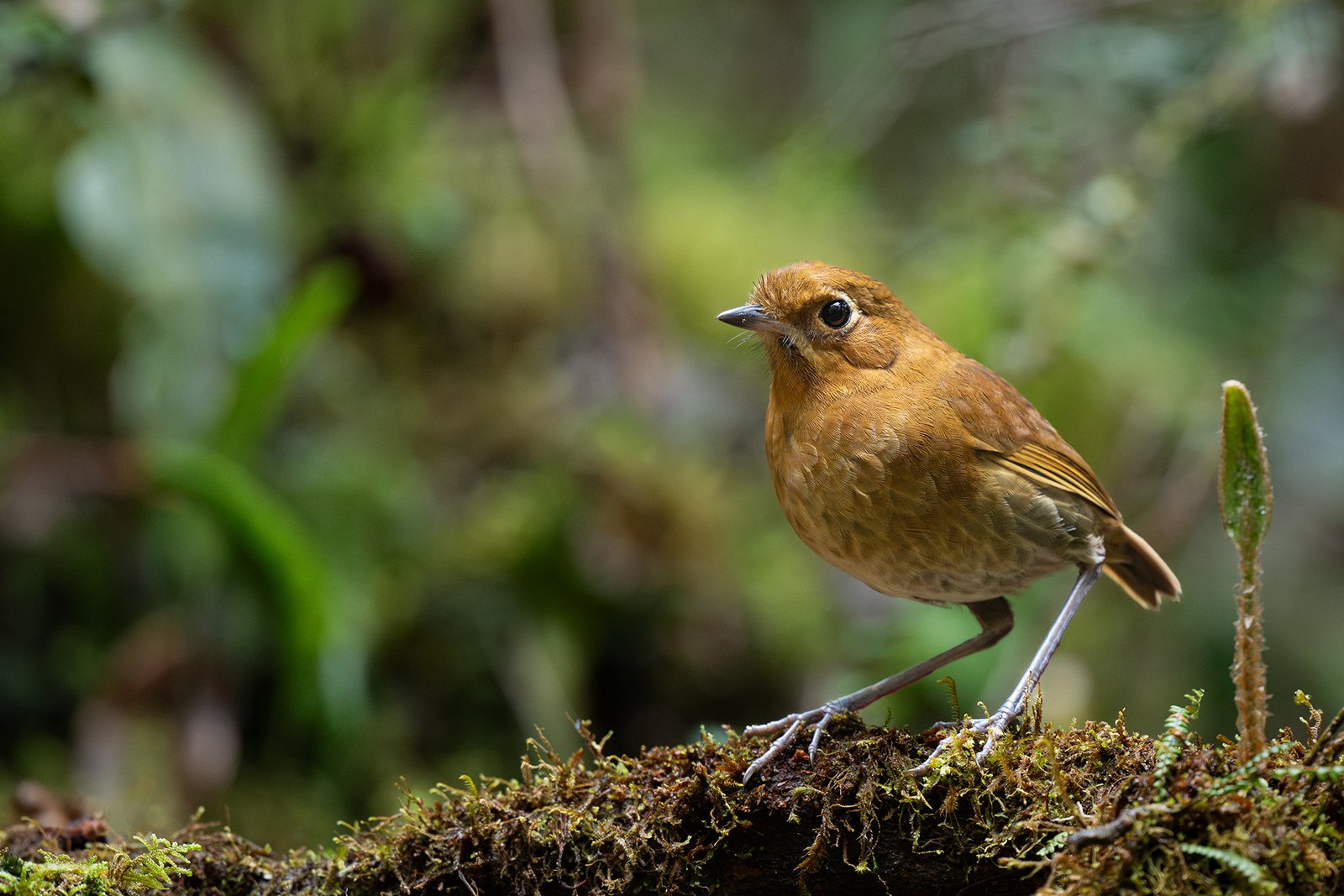
The Muisca Antpitta is the species that kept the name Grallaria rufula after the split of Rufous Antpitta in 2020. It is named after the Muisca, the people who inhabited the high plateau and slopes of the Eastern Andes of Colombia. It is a small, uniformly rufous ground bird of high montane forest and bamboo.
Voice
The long song is a slow, even series of a few widely spaced, long notes at the same pitch. The short song consists of two notes of about a second each, separated by a short pause; the second sounds buzzy.
Recording: Bram Vogels — CC BY-NC-SA 4.0 · xeno-canto
Identification
14–15 cm, small, round and almost tailless, on long dark legs, with a dark bill. The upperparts and underparts are uniformly rufous, the underparts slightly paler; a pale ring around the eye. Northern birds are browner, with a paler malar area; southern birds are redder. The sexes are alike.
Confusion species
Boyaca Antpitta Grallaria alticola lives in more open páramo and scrub, is larger and more greyish-brown to buffy brown. Cundinamarca Antpitta Grallaria kaestneri on the east slope is larger, darker olive-brown and lives lower. Rusty-breasted Antpitta Grallaricula ferrugineipectus is smaller, with a pale crescent in front of the eye and a pale belly. Bicolored Antpitta Grallaria rufocinerea of the Central Andes has grey underparts.
Habitat
Bamboo and dense undergrowth in humid montane forest, also secondary forest and nearby disturbed areas, roughly between 1850 and 3800 m. It searches the ground for invertebrates. Little is known about the breeding of the species in its current definition.
Where the bird is most at home, classified by the vegetation units of the Andes and the west coast.


Range and movements
In Colombia in the Eastern Andes, from the Venezuelan border south to Cundinamarca and western Meta. Absent from Ecuador, Peru, Bolivia and the Galápagos; the similar birds there belong to other species of the rufula group. Outside the guide area in Táchira, Venezuela.
- Resident
- dark = core range, pale = thinly spread
How and when to look
Listen at dawn in bamboo-rich high montane forest in the Eastern Andes, for example at Chingaza east of Bogotá, for the long, even notes. The bird sings from dense cover and sometimes briefly steps onto a trail.
Conservation status
Not evaluated as a separate species; the broadly defined Rufous Antpitta is listed as Least Concern. The high montane forest of the Eastern Andes is heavily fragmented by agriculture and ranching.
Scientific name
Grallaria rufula | de Lafresnaye, 1843
De Lafresnaye described the species in 1843 and placed it straight away in the genus where it still stands. The genus Grallaria was introduced in 1816 by Vieillot. The genus name comes from New Latin grallarius, 'stilt-walker', referring to the long legs. The species name comes from Latin rufulus, 'reddish'. The specimen the first description was based on came from Bogotá, Colombia.