All species › Passerines › Antpittas › Rufous-breasted Antpitta
Rufous-breasted Antpitta | Grallaricula leymebambae
Zuidelijke roestborstdwergmierpitta | Ponchito pechicastaño sureño | Tovaquinha-de-peito-ruivo
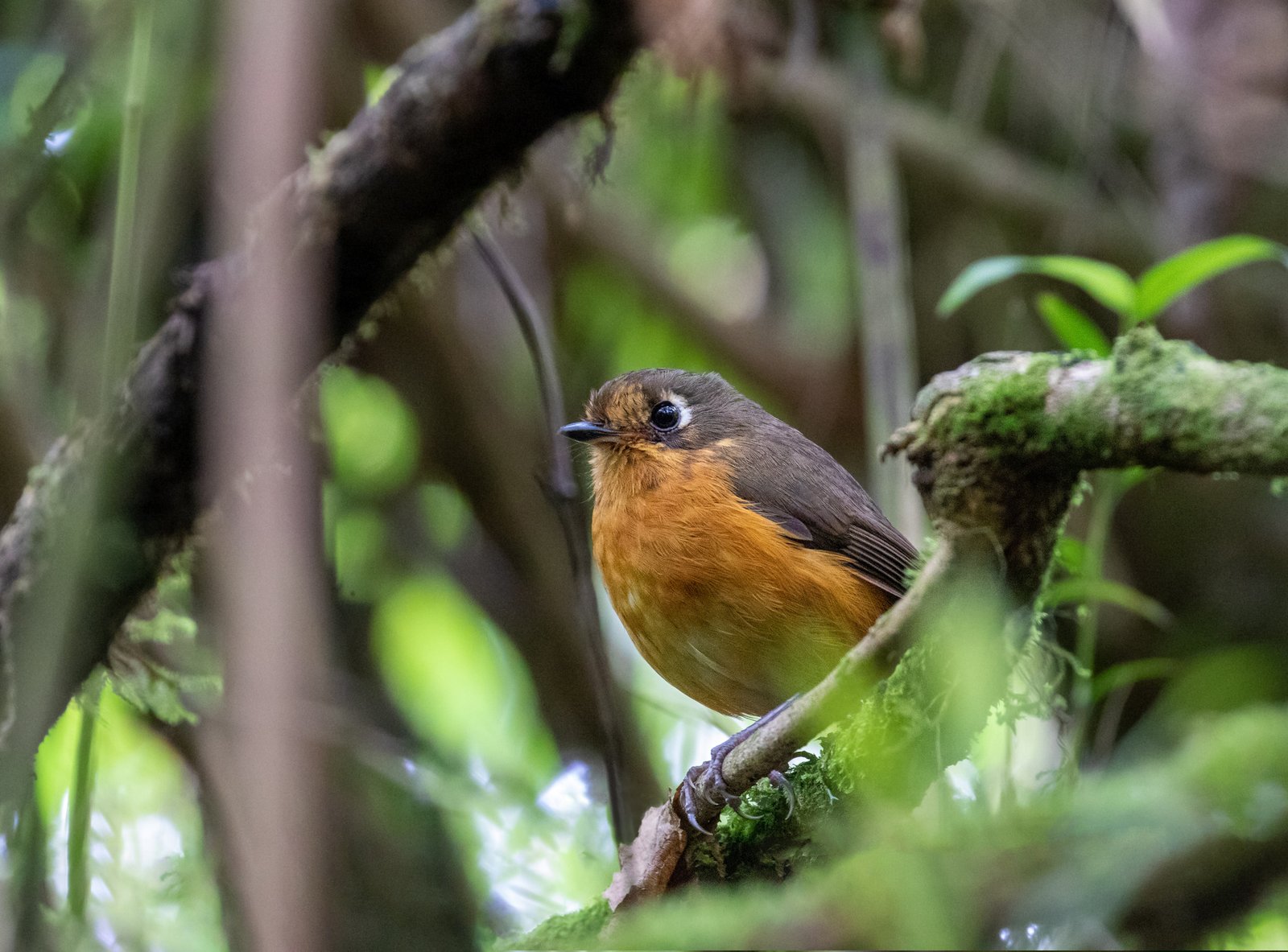
The Rufous-breasted Antpitta was split from Rusty-breasted Antpitta on the basis of differences in song and elevation. It lives in the undergrowth of humid montane forest, closely tied to Chusquea bamboo, from Ecuador to Bolivia. The scientific name refers to Leymebamba in the Peruvian department of Amazonas.
Voice
The song is a series of clear, falling whistles, slower and higher than in Rusty-breasted Antpitta. Also soft single whistles.
Recording: rudy gelis — CC BY-NC-SA 4.0 · xeno-canto
Identification
10–11 cm, slightly larger than the northern species, round and short-tailed, on long greyish legs. The upperparts are dark brown to slate-brown, the crown and cheeks without rufous. The forehead, lores and eye-ring are rusty. The throat, breast and flanks are rufous, with a white crescent on the lower throat and a white centre to the belly. The bill is dark. The sexes are alike.
Confusion species
Rusty-breasted Antpitta Grallaricula ferrugineipectus occurs only in Colombia and Venezuela and lives lower. Slaty-crowned Antpitta Grallaricula nana has a slate-grey crown; it lives in the same bamboo-rich forest in Ecuador and northern Peru. Ochre-breasted Antpitta Grallaricula flavirostris has an ochre-yellow breast and a yellow bill and lives lower. Ochre-fronted Antpitta Grallaricula ochraceifrons has white, black-streaked underparts.
Habitat
The undergrowth of humid montane forest, especially in and near dense Chusquea bamboo, roughly between 1750 and 3350 m. It forages low in the vegetation, taking insects and other invertebrates from leaves and stems. Little is known about its breeding.
Where the bird is most at home, classified by the vegetation units of the Andes and the west coast.


Range and movements
In Ecuador very locally on the western slope, including Pichincha near Quito and Loja. In Peru on the western slope in Piura and Lambayeque, and on the eastern slope from southern Amazonas, south of the Marañón, southwards through the country. In Bolivia on the eastern slope in the west, mainly in La Paz. Absent from Colombia and the Galápagos. Does not occur outside the guide area.
- Resident
- dark = core range, pale = thinly spread
How and when to look
Listen in bamboo-rich montane forest along roads through the cloud forest of the Peruvian eastern slope for the slow series of whistles. The bird stays low in the bamboo and is often seen only briefly.
Conservation status
Least Concern. The species depends on bamboo-rich montane forest, which is locally cleared or burned.
Scientific name
Grallaricula leymebambae | Carriker, 1933
Carriker described the species in 1933 and placed it straight away in the genus where it still stands. The genus Grallaricula was introduced in 1858 by Sclater. The genus name is a diminutive of the genus Grallaria, Modern Latin for 'stilt-walker'. The species name refers to Leymebamba in the Amazonas region of Peru. The specimen the first description was based on came from Leymebamba, Amazonas, Peru.