All species › Passerines › Antpittas › Sierra Nevada Antpitta
Sierra Nevada Antpitta | Grallaria spatiator
Sierranevadamierpitta | Tororoí de Sierra Nevada | Tovacuçu-de-sierra-nevada
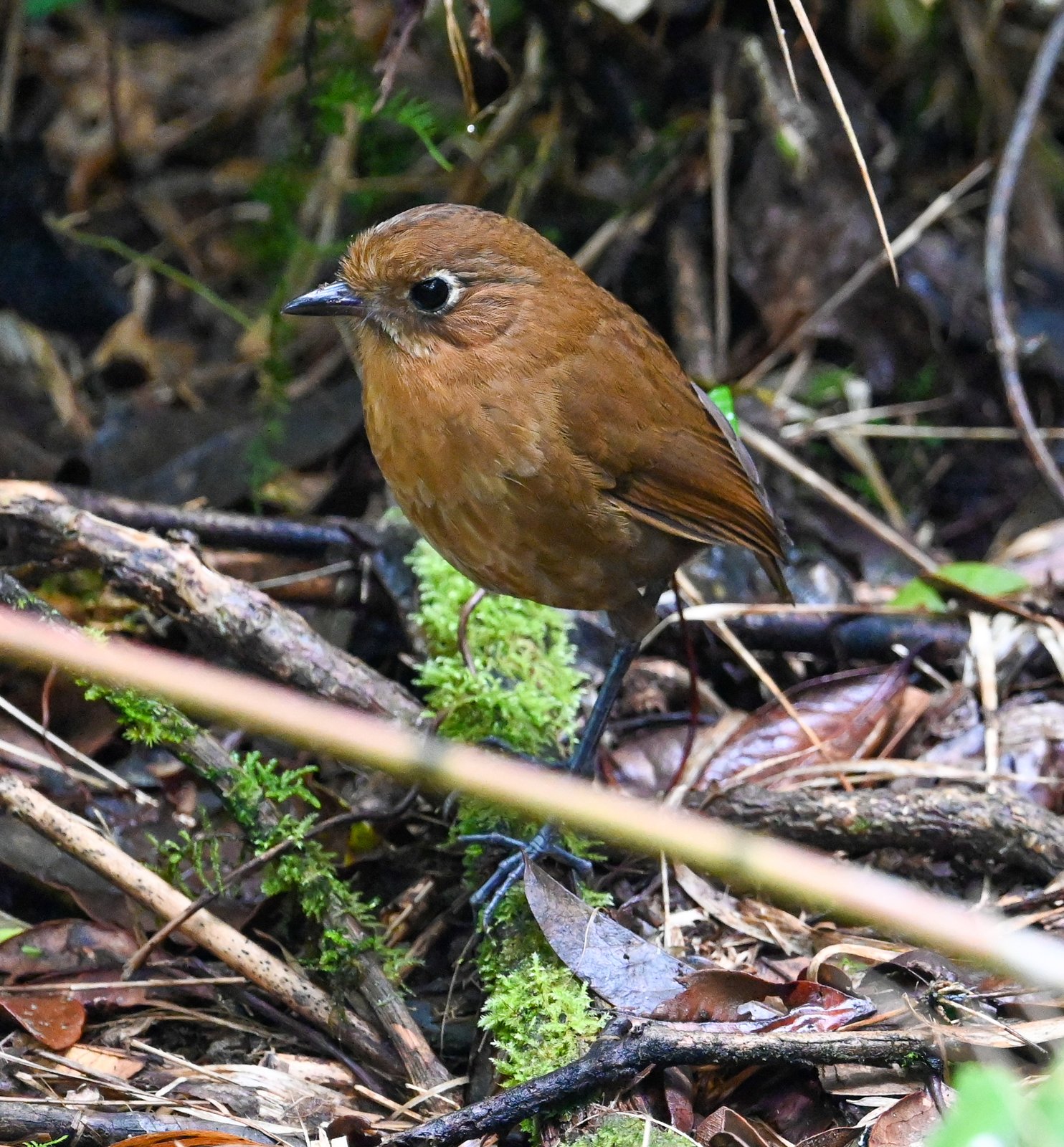
The Sierra Nevada Antpitta is a small, rufous antpitta found only in the Sierra Nevada de Santa Marta in northern Colombia. It was long treated as a subspecies of Rufous Antpitta, but since 2020 it has been recognized as a separate species on the basis of voice and genetics. It lives on the floor of mossy montane forest and is mostly heard.
Voice
The long song is a ringing trill of about 30 notes lasting some three seconds. The short song is a brief, high, slightly descending whistle.
Recording: Alonso Quevedo — CC BY-NC-SA 4.0 · xeno-canto
Identification
13–14 cm, small, round and almost tailless, on long legs. The crown, upperparts, wings and tail are dark reddish ochre-brown with paler feather edges. Behind the eye is a whitish spot that sometimes forms part of an eye-ring. The underparts are mostly pale greyish white with an ochre wash on the breast; the flanks match the upperparts. The sexes are alike.
Confusion species
Santa Marta Antpitta Grallaria bangsi in the same mountains is larger and olive-brown, with a yellowish, streaked breast. Rusty-breasted Antpitta Grallaricula ferrugineipectus is smaller, with a rusty breast and a pale crescent in front of the eye. No other species of the Grallaria rufula group occurs in the Sierra Nevada de Santa Marta.
Habitat
The floor and understorey of cool, humid montane forest rich in moss and epiphytes, roughly between 2200 and 2900 m. Almost nothing has been described about its diet and breeding; like related species it presumably eats invertebrates from the forest floor.
Where the bird is most at home, classified by the vegetation units of the Andes and the west coast.

Range and movements
Only in Colombia, in the Sierra Nevada de Santa Marta, in Magdalena, La Guajira and Cesar. Absent from Ecuador, Peru, Bolivia and the Galápagos. Does not occur outside the guide area.
- Resident
- dark = core range, pale = thinly spread
How and when to look
Listen at dawn and dusk for the trilled song in the higher forest of the Sierra Nevada de Santa Marta, for example along the road from Minca to the San Lorenzo ridge. The bird usually sings from dense, mossy undergrowth.
Conservation status
Not evaluated as a separate species. The range is very small and the montane forest of the Sierra Nevada is under pressure from logging, agriculture and fires; the species is therefore probably threatened.
Scientific name
Grallaria spatiator | Bangs, 1898
Bangs described the species in 1898 and placed it straight away in the genus where it still stands. The genus Grallaria was introduced in 1816 by Vieillot. The genus name comes from New Latin grallarius, 'stilt-walker', referring to the long legs. The species name comes from Latin spatiator, 'stroller'. The specimen the first description was based on came from Macotama, Sierra Nevada de Santa Marta, Colombia.