All species › Passerines › Antpittas › Perija Antpitta
Perija Antpitta | Grallaria saltuensis
Perijámierpitta | Tororoí del Perijá | Tovacuçu-de-perijá
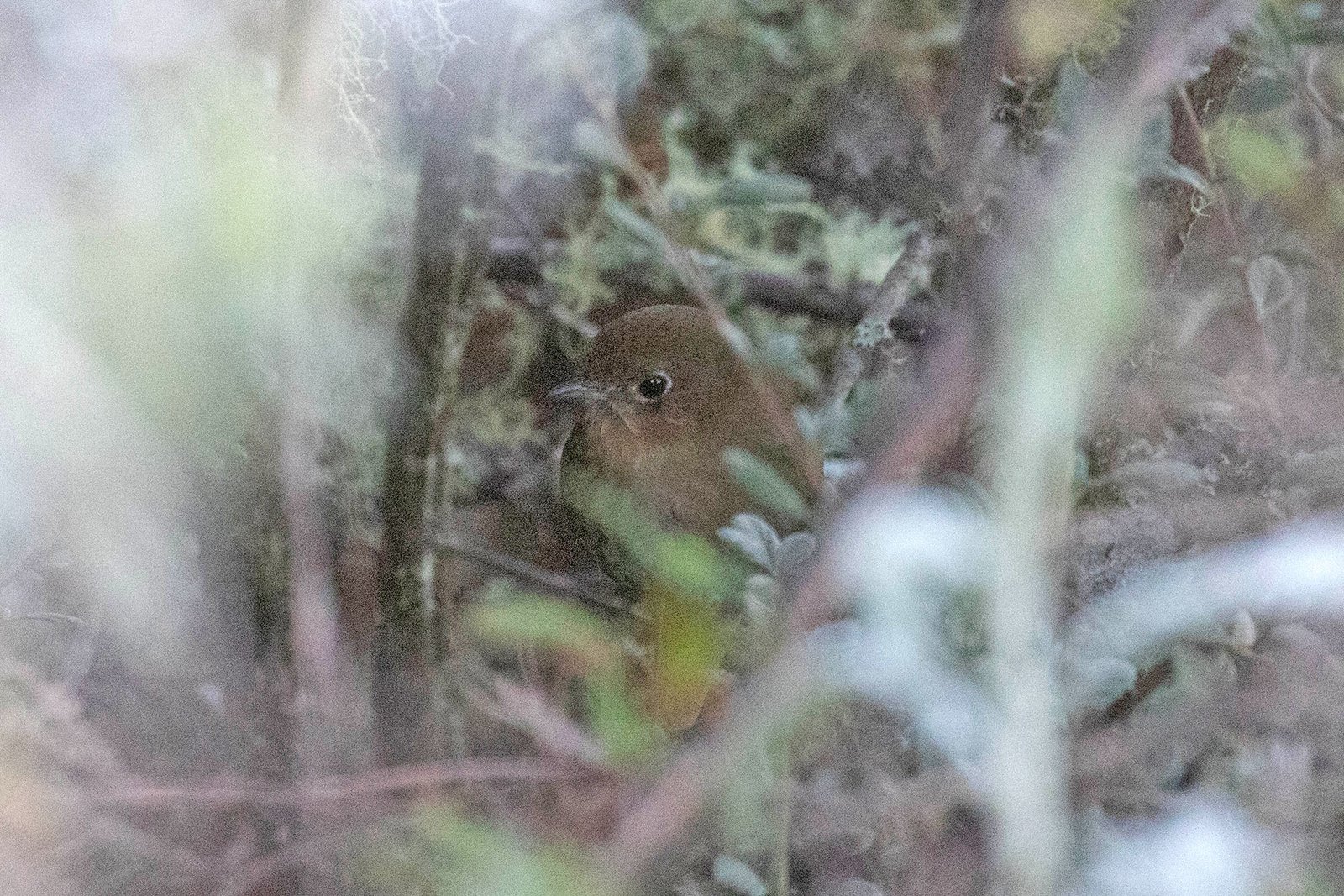
The Perija Antpitta is a small, pale antpitta found only in the Serranía del Perijá on the border of Colombia and Venezuela. It was formerly included in Rufous Antpitta, but differs in its largely white underparts and its own song. It lives on the floor of high montane forest.
Voice
The long song is a descending series of 10 to 20 pure, overslurred whistles, about five per second. The short song is a flat trill of about half a second. It sings mainly at dawn and dusk, from the ground or a low perch.
Recording: Ross Gallardy — CC BY-NC-SA 4.0 · xeno-canto
Identification
14–15 cm, small, round and short-tailed, on pinkish-grey legs. The upperparts are buffy brown to olive-brown, the flight feathers edged greyish. The throat is whitish and the underparts are mostly dull white, with buffy-brown breast sides, flanks and thighs. The sexes are alike.
Confusion species
Muisca Antpitta Grallaria rufula of the Eastern Andes is uniformly rufous, including the underparts, and does not occur in the Perijá. Rusty-breasted Antpitta Grallaricula ferrugineipectus is smaller, with a rusty breast. Chestnut-crowned Antpitta Grallaria ruficapilla is larger, with a rufous head and black-streaked underparts.
Habitat
The floor and understorey of humid montane forest, also forest edges and nearby disturbed areas, roughly between 2500 and 3250 m. Little is known about its diet and breeding.
Where the bird is most at home, classified by the vegetation units of the Andes and the west coast.


Range and movements
In Colombia only in the Serranía del Perijá, in La Guajira and Cesar. Absent from Ecuador, Peru, Bolivia and the Galápagos. Outside the guide area on the Venezuelan side of the Perijá, in Zulia.
- Resident
- dark = core range, pale = thinly spread
How and when to look
The upper Perijá has limited access. Listen at dawn for the descending whistled series in montane forest above about 2500 m on the Colombian side, in Cesar.
Conservation status
Near Threatened. The population is estimated at 1000 to 2500 mature individuals and is declining through loss and fragmentation of forest; lower on the slopes forest is cleared for settlement, ranching and drug crops.
Scientific name
Grallaria saltuensis | Wetmore, 1946
Wetmore described the species in 1946 and placed it straight away in the genus where it still stands. The genus Grallaria was introduced in 1816 by Vieillot. The genus name comes from New Latin grallarius, 'stilt-walker', referring to the long legs. The species name comes from Latin saltus, 'forest, mountain pasture', with the suffix -ensis: dweller of the mountain forest. The specimen the first description was based on came from Sierra de Perijá, Colombia.