All species › Swifts › Hummingbirds › Streak-throated Hermit
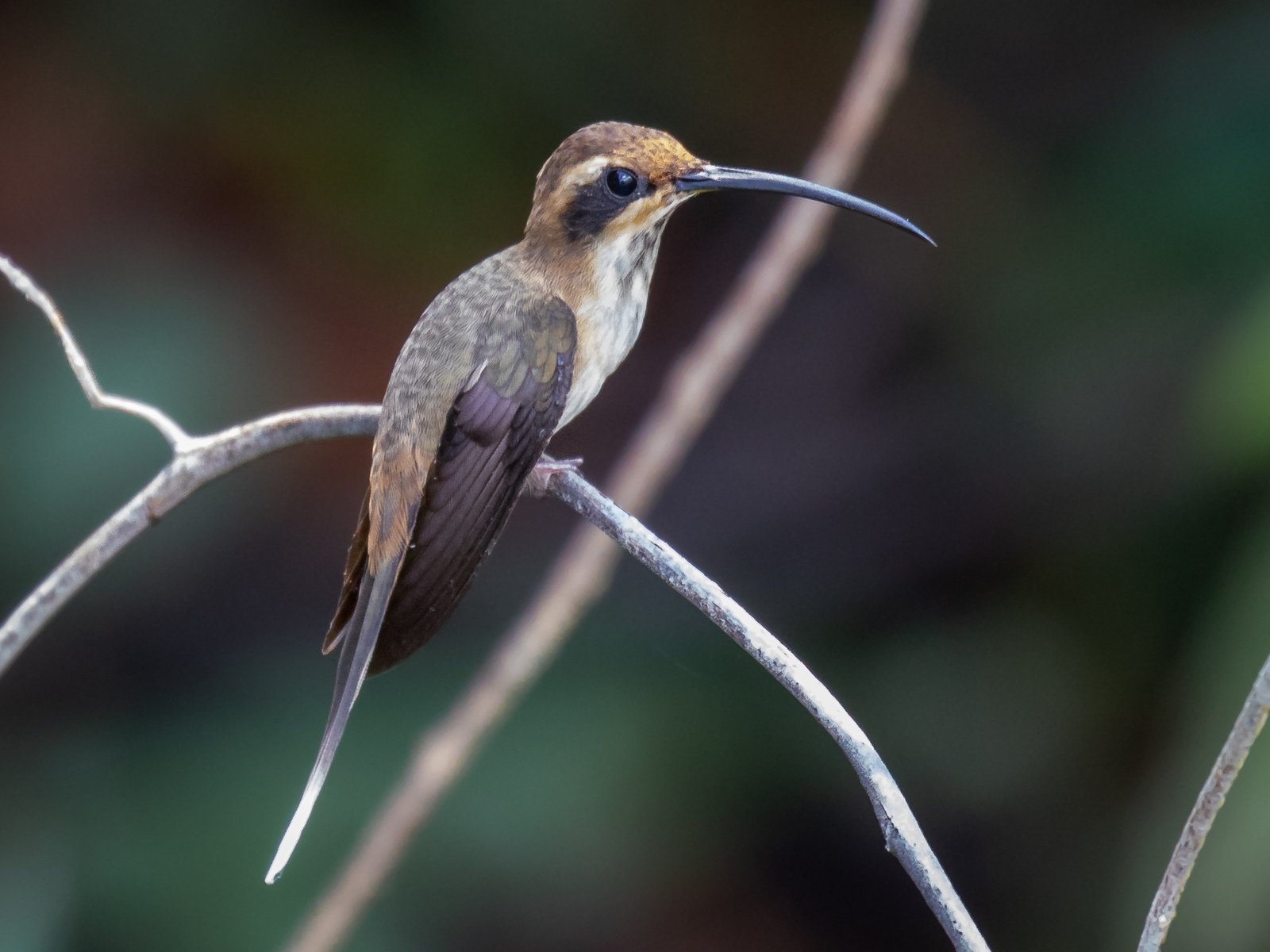
Streak-throated Hermit | Phaethornis rupurumii
Streepkeelheremietkolibrie | Ermitaño del Rupununi | Rabo-branco-do-rupununi
The Streak-throated Hermit is a small hermit of the Orinoco region and the Guiana Shield. In the guide area it occurs only in the far east of Colombia. It lives in drier and more open forest types than most hermits, such as gallery forest and scrub.
Voice
The song is a persistently repeated series of high, squeaky notes, usually given from a perch near the ground. The call is a high tseep.
Recording: Alex Lees — CC BY-NC-SA 4.0 · xeno-canto
Identification
10–12 cm, with a decurved bill and a yellow lower mandible. The upperparts are bronzy green, and the rump is rufous. The throat is dark with distinct dark streaks; the rest of the underparts are pale buff to cinnamon. A dark mask is bordered by a buff supercilium and malar stripe. The tail is graduated, with white-tipped, moderately elongated central feathers. The sexes are nearly alike.
Confusion species
Grey-chinned Hermit Phaethornis griseogularis has a grey, unstreaked chin and lives mainly in the foothills. Reddish Hermit Phaethornis ruber is smaller, with strongly rufous underparts and, in the male, a dark breast band. Black-throated Hermit Phaethornis atrimentalis has a blackish throat and lives further south in Amazonia. Dusky-throated Hermit Phaethornis squalidus is very similar, but lives in south-eastern Brazil.
Habitat
Understorey of forest edges, gallery forest, semi-deciduous forest, scrub, river islands and secondary forest, also várzea forest, in the lowlands to about 500 m. It visits small tubular flowers in the understorey and takes small arthropods. The nest hangs from the underside of a leaf tip.
Where the bird is most at home, classified by the vegetation units of the Andes and the west coast.


Range and movements
In Colombia only in the far east, in Vichada and Guainía, along the Orinoco. Absent from Ecuador, Peru, Bolivia and the Galápagos. Outside the guide area in central and eastern Venezuela, western Guyana and Roraima in Brazil, with a separate form along the Amazon in Brazil.
- Resident
- dark = core range, pale = thinly spread
How and when to look
In gallery forest and scrub along the Orinoco in eastern Colombia, for example around Puerto Carreño. Listen for the squeaky song low in the understorey.
Conservation status
Least Concern. The species is poorly studied, but appears to be locally common.
Scientific name
Phaethornis rupurumii | Boucard, 1892
Boucard described the species in 1892 and placed it straight away in the genus where it still stands. The genus Phaethornis was introduced in 1827 by Swainson. The genus name combines Ancient Greek phaethōn, 'sun', with ornis, 'bird'. The species name refers to the Rupununi (spelled 'Rupurumi' by Boucard), a river and savanna region in Guyana. The specimen the first description was based on came from Rupununi, Guyana.