All species › Passerines › Tyrant flycatchers and allies › Venezuelan Flycatcher
Venezuelan Flycatcher | Myiarchus venezuelensis
Venezolaanse tiran | Copetón venezolano | Maria-cavaleira-venezuelana
The Venezuelan Flycatcher is a Myiarchus of dry forest in northern Colombia and Venezuela. It closely resembles Brown-crested and Panama Flycatchers, which occur in the same area, and in the field it is separated mainly by voice and by details of the wing and tail. It is often solitary and sits still on a perch for long periods.
Voice
Short, plaintive whistles like wheeer and a short wheet; at dawn repeated whistles.
Recording: Rosa Elena Albornoz @rosaelena_naturaleza — CC0 1.0 · xeno-canto
Identification
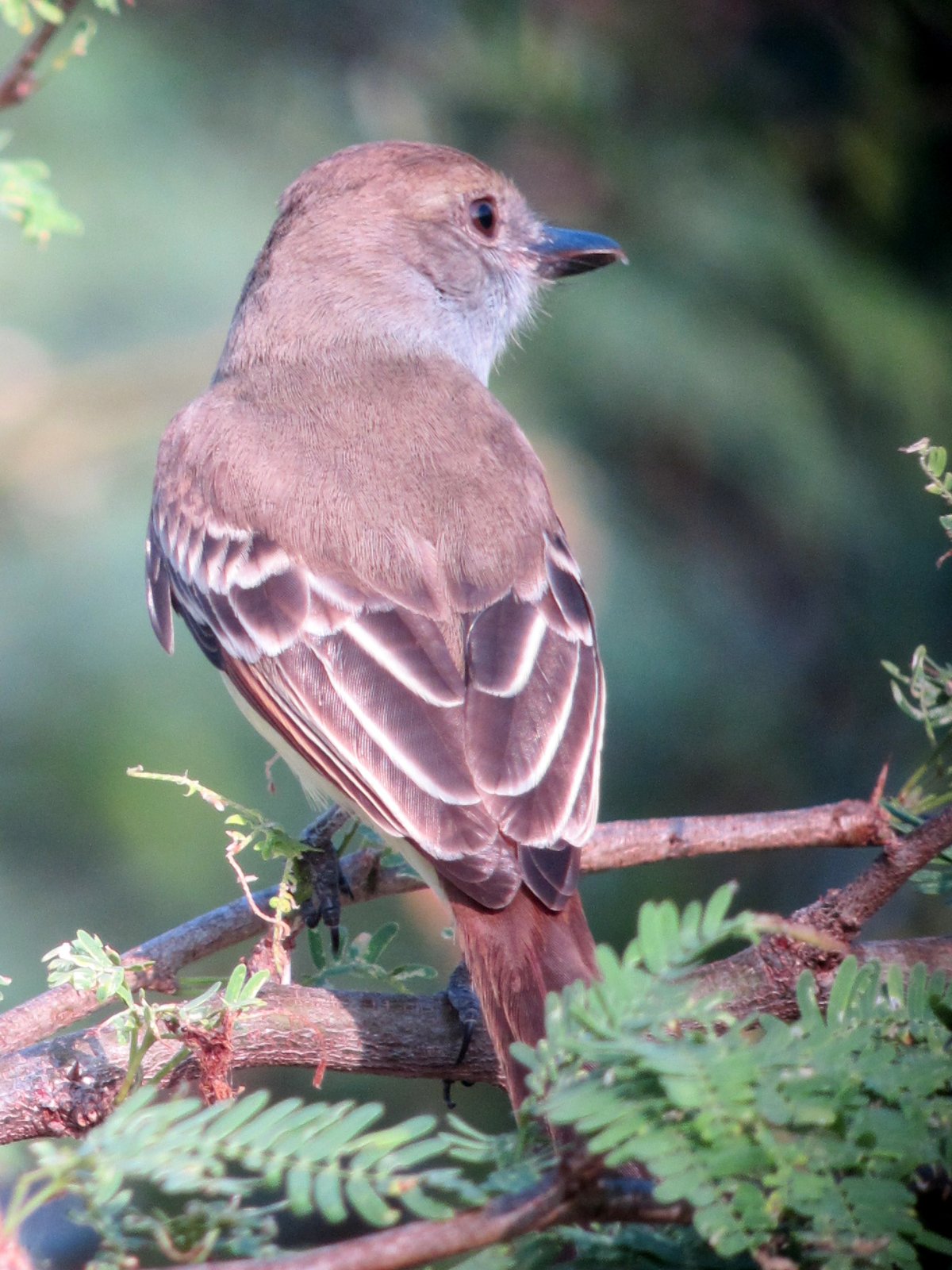
19 cm, with a black bill and a slightly darker crown with a short crest. The upperparts are olive-brown. The throat and breast are grey, the belly yellow. The primaries have narrow rufous outer edges; the tail is brown, with little or no rufous on the inner webs. The coverts and tertials have pale edges. The sexes are alike.
Confusion species
Brown-crested Flycatcher Myiarchus tyrannulus is slightly larger, with a browner crest and obvious rufous on the inner webs of the tail. Panama Flycatcher Myiarchus panamensis is greyer, with little rufous in the wing. Short-crested Flycatcher Myiarchus ferox lives east of the Andes and is darker. Dusky-capped Flycatcher Myiarchus tuberculifer is smaller, with a dark cap.
Habitat
Dry and semi-dry deciduous forest, gallery forest, forest edges and scrub with trees, in the lowlands and on the lower slopes up to about 1000 m. It catches insects in short sallies from a perch at middle levels of the forest. It nests in tree cavities.
Where the bird is most at home, classified by the vegetation units of the Andes and the west coast.


Range and movements
Colombia: in the dry Caribbean lowlands in the north, including La Guajira and the surroundings of the Sierra Nevada de Santa Marta. Absent from Ecuador, Peru, Bolivia and the Galápagos. Outside the guide area in northern Venezuela and on Tobago.
- Resident
- dark = core range, pale = thinly spread
How and when to look
Search dry forest at the foot of the Sierra Nevada de Santa Marta and in La Guajira; compare carefully with Brown-crested Flycatcher, which often occurs in the same forest.
Conservation status
Least Concern. The dry forest of the Caribbean lowlands is highly fragmented, but the species also occurs in secondary forest.
Scientific name
Myiarchus venezuelensis | Lawrence, 1865
Lawrence described the species in 1865 and placed it straight away in the genus where it still stands. The genus Myiarchus was introduced in 1844 by Cabanis. The genus name comes from Greek muia, 'fly', and arkhos, 'ruler, chief'. The species name refers to Venezuela, not necessarily the type locality. The specimen the first description was based on came from Lago de Valencia, Carabobo, Venezuela.