All species › Passerines › Shrike-babblers, Erpornis and vireos › Warbling Vireo
Warbling Vireo | Vireo gilvus
Orpheusvireo | Vireo gorjeador | Juruviara-gorjeadora
The Warbling Vireo is a grey, plain vireo that breeds in North America and winters mainly in Mexico and Central America. In the guide area it is a very rare winter visitor to Colombia. The South American Brown-capped Vireo was formerly included in this species.
Voice
In winter quarters usually only a nasal, whining call. The song is a long, rippling, warbled phrase.
Recording: Ed Pandolfino — CC BY-NC-SA 4.0 · xeno-canto
Identification
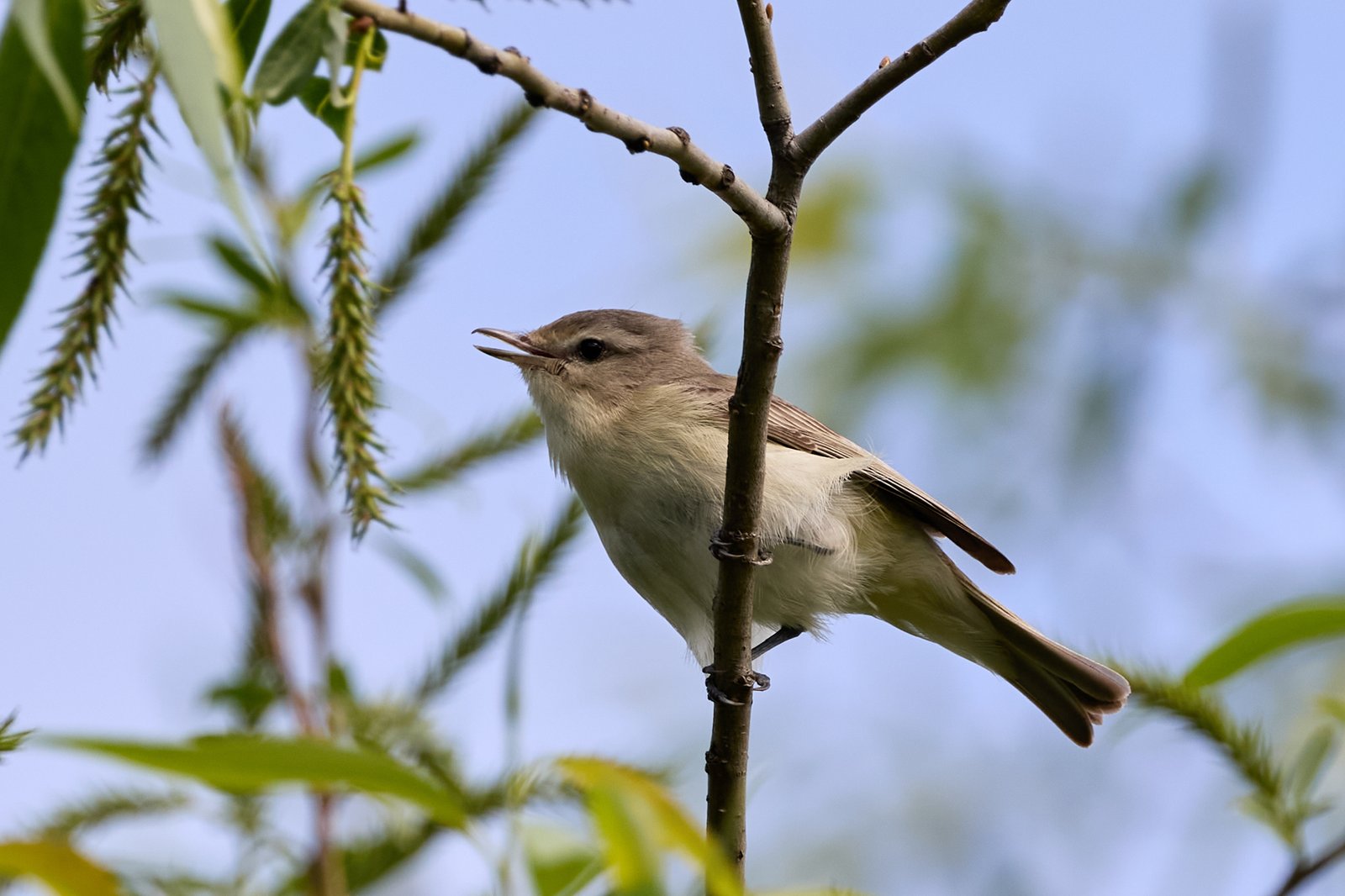
13 cm, with a short, fairly stout bill. The crown and upperparts are grey to greyish olive, without wing bars. A white supercilium, pale lores and a faint dark line behind the eye. The underparts are whitish, sometimes with a pale yellow wash on the flanks. The sexes are alike.
Confusion species
Philadelphia Vireo Vireo philadelphicus has a yellow throat and breast and a dark stripe through the lores. Brown-capped Vireo Vireo leucophrys has a brown cap and a yellower belly and is resident in montane forest. Red-eyed Vireo Vireo olivaceus is larger, with a black-bordered grey crown, a black eye-line and a greener back.
Habitat
Forest edges, riparian woodland, gardens, parks and plantations with scattered trees. It searches the foliage of the canopy for insects. It breeds in deciduous and riparian woodland in North America.
Where the bird is most at home, classified by the vegetation units of the Andes and the west coast.


Range and movements
Colombia: very rare winter visitor, with a few records in the north and in the Andes. Ecuador, Peru and Bolivia: no confirmed records; older reports there refer to Brown-capped Vireo. Absent from the Galápagos. Outside the guide area it breeds from Canada to Mexico and winters from Mexico to Central America.
- Winter visitor (c. Oct–Mar)
- dark = core range, pale = thinly spread
How and when to look
A Warbling Vireo in the guide area is exceptional; between October and April in Colombia, look for a grey vireo without a brown cap and with pale lores, and document the sighting with photographs.
Conservation status
Least Concern. The global population is large and increasing.
Scientific name
Vireo gilvus | (Vieillot, 1808)
Vieillot described the species in 1808 as Muscicapa gilva; because it was later moved to another genus, the author and year stand in brackets. The genus Vireo was introduced in 1808 by Vieillot. The genus name is Latin vireo, a green migratory bird, perhaps the female golden oriole or the greenfinch; related to virere, 'to be green'. The species name comes from Latin gilvus, 'pale yellow'. The specimen the first description was based on came from New York State, United States.