All species › Pelicans, herons and ibises › Herons, egrets and bitterns › Zigzag Heron
Zigzag Heron | Zebrilus undulatus
Zigzagreiger | Garcilla cebra | Socoí-zigue-zague
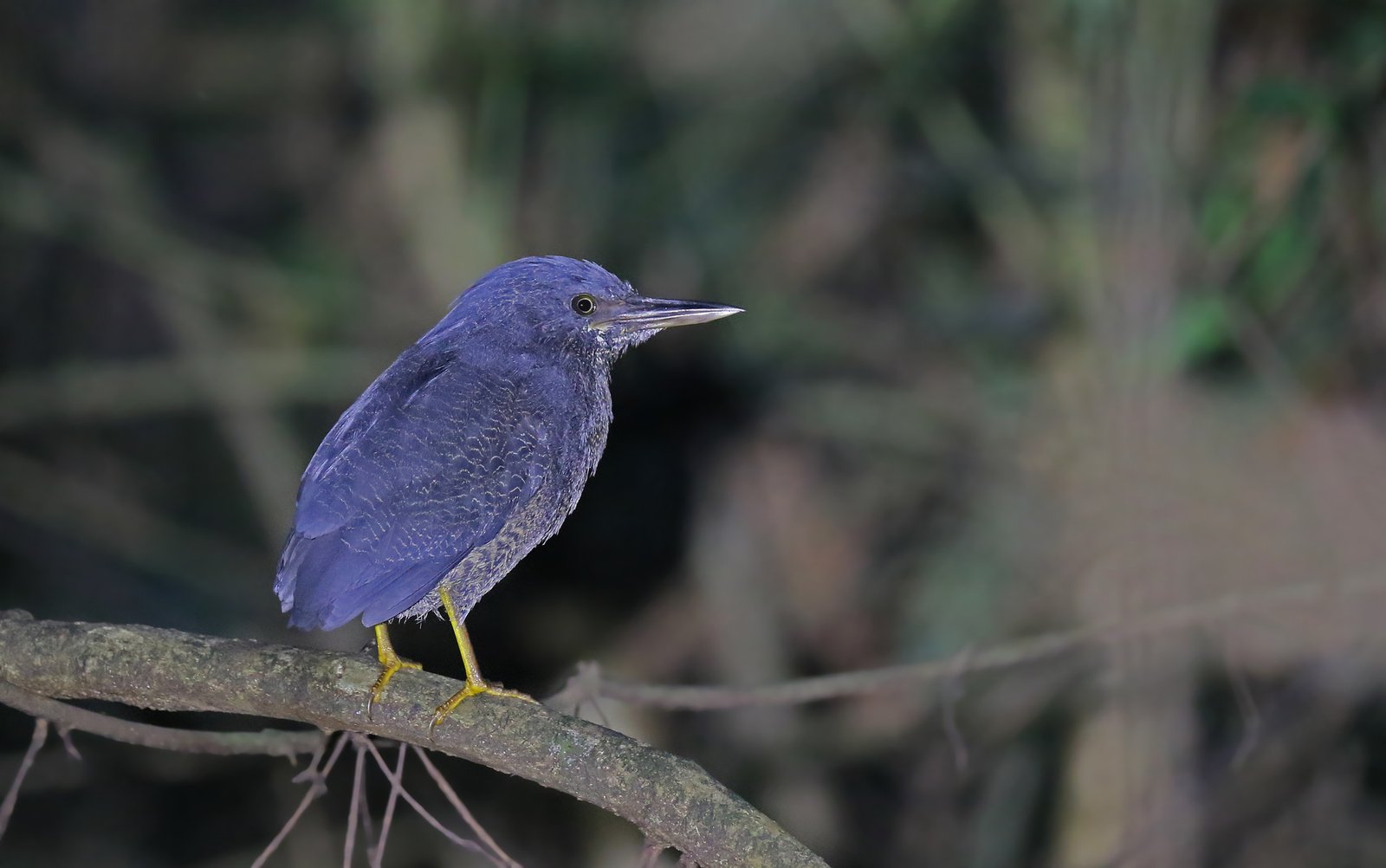
The Zigzag Heron is a small, dark heron of swampy forest in Amazonia. The name refers to the fine, wavy pale lines that run across the whole dark plumage. It lives hidden in the shade along forest streams and is known mainly from its call at dusk.
Voice
A low, hollow, rising oohn or woo-oo, repeated at intervals, mainly at dawn and at dusk.
Recording: Paul Coopmans — CC BY-NC-SA 4.0 · xeno-canto
Identification
28–33 cm, small and stocky, with a short, fairly thick bill and short legs. Adults are dark greyish brown to blackish above, with fine, wavy buff lines; the underparts are paler buff with fine dark wavy lines. The crown is blackish, with a short crest. Juveniles are warmer rufous, especially on the head and neck, with a finely barred back. The sexes are alike.
Confusion species
Striated Heron Butorides striata is larger, with a longer bill, a grey-green back without wavy lines and a grey or rufous neck. Least Bittern Botaurus exilis has a pale wing patch and a streaked buff neck, and lives in reeds and other tall marsh vegetation, not in forest. Stripe-backed Bittern Botaurus involucris has buff plumage with black longitudinal stripes on the back.
Habitat
Swampy forest, palm swamps (aguajales), flooded forest and the banks of small, shaded forest streams and pools in lowland rainforest, mostly below 400 m. It perches low on branches over water and hunts small fish and insects. The nest is a small platform of twigs low in a shrub or small tree over water.
Where the bird is most at home, classified by the vegetation units of the Andes and the west coast.


Range and movements
In Colombia in Amazonia and the far east. In Ecuador, Peru and Bolivia in the Amazonian lowlands. Absent from the Galápagos. Outside the guide area in southern Venezuela, the Guianas and Amazonian Brazil.
- Resident
- dark = core range, pale = thinly spread
How and when to look
Listen at dawn and dusk along forest streams and aguajales in the Amazonian lowlands for the low call, then scan low branches over the water. Birds sometimes respond by coming closer.
Conservation status
Least Concern. Little is known about its numbers and population; the species depends on undisturbed swampy lowland forest.
Scientific name
Zebrilus undulatus | (Gmelin, 1789)
Gmelin described the species in 1789 as Ardea undulata; because it was later moved to another genus, the author and year stand in brackets. The genus Zebrilus was introduced in 1855 by Bonaparte. The genus name is a diminutive of French zèbre, 'zebra', after the finely barred plumage. The species name is Latin undulatus, 'wavy', after the wave-like markings. The specimen the first description was based on came from Cayenne, French Guiana.