All species › Hummingbirds and swifts › Hummingbirds › Inagua Woodstar
Inagua Woodstar | Nesophlox lyrura
Inaguaboself | Colibrí de Inagua
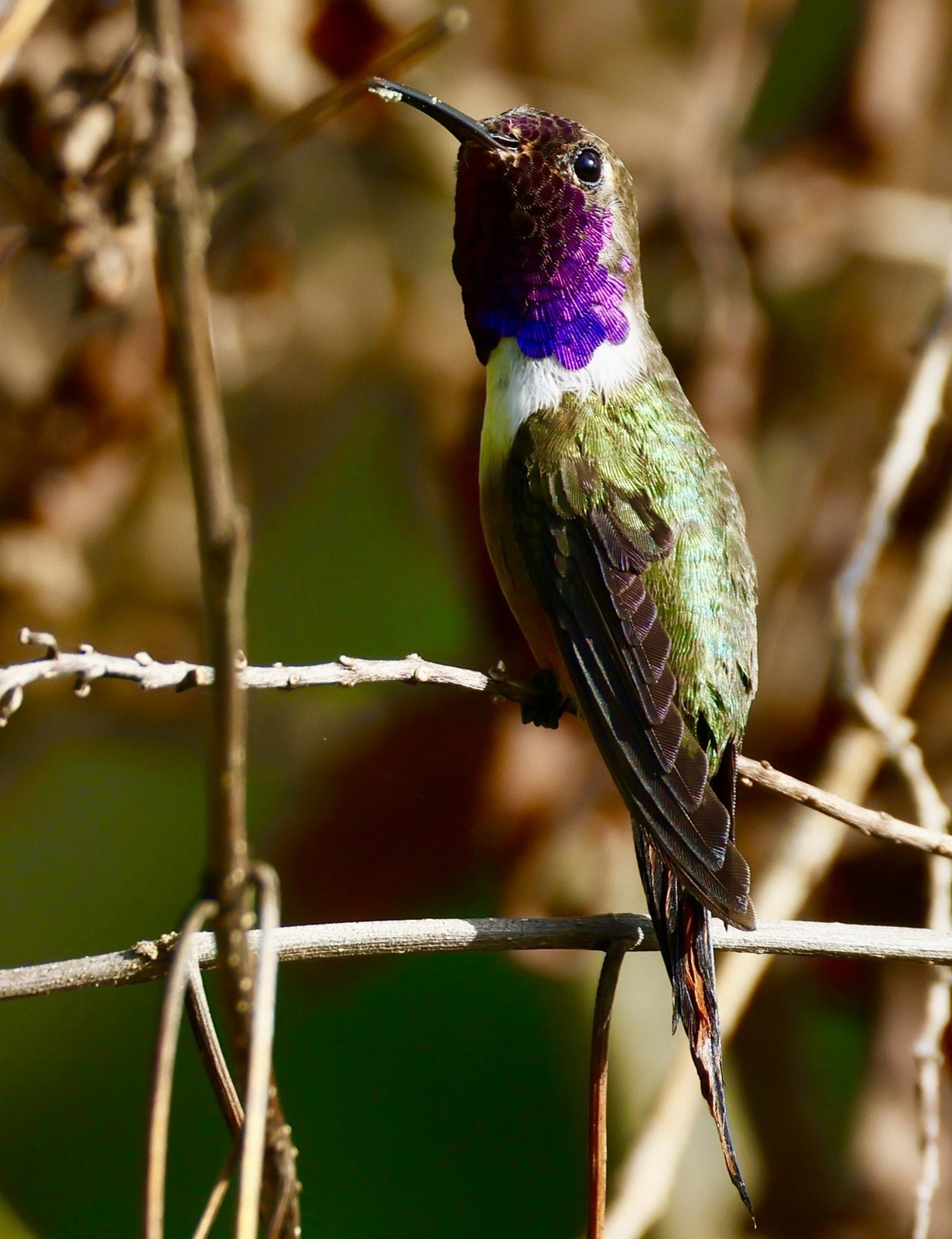
The Inagua Woodstar is a small hummingbird living only on Great and Little Inagua in the southern Bahamas. It was long treated as a subspecies of Bahama Woodstar but is now considered a separate species, mainly on the basis of plumage and tail shape. The male is distinguished by its lyre-shaped outer tail feathers.
Voice
The song is quiet and simple and has been described as sounding like wet, squeaking shoes. Also short chip calls.
No recording with a suitable Creative Commons licence is available for this species yet.
Identification
7.8–8.2 cm, with a short black bill. The male has a glittering reddish-purple forehead and gorget, glossy green upperparts, a whitish breast and a belly mixed rufous and green. The tail is deeply forked: central feathers green, outer feathers with cinnamon-rufous inner webs, the outermost curved into a lyre shape. The female is dull green above, with a pale grey chin and throat bearing small green spots, a whitish breast, a rufous belly and a rounded tail with green central feathers and cinnamon outer feathers with a broad black band near the tip.
Confusion species
On Inagua this is the only resident hummingbird. Bahama Woodstar Nesophlox evelynae of the other islands is very similar; its male lacks the lyre-shaped outer tail feathers. Females look almost identical in the field, so locality is decisive. A winter visitor such as Ruby-throated Hummingbird Archilochus colubris has a grey belly without rufous.
Habitat
Dune and coastal scrub, dry scrub, vegetation along fresh water, and planted parks and gardens. In Matthew Town at flowering shrubs in gardens.
Where the bird is most at home, classified by the vegetation types of the Caribbean.



Range and movements
Endemic to Great Inagua and Little Inagua in the southern Bahamas. There are no reliable records from other islands.
- Resident
- dark = core range, pale = thinly spread
How and when to look
Best looked for in the gardens and scrub around Matthew Town on Great Inagua, at flowering shrubs. With a male, watch the tail shape when it is spread.
Conservation status
Regarded by IUCN as not threatened. The range is limited to two islands; little is known about numbers and trend.
Scientific name
Nesophlox lyrura | (Gould, 1869)
Gould described the species in 1869 as Doricha lyrura; because it was later moved to another genus, the author and year stand in brackets. The genus Nesophlox was introduced in 1910 by Ridgway. Nesophlox is Greek, from nēsos 'island' (the Bahamas) and phlox 'flame': 'island flame'. lyrura is Greek, from lura 'lyre' and oura 'tail', after the lyre-shaped outer tail feathers. The specimen the first description was based on came from Inagua, Bahamas.