All species › Waders, gulls and terns › Sandpipers and snipes › Wilson's Phalarope
Wilson's Phalarope | Phalaropus tricolor
Grote franjepoot | Falaropo tricolor
Wilson's Phalarope is the largest of the three phalaropes and the only one that does not winter at sea. It breeds on the prairies of western North America and migrates overland to the salt lakes of the Andes and Argentina, so the Caribbean lies east of its main route. As in all phalaropes, roles are reversed: the female is larger and brighter and the male incubates.
Voice
Fairly quiet outside the breeding season; a soft, nasal wurk or vimp, mainly in flight.
Recording: Aluisio Ribeiro — CC BY-NC-SA 4.0 · converted to mono · xeno-canto
Identification
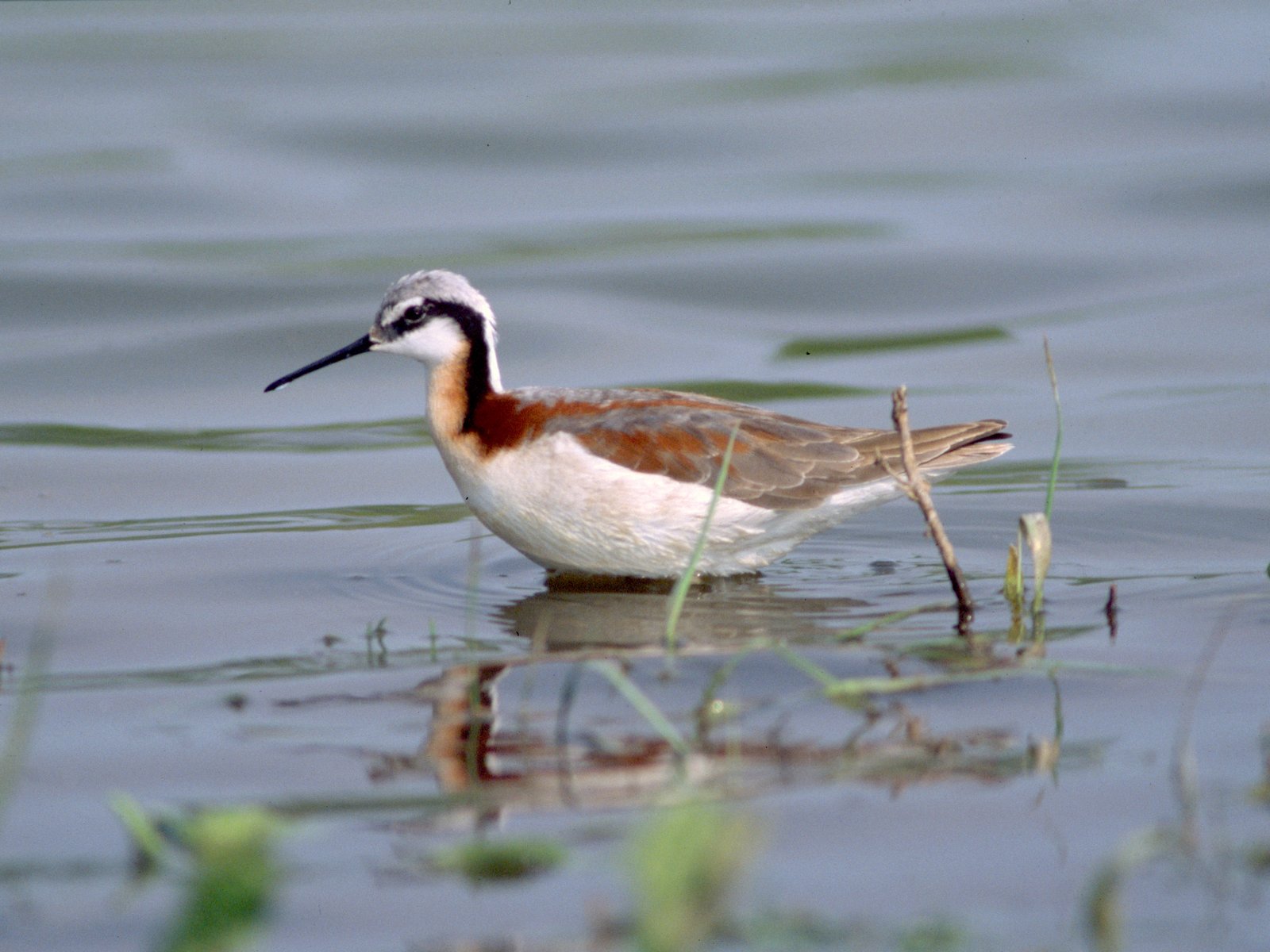
22–24 cm, slender, with a small head, a long, needle-fine black bill and lobed toes. In non-breeding plumage, the one most likely in the region, it is plain pale grey above and white below, with a white forehead and supercilium and a grey line running from behind the eye down the side of the neck; there is no black eye patch. The legs are then yellowish. The breeding female has a grey crown, a black line from eye to neck side merging into chestnut, a buff foreneck and grey and chestnut stripes on the back; the male is duller. Juveniles have brown, pale-fringed upperparts. In flight no wing bar, but a white rump and pale tail.
Confusion species
Red-necked Phalarope Phalaropus lobatus is smaller, with a shorter bill, a black eye patch in non-breeding plumage, a white wing bar and often pale stripes on the back. Lesser Yellowlegs Tringa flavipes also has a white rump and yellow legs, but is longer-legged, darker and spotted above. Stilt Sandpiper Calidris himantopus has a slightly drooping bill and greenish legs.
Habitat
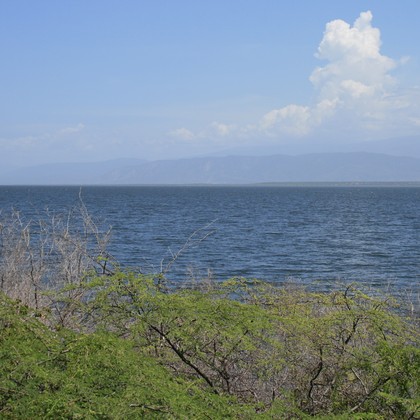
Shallow salt pans, brackish lagoons, saline lakes and the edges of ponds. Unlike the other phalaropes it often runs quickly over mud and along the waterline, picking at insects; when swimming it sometimes spins to bring prey to the surface.
Where the bird is most at home, classified by the vegetation types of the Caribbean.


Range and movements
Rare passage migrant, with records from the Bahamas, the Greater Antilles, the Virgin Islands, several of the Lesser Antilles, the ABC Islands and Trinidad and Tobago; most records fall in autumn migration, often of single juveniles at salt ponds. In Trinidad and Tobago it is classed as a vagrant. Outside the region it breeds inland in western Canada and the western United States, gathers after breeding at salt lakes in the Great Basin and winters on the salt lakes of the Andes and in Argentina.
- Resident
- Summer visitor (c. Oct–Mar)
- Winter visitor (c. Apr–Sep)
- Passage (Mar–Apr, Oct–Nov)
- dark = core range, pale = thinly spread
How and when to look
Salt pans and shallow lagoons holding flocks of peeps and yellowlegs are the places to look for a pale grey, needle-billed wader, especially from late August into October. In flight, the lack of a wing bar combined with the white rump is a good feature.
Conservation status
Not threatened. On migration the species depends on a few large salt lakes in western North America, where water extraction and drying can reduce its food supply.
Scientific name
Phalaropus tricolor | (Vieillot, 1819)
Vieillot described the species in 1819 as Steganopus tricolor; because it was later moved to another genus, the author and year stand in brackets. The genus Phalaropus was introduced in 1760 by Brisson. Phalaropus comes through French phalarope from Greek phalaris 'coot' and pous 'foot': like coots, phalaropes have lobed toes. tricolor is Latin for 'three-coloured'. The specimen the first description was based on came from Paraguay.