All species › Owls › Owls › Balsas Screech Owl
Position in the tree Birds Aves › Birds with a flexible palate Neognathae › All other modern birds Neoaves › Landbirds Telluraves › Raptors, owls, kingfishers and woodpeckers Afroaves › Hawks and owls Hieraves
Balsas Screech Owl | Megascops seductus
Balsasschreeuwuil | Tecolote del Balsas
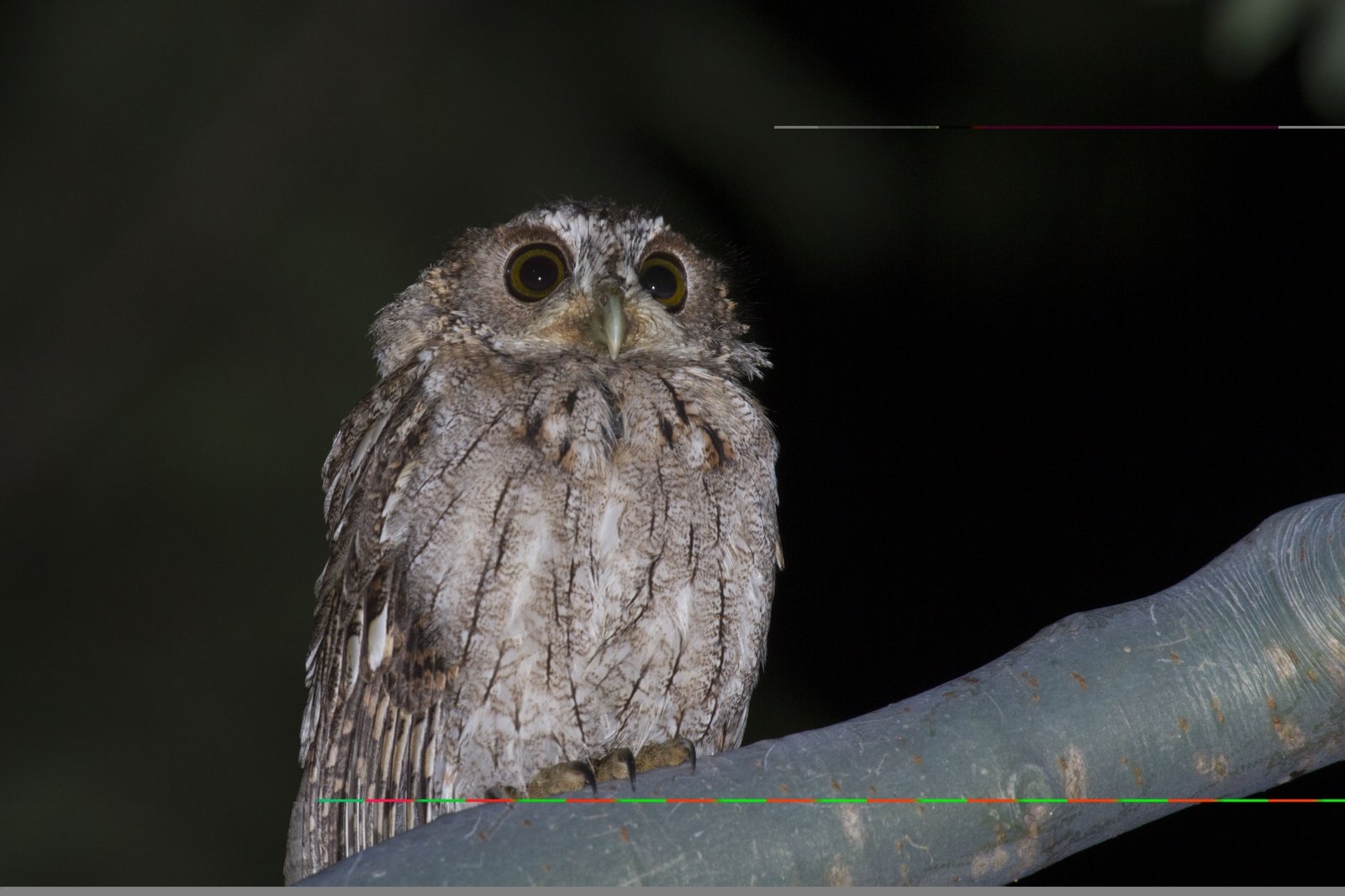
The Balsas Screech Owl is a large screech owl found only in southwestern Mexico, in the drainage of the Río Balsas and on the adjacent Pacific slopes. It lives in dry deciduous forest and thorn scrub and is active only at night. It was formerly treated as a subspecies of the Western Screech Owl; it differs from the other screech owls of the guide area in its dark eyes.
Voice
The male's song is a fairly loud series of gruff notes accelerating into a trill, with the rhythm of a bouncing ball coming to rest; it sounds lower and rougher than the song of the Western Screech Owl. Both sexes also give series of gruff, whinnying trills.
Recording: David Ruíz Domínguez — CC BY-NC-SA 4.0 · shortened to the first 60 s, mono · xeno-canto
Identification
24–27 cm, one of the largest screech owls in the guide area, with short ear tufts, dark brown, rarely golden-brown eyes and a greenish bill. The facial disc is grey-brown with a dark rim. Crown and upperparts are grey-brown with blackish-brown streaks and a pinkish wash; the scapulars form a white band and two rows of white spots cross the closed wing. The underparts are paler, with narrow dark streaks and faint barring. Male and female are alike.
Confusion species
The Western Screech Owl Megascops kennicottii lives higher, on the plateau and in oak and pine-oak forest, is smaller and has yellow eyes. The Middle American Screech Owl Megascops guatemalae occurs in the same region but is smaller, has yellow eyes and finely vermiculated underparts and sings a long trill. The Pacific Screech Owl Megascops cooperi lives farther southeast, in Oaxaca and Chiapas, and has yellow eyes. The Whiskered Screech Owl Megascops trichopsis is smaller and lives in montane forest.
Habitat
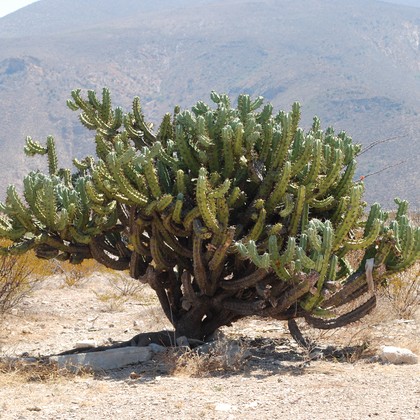
Dry deciduous forest, thorn scrub and semi-open country with scattered trees and shrubs between about 600 and 1500 m, also riparian woodland along dry river valleys and wooded pasture and farmland. It nests in tree cavities, often old woodpecker holes. It hunts at night from a perch for large insects, spiders, scorpions and small vertebrates.
Where the bird is most at home, classified by the vegetation units of Mexico and Central America.



Range and movements
Resident in southwestern Mexico: from southern Jalisco and Colima through the Río Balsas drainage in Michoacán, southern México State, Morelos and southwestern Puebla to central Guerrero. It does not occur outside the guide area.
- Resident
- dark = core range, pale = thinly spread
How and when to look
In the dry forests of the Sierra de Huautla in Morelos and in the hills of Colima the song can be heard after sunset. By day it hides in a cavity or dense foliage; at dusk it sometimes moves to a perch at the edge of a clearing.
Conservation status
Not threatened. The species was listed as Near Threatened until 2014. The dry deciduous forest of the Balsas region is heavily fragmented by agriculture, cattle ranching and logging; a large part of the known population lives in the Sierra de Huautla, which is protected as a biosphere reserve.
Scientific name
Megascops seductus | (Moore, 1941)
Moore described the species in 1941 as Otus vinaceus seductus; because it was later moved to another genus, the author and year stand in brackets. The genus Megascops was introduced in 1848 by Kaup. Megascops combines the Greek megas 'great' with Scops, the old genus name of the scops owls. seductus is Latin for 'remote, distant', from seducere 'to separate', after the far extension of the range into southern Mexico. The specimen the first description was based on came from southwestern Mexico (exact type locality not found).