All species › Pelicans, herons and ibises › Herons, egrets and bitterns › Bare-throated Tiger Heron
Position in the tree Birds Aves › Birds with a flexible palate Neognathae › All other modern birds Neoaves › Birds of the elements Elementaves › Tropicbirds and waterbirds Phaethoquornithes › Core waterbirds Aequornithes
Bare-throated Tiger Heron | Tigrisoma mexicanum
Mexicaanse tijgerroerdomp | Garza tigre mexicana
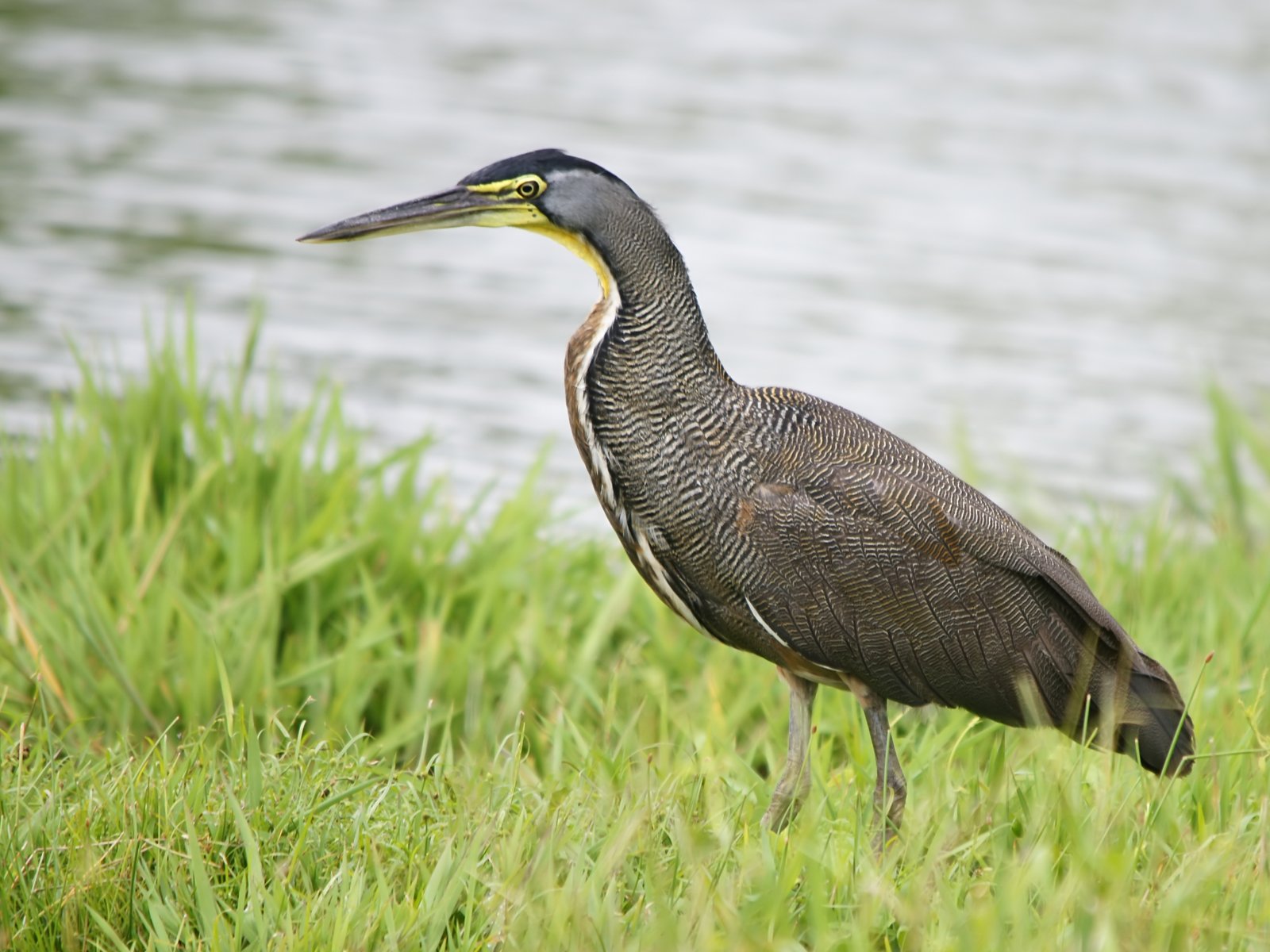
The Bare-throated Tiger Heron is a large, stocky heron with finely barred plumage and a bare, yellow throat. It is the most widespread tiger heron in the guide area and is resident in marshes, riverbanks and mangroves in the lowlands, from north-western and north-eastern Mexico to Panama. It often stands motionless for long periods at the water's edge and is then easy to see in open places.
Voice
A deep, hoarse, growling or barking rrok or hrrah, often in an accelerating series, mainly at dusk and at night. When disturbed a rasping kwok.
Recording: Manuel Grosselet — CC BY-NC-SA 4.0 · converted to mono · xeno-canto
Identification
71–81 cm. A bulky heron with a thick neck, a long, straight, dagger-shaped bill and fairly short, olive-green legs. Adults have a black crown, a grey head and a bare, yellow to orange-yellow throat. The neck, breast and upperparts are densely and finely barred black and buff, with a white central stripe down the foreneck; the belly is cinnamon and the flanks are barred grey and black. Juveniles are more coarsely and boldly barred, rufous and black, with a pale, streaked foreneck. The sexes are alike. It flies with deep, slow beats and the neck drawn in.
Confusion species
Adult Rufescent Tiger Heron Tigrisoma lineatum has a plain rufous-chestnut head and neck and a feathered throat; juveniles of the two species are very similar, but those of Rufescent Tiger Heron have a feathered throat. Fasciated Tiger Heron Tigrisoma fasciatum is smaller and darker, with a shorter, thicker bill and a feathered throat, and lives along fast mountain rivers. American Bittern Botaurus lentiginosus and Pinnated Bittern Botaurus pinnatus are streaked lengthwise rather than barred.
Habitat
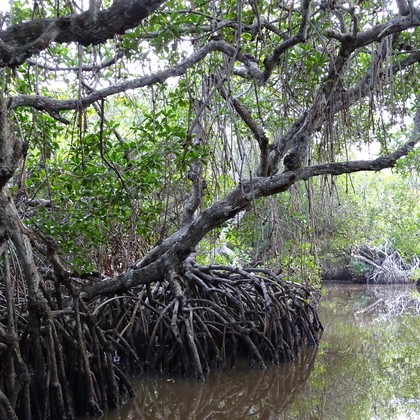
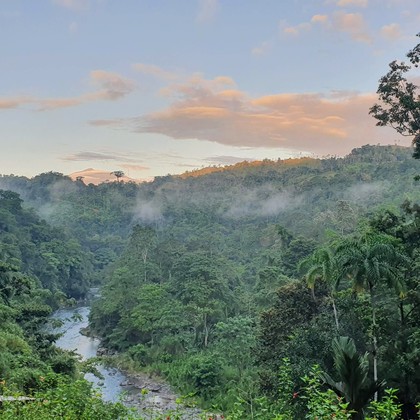
Fresh and brackish marshes, the banks of rivers and lagoons, mangroves, floodplain forest and rice fields, mainly in the lowlands up to about 1000 m, locally higher. It hunts standing still or walking slowly, for fish, frogs, crabs and crayfish. The nest is a platform of sticks high in a tree, often over water and usually apart from other herons.
Where the bird is most at home, classified by the vegetation units of Mexico and Central America.




Range and movements
In Mexico on the Pacific side from southern Sonora south to Chiapas, and on the Gulf side from southern Tamaulipas through Veracruz and Tabasco to the Yucatán Peninsula. Further in the lowlands of all of Central America, from Belize and Guatemala to Panama, on both coasts. Outside the guide area only in the extreme north-west of Colombia.
- Resident
- dark = core range, pale = thinly spread
How and when to look
Good places are the mangroves around San Blas in Nayarit, the marshes of Tabasco, Crooked Tree in Belize and Palo Verde, Caño Negro and the rivers of Guanacaste in Costa Rica. On boat trips along riverbanks the species can often be seen at close range.
Conservation status
Not threatened. In the guide area locally common, but it has declined in many places through drainage of marshes, mangrove clearance and hunting.
Scientific name
Tigrisoma mexicanum | Swainson, 1834
Swainson described the species in 1834 and placed it straight away in the genus where it still stands. The genus Tigrisoma was introduced in 1827 by Swainson. Tigrisoma is Greek, from tigris 'tiger' and sōma 'body', after the barred plumage. mexicanum is Latin for 'Mexican', after the country of the type locality. The specimen the first description was based on came from Real del Monte, Hidalgo, Mexico.