All species › Pelicans, herons and ibises › Herons, egrets and bitterns › Rufescent Tiger Heron
Position in the tree Birds Aves › Birds with a flexible palate Neognathae › All other modern birds Neoaves › Birds of the elements Elementaves › Tropicbirds and waterbirds Phaethoquornithes › Core waterbirds Aequornithes
Rufescent Tiger Heron | Tigrisoma lineatum
Rosse tijgerroerdomp | Garza tigre colorada
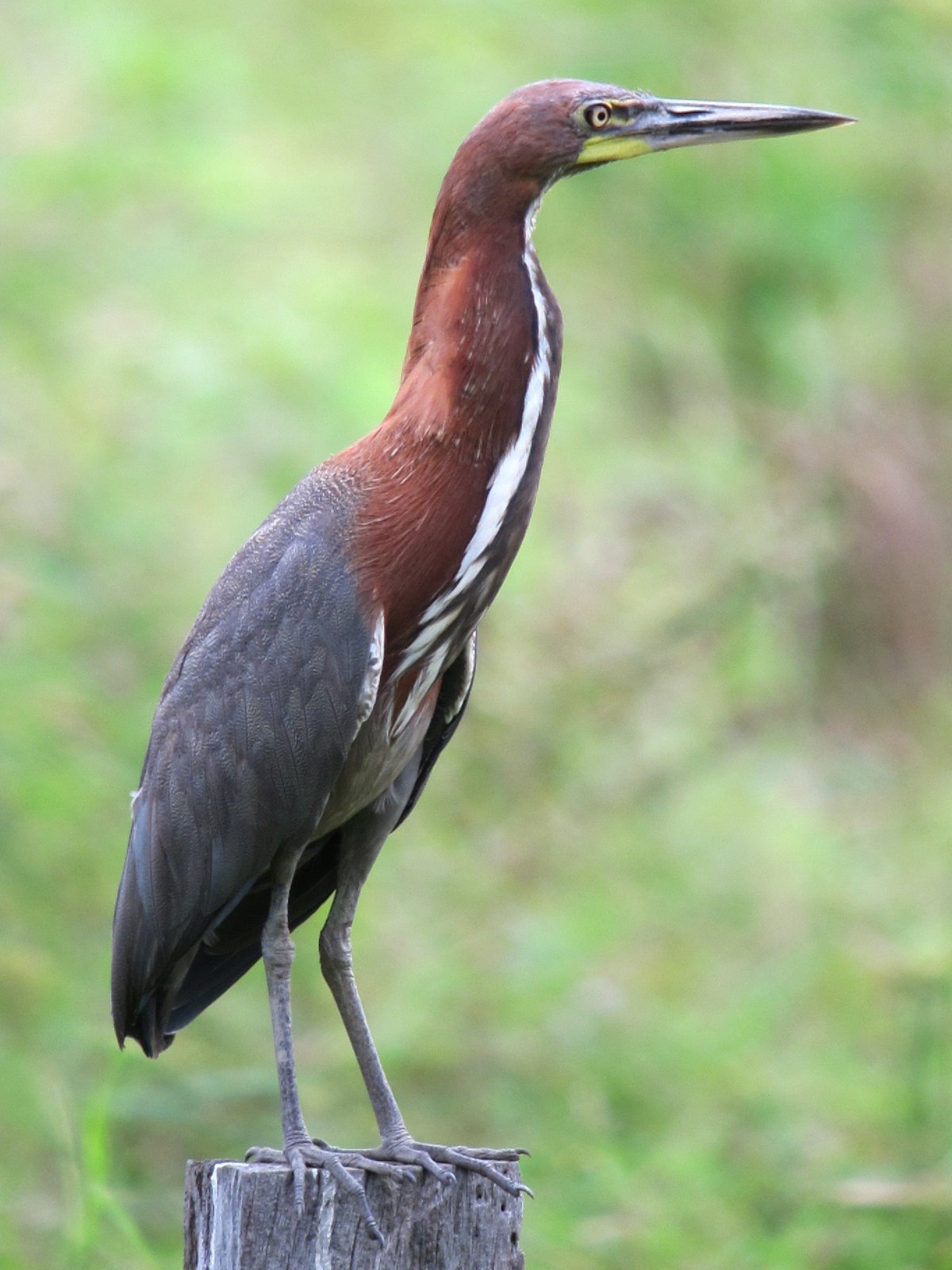
The Rufescent Tiger Heron is a medium-sized tiger heron, with a rufous-chestnut head and neck in adults. It reaches its northern limit in the guide area: it is a rather scarce resident of wooded swamps and creeks in the lowlands from Honduras to Panama. It is shyer than Bare-throated Tiger Heron and keeps more to the shade of the forest.
Voice
A deep, low, booming hoo-hoo-hoo and a series of growling sounds, mainly at night and at dusk. When disturbed a hoarse kwok.
Recording: Jacob Wijpkema — CC BY-NC-SA 4.0 · shortened to the first 60 s, mono · xeno-canto
Identification
66–76 cm. A stocky heron with a fairly long, straight bill and short, greenish legs. Adults have a plain, deep rufous-chestnut head, neck and breast, with a white, black-edged central stripe down the foreneck; the throat is feathered. The mantle and wings are dark grey-brown and finely vermiculated, the belly is buffy brown with grey flanks. Juveniles look very different: coarsely and boldly barred buff and black, with a white belly. The sexes are alike. Immature plumages last for several years.
Confusion species
Young Bare-throated Tiger Herons Tigrisoma mexicanum are very similar to young Rufescent, but have a bare, yellow throat. Fasciated Tiger Heron Tigrisoma fasciatum has a shorter, thicker bill and is more finely barred as a juvenile; it lives along fast mountain rivers. Agami Heron Agamia agami also has a chestnut neck, but has a green-glossed back, a much longer and thinner bill and a chestnut belly.
Habitat
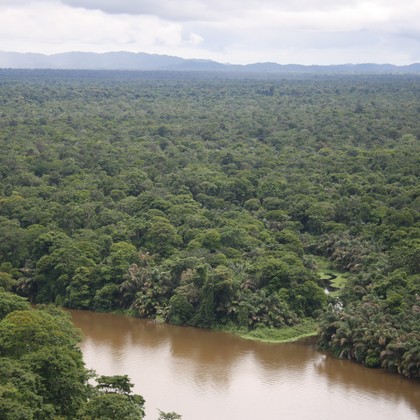
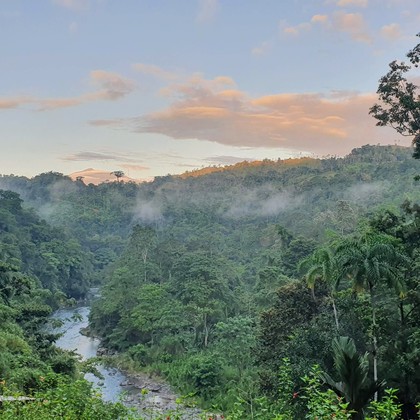
Wooded swamps, palm swamps, floodplain forest, creeks and the banks of slow-flowing rivers in the lowlands, locally also mangroves and open marshes. It hunts patiently from the bank or in shallow water for fish, frogs and crustaceans. The nest is a platform of sticks in a tree or shrub, often over water.
Where the bird is most at home, classified by the vegetation units of Mexico and Central America.



Range and movements
In the guide area in the lowlands on the Caribbean side of Honduras and Nicaragua, in northern and eastern Costa Rica and scattered across Panama, especially in the east. Outside the guide area through much of South America, to northern Argentina.
- Resident
- dark = core range, pale = thinly spread
How and when to look
The best chance is in eastern Panama, such as along the Chagres and in the swamps of Darién, and in Costa Rica at Caño Negro. An adult in the shade of the bank is first noticed by its rufous-chestnut neck.
Conservation status
Not threatened. Widespread globally. In the guide area scarce and local, and sensitive to clearance of floodplain forest and drainage.
Scientific name
Tigrisoma lineatum | (Boddaert, 1783)
Boddaert described the species in 1783 as Ardea lineata; because it was later moved to another genus, the author and year stand in brackets. The genus Tigrisoma was introduced in 1827 by Swainson. Tigrisoma is Greek, from tigris 'tiger' and sōma 'body', after the barred plumage. lineatum is Latin for 'lined, striped', after the fine barring of the plumage. The specimen the first description was based on came from Cayenne, French Guiana.