All species › Birds of prey › Kites, Old World vultures, eagles and hawks › Black-collared Hawk
Position in the tree Birds Aves › Birds with a flexible palate Neognathae › All other modern birds Neoaves › Landbirds Telluraves › Raptors, owls, kingfishers and woodpeckers Afroaves › Hawks and owls Hieraves
Black-collared Hawk | Busarellus nigricollis
Moerasbuizerd | Aguililla canela
The Black-collared Hawk is a rufous raptor with a pale head, a black collar, broad wings and a short tail that feeds almost entirely on fish. It perches on a branch above shallow water and grabs fish just below the surface; the undersides of its toes are covered with spiny scales that help it hold slippery prey. In the guide area it is a resident of marshes and rivers from southeastern Mexico to Panama.

Voice
A hoarse, grating hraaa and a whistled, descending wee-oo, mainly around the nest.
Recording: Jacob Wijpkema — CC BY-NC-SA 4.0 · shortened to the first 60 s, mono · xeno-canto
Identification
45–52 cm, with broad, rounded wings and a short, broad tail. Adults are cinnamon-rufous, with a creamy white head, a black crescent on the upper breast and black primaries. The tail is black with fine rufous bars at the base. The eye is dark and the legs are greyish white. In flight the rufous body and forewing contrast with the black primaries and short black tail. Young birds are duller brown with dark streaks, have a dirty white head and already show a dark breast band.
Confusion species
The Savanna Hawk Buteogallus meridionalis is also rufous, but has long legs, a longer black-and-white banded tail, a rufous head and no black breast band, and lives in savanna. Harris's Hawk Parabuteo unicinctus is dark brown with rufous shoulders and thighs and a white tail base.
Habitat
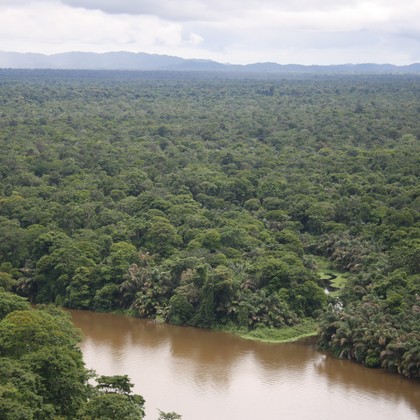
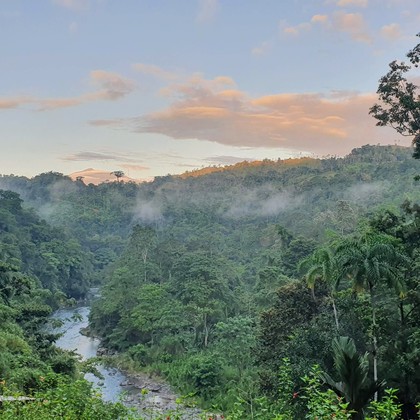
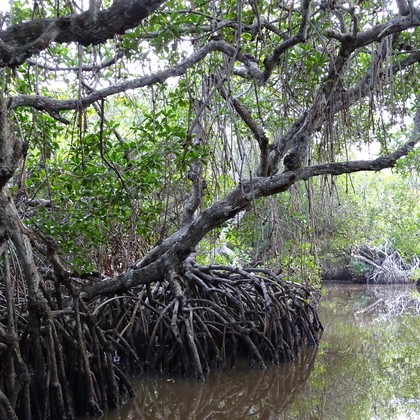
Freshwater marshes, flooded grassland, riverbanks, lagoons and lakes with shallow water, swamp forest and the edges of mangroves; also rice fields and fish ponds. It often perches in the open on a dead branch or post above the water.
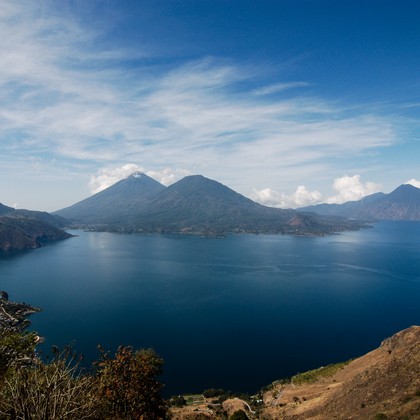
Where the bird is most at home, classified by the vegetation units of Mexico and Central America.



Range and movements
Resident in the lowlands of the Gulf slope of southern Mexico, mainly in southern Veracruz, Tabasco, Campeche, Chiapas and Quintana Roo, and further in Belize, northern and eastern Guatemala, Nicaragua, Costa Rica and Panama; scarce in Honduras and El Salvador. Local on the Pacific slope, for example in Guanacaste in Costa Rica. Outside the guide area in tropical South America to northern Argentina.
- Resident
- dark = core range, pale = thinly spread
How and when to look
In the Pantanos de Centla in Tabasco, along the rivers and lagoons of Belize such as at Crooked Tree, and at Caño Negro and Palo Verde in Costa Rica, where birds perch on branches along the water and can be seen from boats.
Conservation status
Not threatened. Sensitive to the drainage of marshes and to water pollution.
Scientific name
Busarellus nigricollis | (Latham, 1790)
Latham described the species in 1790 as Falco nigricollis; because it was later moved to another genus, the author and year stand in brackets. The genus Busarellus was introduced in 1842 by De Lafresnaye. Busarellus is a diminutive of the French buse 'buzzard' (from Latin buteo): 'little buzzard', after Levaillant's name 'Buserai'. nigricollis is Latin, from niger 'black' and collum 'neck', after the black collar on the upper breast. The specimen the first description was based on came from Cayenne, French Guiana.