All species › Passerines › Shrike-babblers, Erpornis and vireos › Brown-capped Vireo
Position in the tree Birds Aves › Birds with a flexible palate Neognathae › All other modern birds Neoaves › Landbirds Telluraves › Falcons, parrots and passerines Australaves › Falcons and passerines Eufalconimorphae › Parrots and passerines Psittacopasserae
Brown-capped Vireo | Vireo leucophrys
Witbrauwvireo | Vireo gorra parda
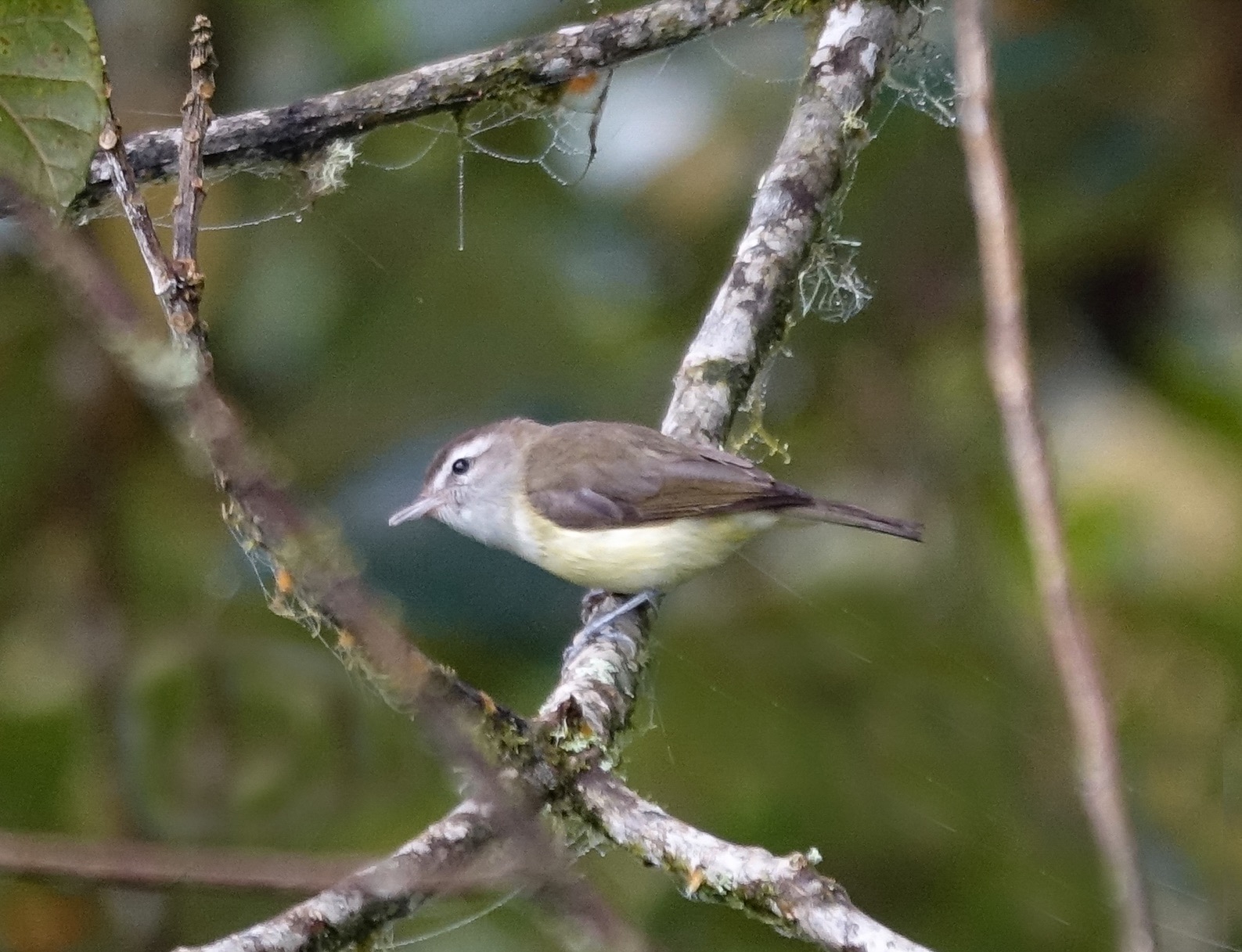
The Brown-capped Vireo is a resident of humid montane forest, with a brown crown, a white supercilium and yellowish underparts. In the guide area it lives in the mountains from eastern and southern Mexico to Panama.
Voice
The song is a fast, rolling warble very similar to that of Warbling Vireo. The call is a nasal, scolding sound.
Recording: Juan Freile — CC BY-NC-SA 4.0 · shortened to the first 60 s, mono · xeno-canto
Identification
12–13 cm. Crown and nape brown, sharply set off against the white supercilium; dark eye-stripe. Back olive-brown to olive-green. Throat whitish, rest of the underparts pale yellow. No wing bars. Eye dark.
Confusion species
Warbling Vireo Vireo gilvus has a grey crown and whitish underparts; both species occur in the mountains of Mexico. Philadelphia Vireo Vireo philadelphicus has a grey crown, dark lores and a yellow throat and is present only in winter.
Habitat
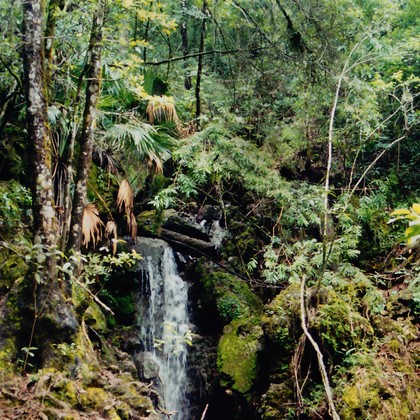
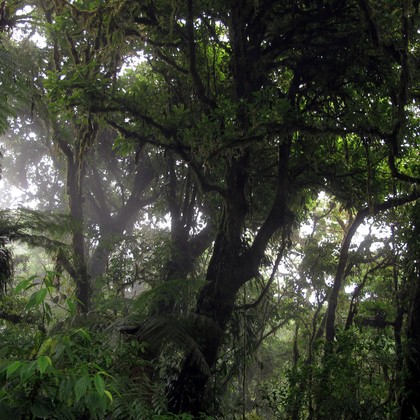
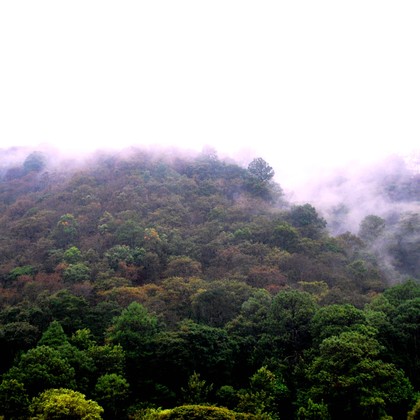
Humid montane and cloud forest, forest edges and clearings with trees, locally lower in foothill forest. It searches the canopy for insects, often in mixed flocks.
Where the bird is most at home, classified by the vegetation units of Mexico and Central America.

Range and movements
In the mountains of eastern and southern Mexico, through the highlands of Guatemala, El Salvador, Honduras and Nicaragua to Costa Rica and Panama. Outside the guide area in the mountains of Venezuela and in the Andes to Bolivia.
- Resident
- dark = core range, pale = thinly spread
How and when to look
Fairly common in the montane forests of Costa Rica and western Panama; in mixed flocks in the canopy, look for the brown crown.
Conservation status
Not threatened. Fairly common in montane forest; disappears where forest is cleared entirely.
Scientific name
Vireo leucophrys | (de Lafresnaye, 1844)
De Lafresnaye described the species in 1844 as Hylophilus leucophrys; because it was later moved to another genus, the author and year stand in brackets. The genus Vireo was introduced in 1808 by Vieillot. Vireo was used by Latin authors for a small, green, migratory bird, probably the Eurasian golden oriole, though the European greenfinch has also been suggested. leucophrys is Greek, from leukos 'white' and ophrus 'eyebrow', after the white supercilium. The specimen the first description was based on came from Colombia (not specified further).