All species › Passerines › Shrike-babblers, Erpornis and vireos › Warbling Vireo
Position in the tree Birds Aves › Birds with a flexible palate Neognathae › All other modern birds Neoaves › Landbirds Telluraves › Falcons, parrots and passerines Australaves › Falcons and passerines Eufalconimorphae › Parrots and passerines Psittacopasserae
Warbling Vireo | Vireo gilvus
Orpheusvireo | Vireo gorjeador
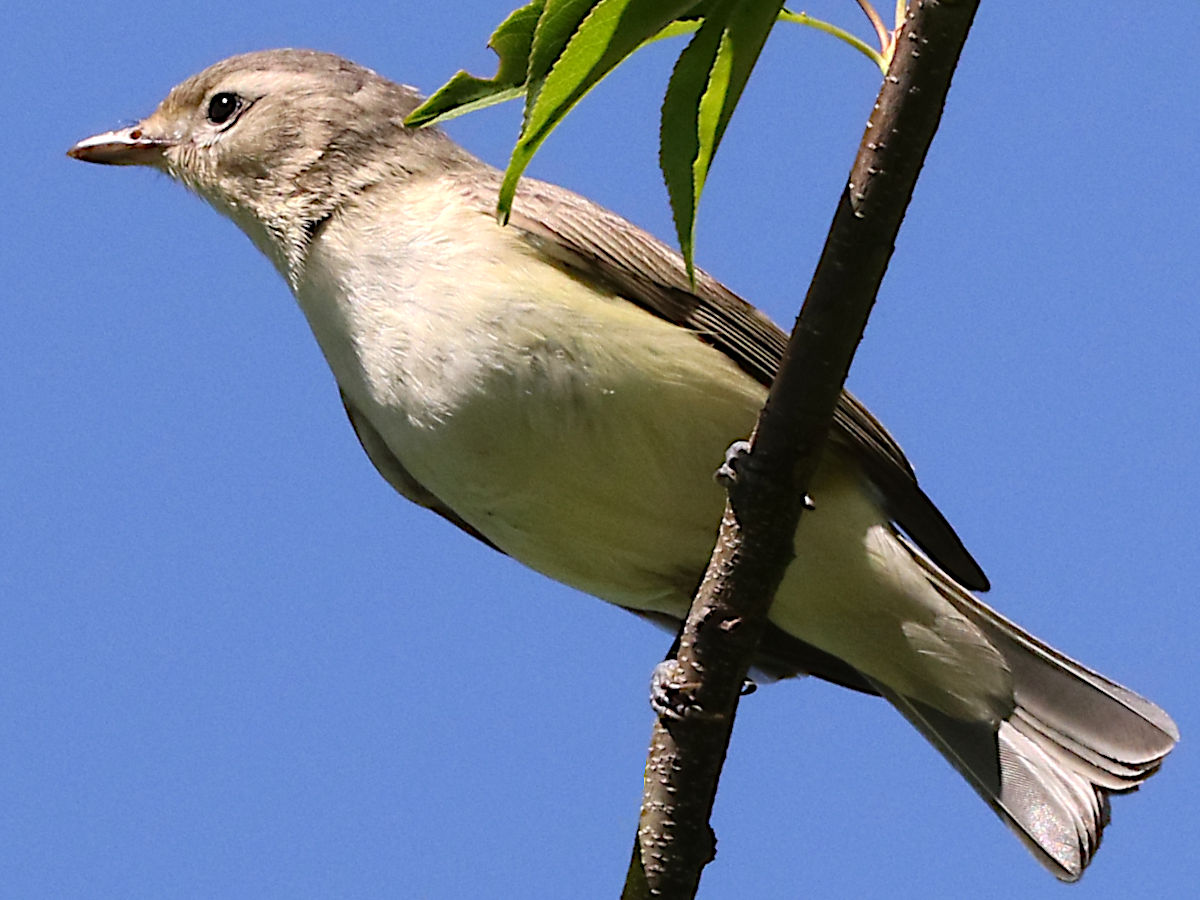
The Warbling Vireo is a plain, greyish-green vireo with a pale supercilium and no wing bars. It breeds in the mountains of northern and central Mexico, and birds from North America winter in Mexico and northern Central America.
Voice
The song is a long, fast, rolling warble without pauses, very different from the short phrases of Red-eyed Vireo. The call is a nasal, mewing sound.
Recording: Scott Crabtree — CC BY-NC-SA 4.0 · shortened to the first 60 s, mono · xeno-canto
Identification
12–14 cm. Upperparts greyish olive-green, crown greyer. Whitish supercilium and pale lores, giving a plain-faced look. Underparts whitish, flanks washed dull yellowish, especially in autumn. No wing bars. Bill fairly short.
Confusion species
Philadelphia Vireo Vireo philadelphicus has a yellow throat and breast and dark lores. Brown-capped Vireo Vireo leucophrys has a brown crown and yellower underparts and is a resident of humid montane forest. Red-eyed Vireo Vireo olivaceus is larger, with a grey crown bordered black above the white supercilium.
Habitat
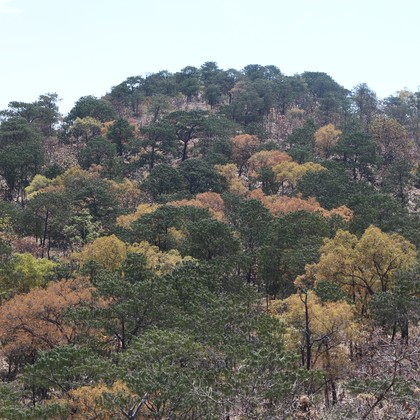
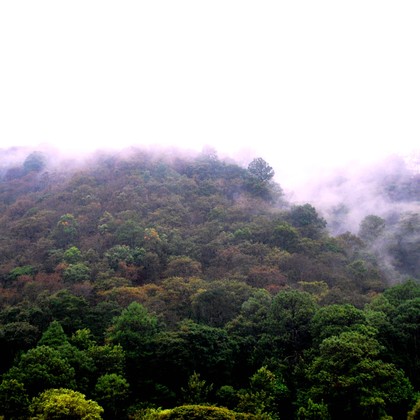
Breeds in open broadleaf, oak and pine-oak woodland and in cottonwood and willow stands along rivers in the mountains. In winter in dry forest, forest edges, secondary forest and trees in gardens and parks, from the lowlands into the mountains.
Where the bird is most at home, classified by the vegetation units of Mexico and Central America.




Range and movements
Breeds across much of North America and in the mountains of northern and central Mexico, locally also in Baja California. In winter from western and southern Mexico to Guatemala, El Salvador and Honduras; farther south scarce to Costa Rica and rare in Panama.
- Resident
- Summer visitor (c. Apr–Sep)
- Winter visitor (c. Oct–Mar)
- Passage (Mar–Apr, Oct–Nov)
- dark = core range, pale = thinly spread
How and when to look
In winter often in mixed flocks in western and southern Mexico and in Guatemala. On the breeding grounds the continuous song gives the bird away while it stays hidden high in the foliage.
Conservation status
Not threatened. Common; in Mexico numerous as a winter visitor and locally as a breeder.
Scientific name
Vireo gilvus | (Vieillot, 1808)
Vieillot described the species in 1808 as Muscicapa gilva; because it was later moved to another genus, the author and year stand in brackets. The genus Vireo was introduced in 1808 by Vieillot. Vireo was used by Latin authors for a small, green, migratory bird, probably the Eurasian golden oriole, though the European greenfinch has also been suggested. gilvus is Latin for 'pale yellow', after the dull, plain plumage. The specimen the first description was based on came from New York State, United States.