All species › Passerines › New World blackbirds, troupials and allies › Brown-headed Cowbird
Position in the tree Birds Aves › Birds with a flexible palate Neognathae › All other modern birds Neoaves › Landbirds Telluraves › Falcons, parrots and passerines Australaves › Falcons and passerines Eufalconimorphae › Parrots and passerines Psittacopasserae
Brown-headed Cowbird | Molothrus ater
Bruinkopkoevogel | Tordo cabeza café
The Brown-headed Cowbird is the cowbird of North America and northern Mexico. It is a brood parasite that has been found in the nests of hundreds of other species. It originally followed the bison herds across the prairie; now it lives mainly among cattle.
Voice
The song is a short, bubbling glug-glug-glee, ending in a high, thin whistle. The female's call is a rapid, dry rattle; the male gives a high, thin whistle in flight.
Recording: Stanislas Wroza — CC BY-NC-SA 4.0 · converted to mono · xeno-canto
Identification
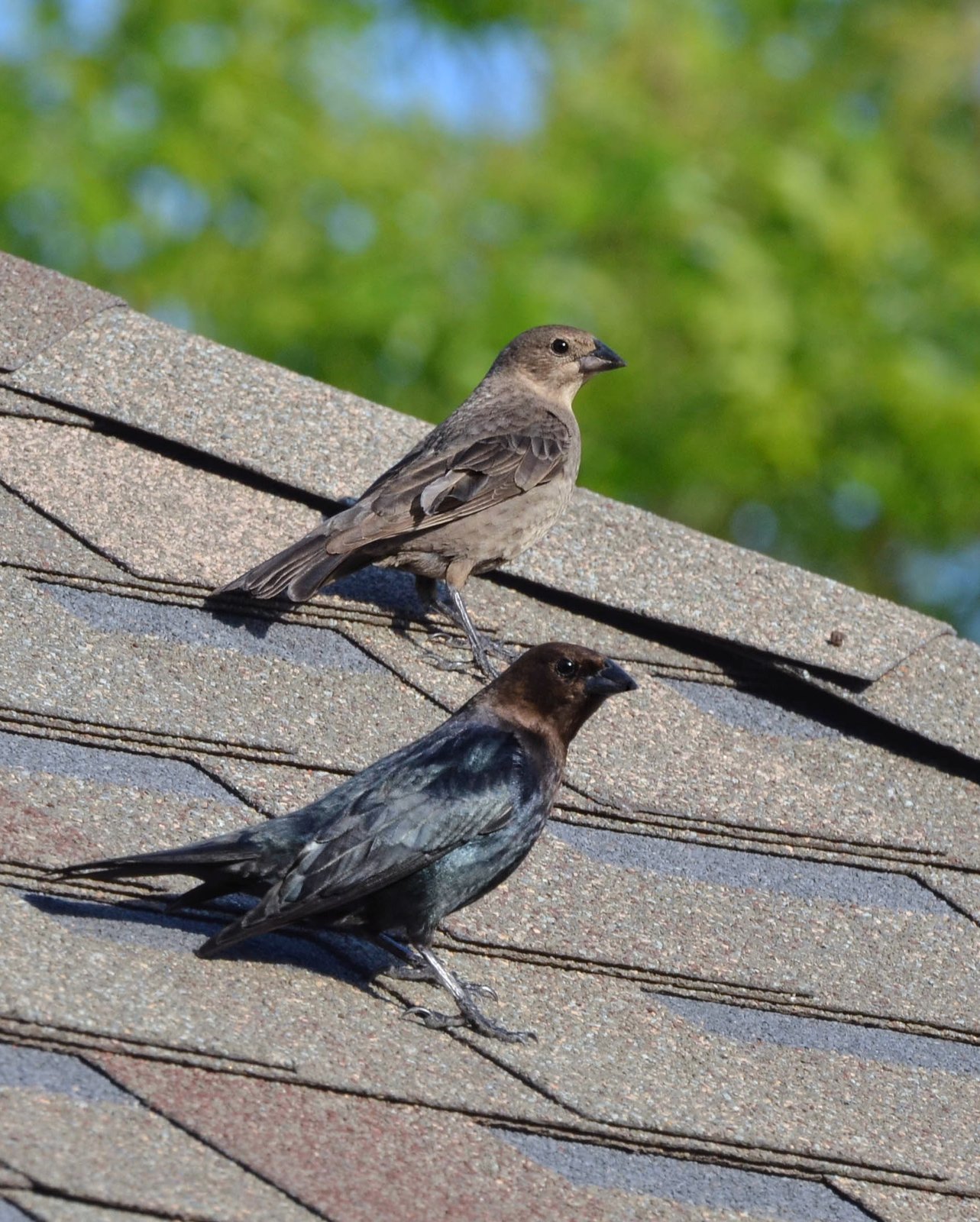
16–21 cm. Male glossy green-black with a dull, chocolate-brown head and neck; eye dark. Bill short, thick and conical, like a finch. Female plain grey-brown with a paler throat and faint streaks below. Juveniles paler, with scaly edges above and clear streaks below. On the ground it often walks with the tail cocked.
Confusion species
Bronzed Cowbird Molothrus aeneus is larger, with a red eye, a thicker neck and a longer bill; the male lacks a brown head. The female Shiny Cowbird Molothrus bonariensis resembles that of Brown-headed Cowbird, but has a slimmer, more pointed bill and a clearer pale supercilium; the two species hardly overlap in the guide area. The female of Brewer's Blackbird Euphagus cyanocephalus is larger, with a longer tail and a slimmer bill.
Habitat
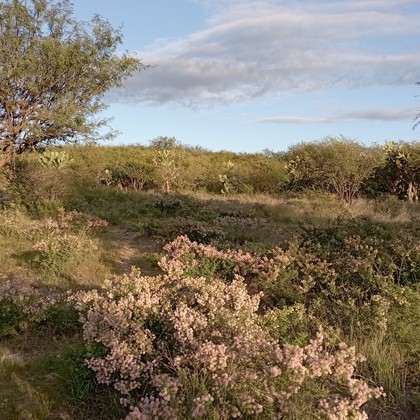
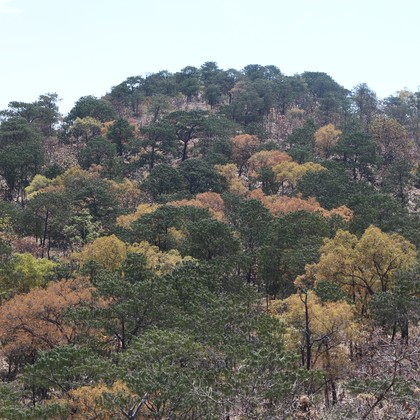
Open country: cattle pastures, fields, villages, parks and edges of open woodland, both in the lowlands and on the plateau; also semi-desert grassland and open oak-pine woodland. It forages on the ground, often among cattle, and eats seeds and insects. Outside the breeding season it forms large flocks with other blackbirds.
Where the bird is most at home, classified by the vegetation units of Mexico and Central America.


Range and movements
Breeds from southern Canada into Mexico. In the guide area resident in Baja California, in northern Mexico and on the central plateau, south to about Guerrero and Oaxaca. In winter many migrants join the birds in northern Mexico and it also appears further south. Further south a vagrant, with a few records in Guatemala, Belize, Costa Rica and Panama.
- Resident
- dark = core range, pale = thinly spread
How and when to look
Easiest to find in pastures with grazing cattle: the brown-headed males stand out among the livestock on the ground. In winter it pays to check blackbird flocks at feeding sites and cattle pens.
Conservation status
Not threatened (LC). Very numerous. Forest clearance and the spread of pastures have allowed a great expansion, and it is a problem for several rare songbirds in North America.
Scientific name
Molothrus ater | (Boddaert, 1783)
Boddaert described the species in 1783 as Oriolus ater; because it was later moved to another genus, the author and year stand in brackets. The genus Molothrus was introduced in 1832 by Swainson. Molothrus is Greek, from mōlos 'struggle' and thrōskō 'to impregnate', perhaps after the brood parasitism or the males' courtship contests. ater is Latin for 'dull black', after the male's black plumage. The specimen the first description was based on came from Carolina (USA).