All species › Birds of prey › Kites, Old World vultures, eagles and hawks › Common Black Hawk
Position in the tree Birds Aves › Birds with a flexible palate Neognathae › All other modern birds Neoaves › Landbirds Telluraves › Raptors, owls, kingfishers and woodpeckers Afroaves › Hawks and owls Hieraves
Common Black Hawk | Buteogallus anthracinus
Zwarte buizerd | Aguililla-negra menor
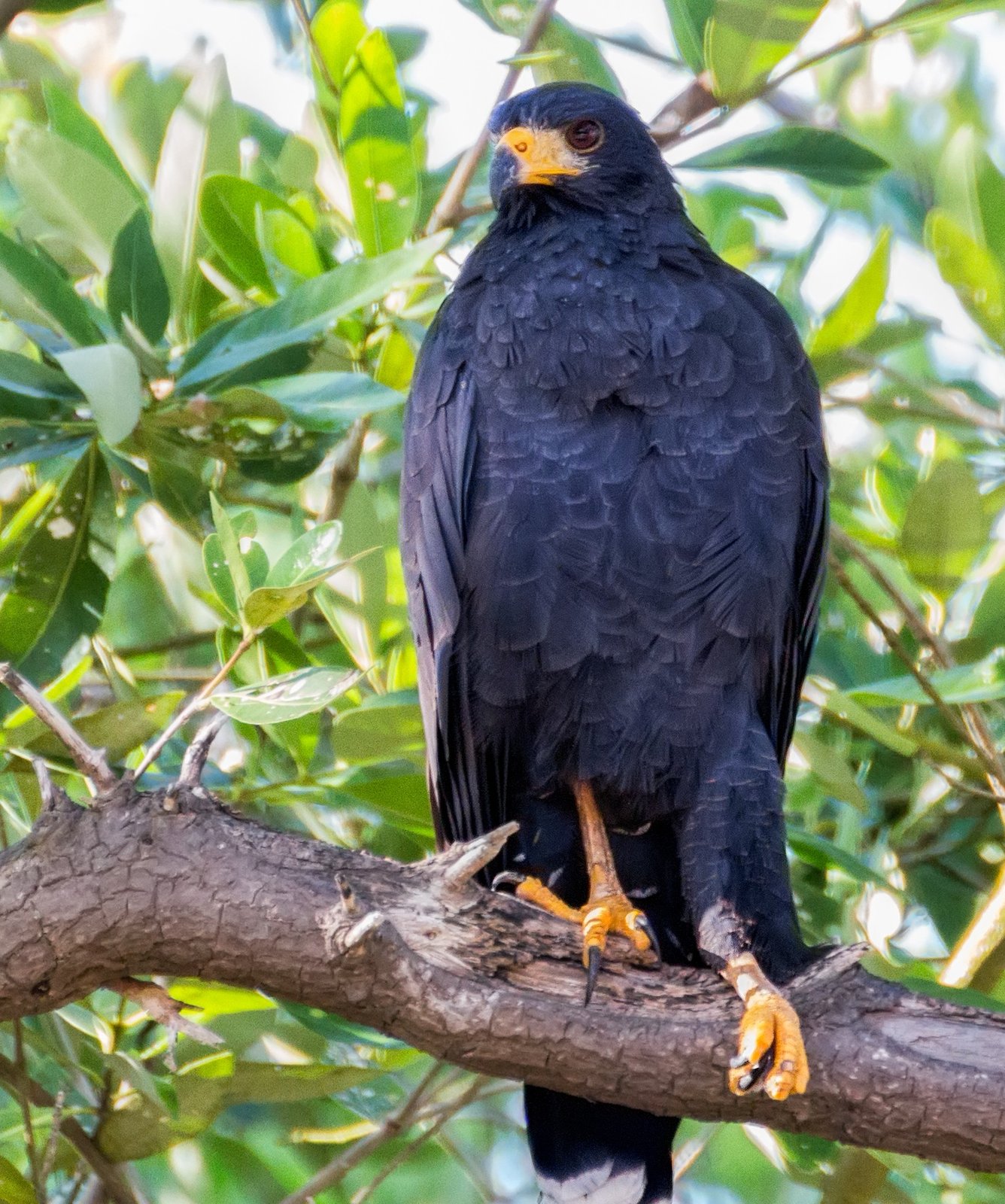
The Common Black Hawk is a stocky, sooty-black hawk with very broad wings, a short tail with one broad white band and yellow cere and legs. It lives near water, from mangroves, beaches and lagoons on the coast to rivers with gallery forest inland, and feeds mainly on crabs, fish, frogs and reptiles. In the guide area it is a widespread resident from Mexico to Panama.
Voice
A high, shrill, accelerating series of whistles, pee-pee-pee-peeie-peeie, often in flight and around the nest.
Recording: Gean Carlo Valdés — CC0 · converted to mono · xeno-canto
Identification
43–56 cm, stocky, with very broad, rounded wings and a short tail. Adults are sooty black to dark slate-grey, with yellow to orange-yellow cere, lores and legs. The tail is black with one broad white band in the middle and a narrow white tip. In flight the wings are black from below, with a small pale patch at the base of the outer primaries. Young birds are dark brown above and cream to buff with heavy dark streaks below, with a pale head with a dark eye-stripe and malar stripe, and a tail with five to seven narrow dark bands. Along the Pacific coast from El Salvador to Panama lives the somewhat smaller and browner mangrove form (subtilis), formerly regarded as a separate species. Male and female are alike; the female is larger.
Confusion species
The Great Black Hawk Buteogallus urubitinga is larger, with longer legs, a longer tail with a white base and a white rump, and lacks the pale patch in the primaries. The Solitary Eagle Buteogallus solitarius is much larger, slate-grey, with even broader wings and a very short tail, and lives in the mountains. The Zone-tailed Hawk Buteo albonotatus is slimmer, has two-toned underwings, several tail bands and glides with its wings in a V like a Turkey Vulture. The Black Vulture Coragyps atratus has a bare grey head and a short tail without a white band.
Habitat
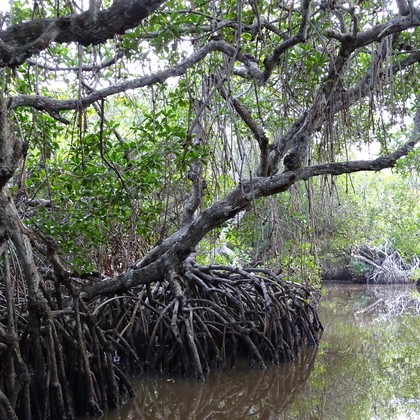
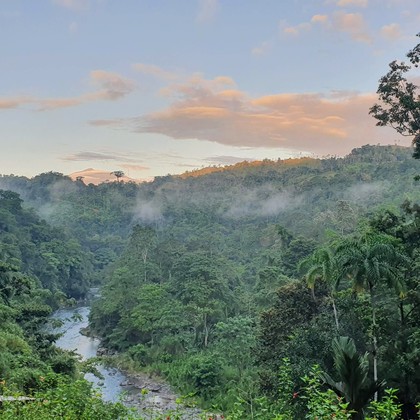
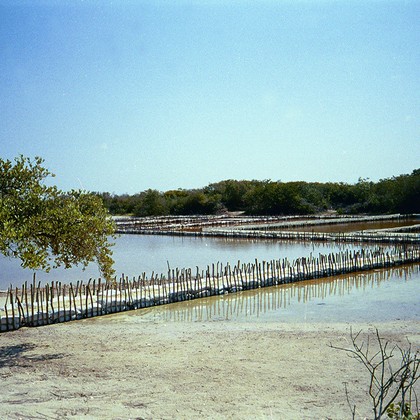
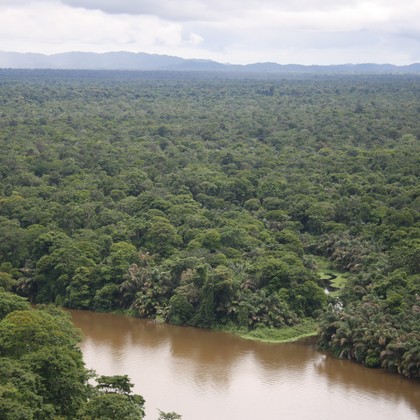
Mangroves, beaches, lagoons and estuaries on the coast; inland rivers, streams and marshes with gallery and riparian forest, in dry country along watercourses up to about 1200 m. It often perches on a low branch or post by the water and hunts from there, or walks over mudflats and through shallow water in search of crabs.
Where the bird is most at home, classified by the vegetation units of Mexico and Central America.



Range and movements
Resident in much of Mexico, on the Pacific slope from Sonora and Chihuahua and on the Gulf slope from Tamaulipas, south through Oaxaca, Chiapas and the Yucatán Peninsula, and on through the whole of Central America to Panama. In Central America mainly on the coast and in the lowlands, on the Pacific side mostly in mangroves. Birds from the southwestern United States winter in Mexico. Outside the guide area in the southwestern United States, on a few Caribbean islands, in northern South America and along the Pacific coast to northwestern Peru.
- Resident
- dark = core range, pale = thinly spread
How and when to look
In mangroves and at river mouths on the Pacific coast of Costa Rica and Panama it often perches conspicuously on a branch or post by the water, for example at the mouth of the Tárcoles River in Costa Rica and at San Blas in Nayarit.
Conservation status
Not threatened. Declining locally through the clearing of mangroves and the loss of riparian forest, but widespread in the guide area.
Scientific name
Buteogallus anthracinus | (Deppe, 1830)
Deppe described the species in 1830 as Falco anthracinus; because it was later moved to another genus, the author and year stand in brackets. The genus Buteogallus was introduced in 1830 by Lesson. Buteogallus is Latin, from buteo 'buzzard' and gallus 'cock, fowl'; the reason for the second part is unclear. anthracinus is Latin for 'coal-black', from Greek anthrax 'coal', after the black plumage. The specimen the first description was based on came from Veracruz, Mexico.