All species › Trogons › Trogons › Elegant Trogon
Position in the tree Birds Aves › Birds with a flexible palate Neognathae › All other modern birds Neoaves › Landbirds Telluraves › Raptors, owls, kingfishers and woodpeckers Afroaves › Mousebirds, rollers and woodpeckers Coraciimorphae › Trogons and cavity nesters Cavitaves
Elegant Trogon | Trogon elegans
Koperstaarttrogon | Trogón elegante
The Elegant Trogon is a red-bellied trogon of dry forest and gallery forest on the Pacific side and in the dry interior valleys of Central America, from Guatemala to north-western Costa Rica. It has only recently been recognised as a separate species from the Coppery-tailed Trogon Trogon ambiguus of Mexico and the south-western United States. Its Dutch name refers to the coppery sheen on the upperside of the tail.

Voice
A series of four to ten low, hoarse, croaking kowk notes, somewhat reminiscent of a turkey or a frog. Also a rasping cackle.
Recording: Bud Lensing — CC BY-NC-SA 4.0 · converted to mono · xeno-canto
Identification
28–30 cm. The male is green on the head, breast and back, with a coppery sheen on the upperside of the tail, a blackish face and throat, an orange-red eye-ring, a yellow bill and a white band between the green breast and the red belly. The underside of the tail is finely vermiculated grey and white with broad white tips. The female is grey-brown on the head, breast and back, with a white patch behind the eye, a white breast band and a whitish belly that becomes pink to red towards the undertail coverts.
Confusion species
Coppery-tailed Trogon Trogon ambiguus is very similar and in the field can be identified almost only by range; it lives in Mexico and the two species do not overlap. Collared Trogon Trogon collaris lacks the coppery sheen on the tail, has a more clearly black-and-white barred undertail and lives in more humid forest. Mountain Trogon Trogon mexicanus has an almost black undertail with three broad white bands and lives in montane forest.
Habitat
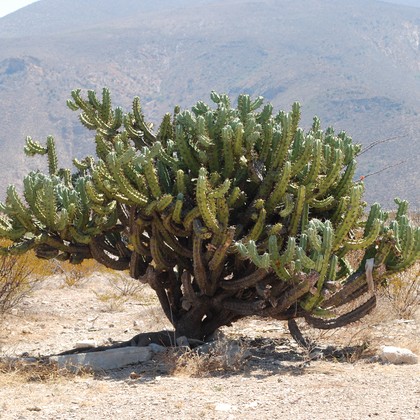
Tropical dry forest, thorn forest, gallery forest and riparian forest in dry regions, from sea level to about 1200 m; also semi-open country with scattered trees. It perches quietly in the middle tree layer and eats large insects and fruit. It nests in a tree cavity, often an old woodpecker hole.
Where the bird is most at home, classified by the vegetation units of Mexico and Central America.



Range and movements
Dry interior valleys of Guatemala, such as the Motagua valley, and of Honduras, and the Pacific side of El Salvador, Honduras and Nicaragua to north-western Costa Rica (Guanacaste and northern Puntarenas). It does not occur elsewhere in the guide area or beyond; in Mexico it is replaced by the Coppery-tailed Trogon.
- Resident
- dark = core range, pale = thinly spread
How and when to look
Common in Santa Rosa National Park and at Palo Verde in Guanacaste, Costa Rica. In the dry season, when many trees are bare, it is easier to see than in the rainy season.
Conservation status
Not threatened. Most of the Pacific dry forest has been cleared, but the species also occurs in gallery forest, secondary forest and semi-open country with trees.
Scientific name
Trogon elegans | Gould, 1834
Gould described the species in 1834 and placed it straight away in the genus where it still stands. The genus Trogon was introduced in 1760 by Brisson. Trogon is Greek, from trōgōn 'gnawing, fruit-eating'. elegans is Latin for 'elegant', after the fine plumage. The specimen the first description was based on came from Guatemala.