All species › Trogons › Trogons
Trogons | Trogonidae
Trogons | Trogones
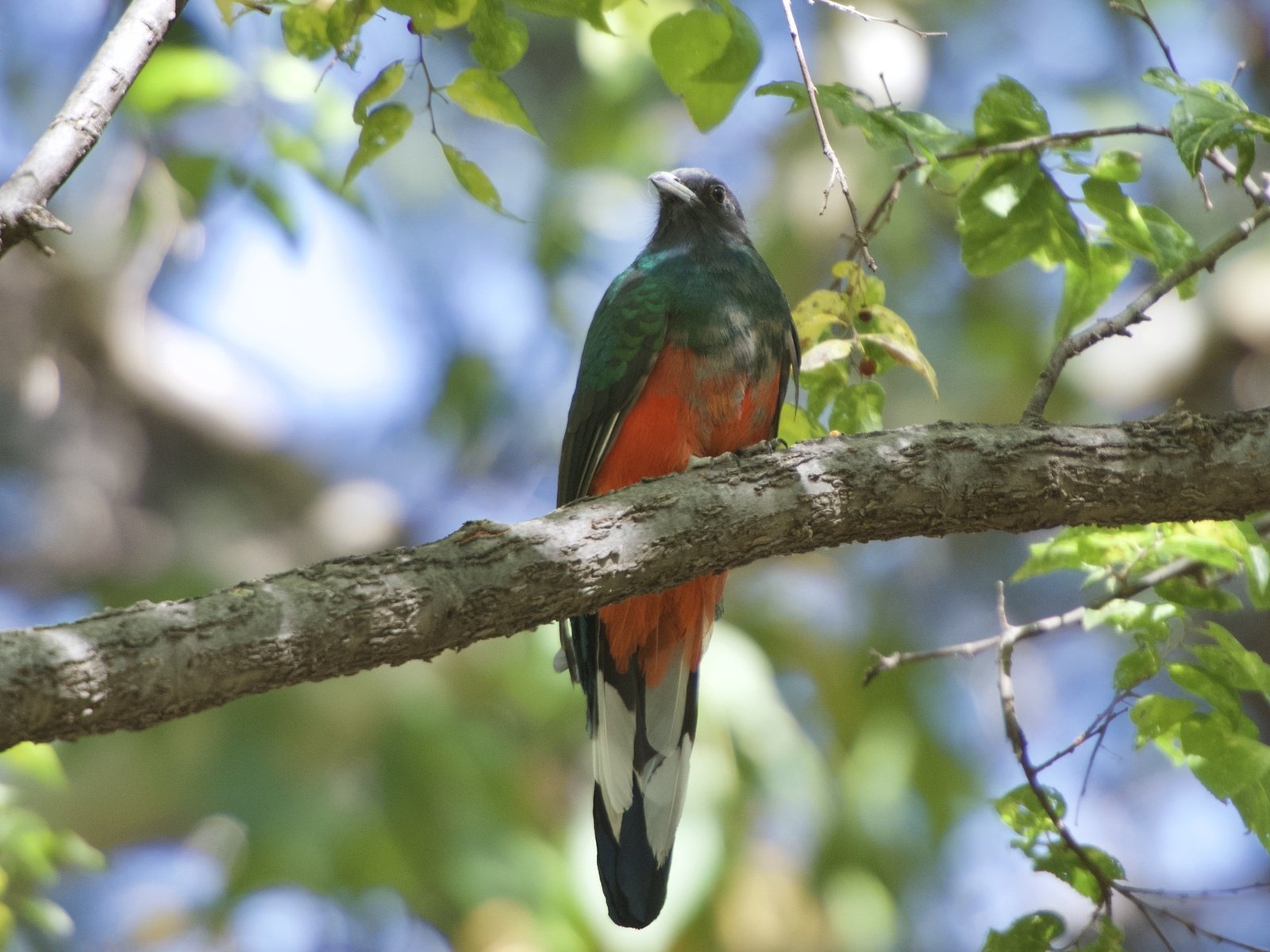
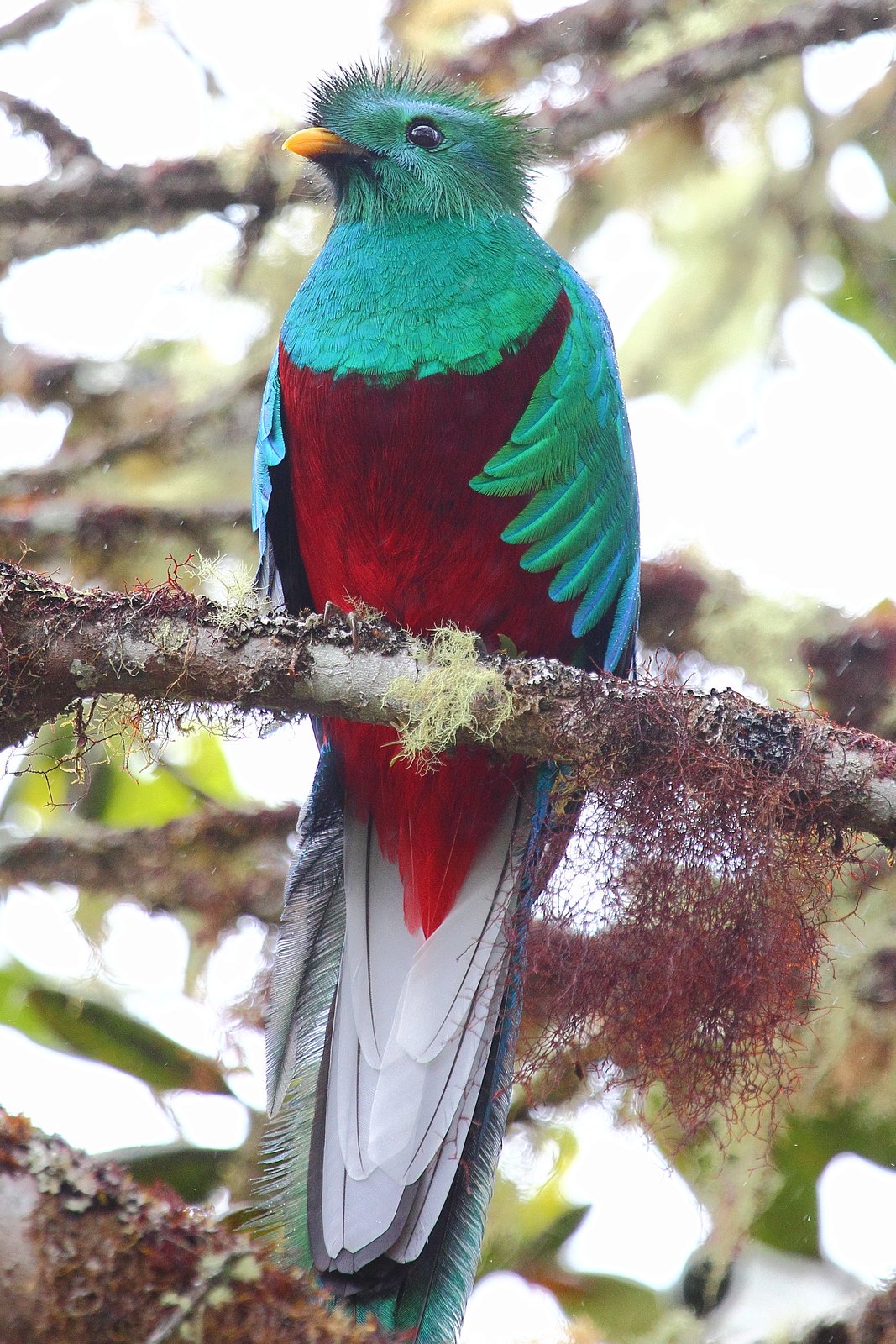
Mexico and Central America are among the richest regions for the family, with fifteen species in three genera: the trogons, the quetzals and the Eared Quetzal of the mountain forests of western Mexico. They live in almost every forest type, from dry deciduous forest and mangrove to cloud forest. The body is compact, the head large and the neck short, and the bird sits upright and almost motionless for long periods on a branch in the mid-storey, turning only its head; often it is the series of hollow or barking calls that first betrays its presence. Insects and fruit are plucked from leaf or twig in a short fluttering sally. In the males head, breast and back are metallic green or blue-violet and the belly red or yellow; the sheen comes from the feather structure rather than pigment. The pattern on the underside of the tail differs between species and is a key identification feature. The male Resplendent Quetzal carries greatly elongated upper tail coverts that hang far beyond the tail; to the Maya and Aztecs these feathers were sacred. The nest is a cavity gnawed out in rotten wood, an arboreal termite nest or a wasp nest, with two or three unmarked eggs.
Native species 15 species
Species that occur here by nature: breeding birds, winter visitors and passage migrants. They are arranged by genus, in the sequence of the list.
Euptilotis 1 species
Pharomachrus 1 species
Trogon 13 species
-

Lattice-tailed Trogon
Trogon clathratus Foothill (submontane) forest
 Lowland rainforest
 Costa Rica-Panama highland forest
-

Slaty-tailed Trogon
Trogon massena- Lowland rainforest
- Foothill (submontane) forest
 Chocó-Darién rainforest
 Secondary forest and forest edge
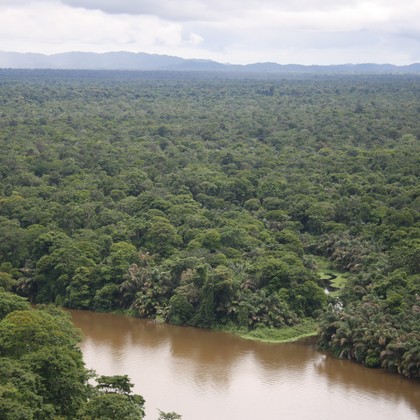 Swamp forest and palm swamp
 Floodplain and gallery forest
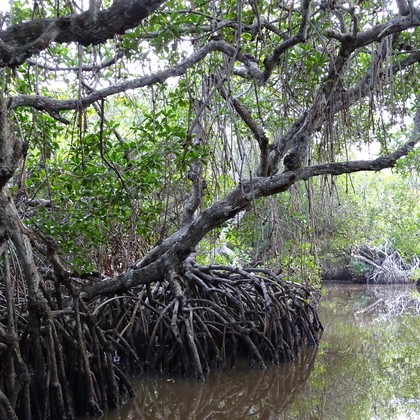 Mangrove
-
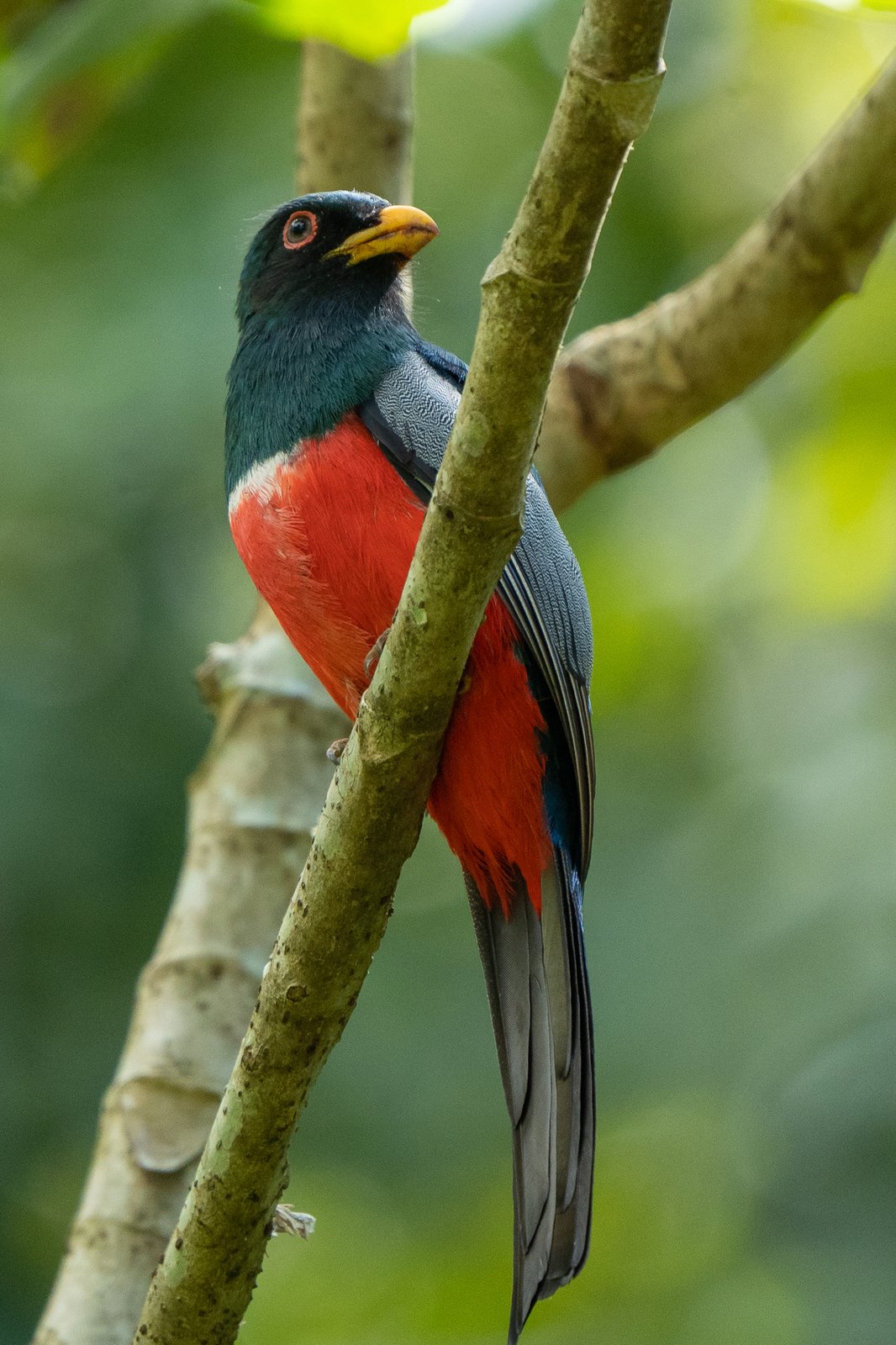
Black-tailed Trogon
Trogon melanurus- Lowland rainforest
- Chocó-Darién rainforest
- Secondary forest and forest edge
- Floodplain and gallery forest
-

Black-headed Trogon
Trogon melanocephalus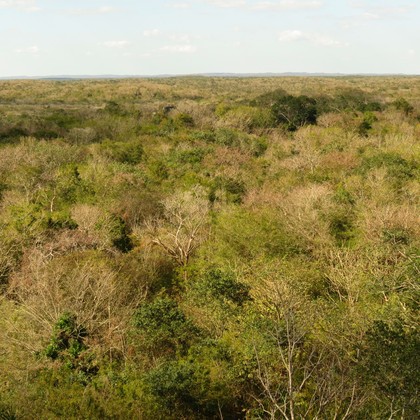 Yucatán and Caribbean-interior seasonal forest
- Lowland rainforest
- Secondary forest and forest edge
 Pacific tropical dry forest
- Floodplain and gallery forest
- Mangrove
 Shade coffee, cacao and agroforestry
-
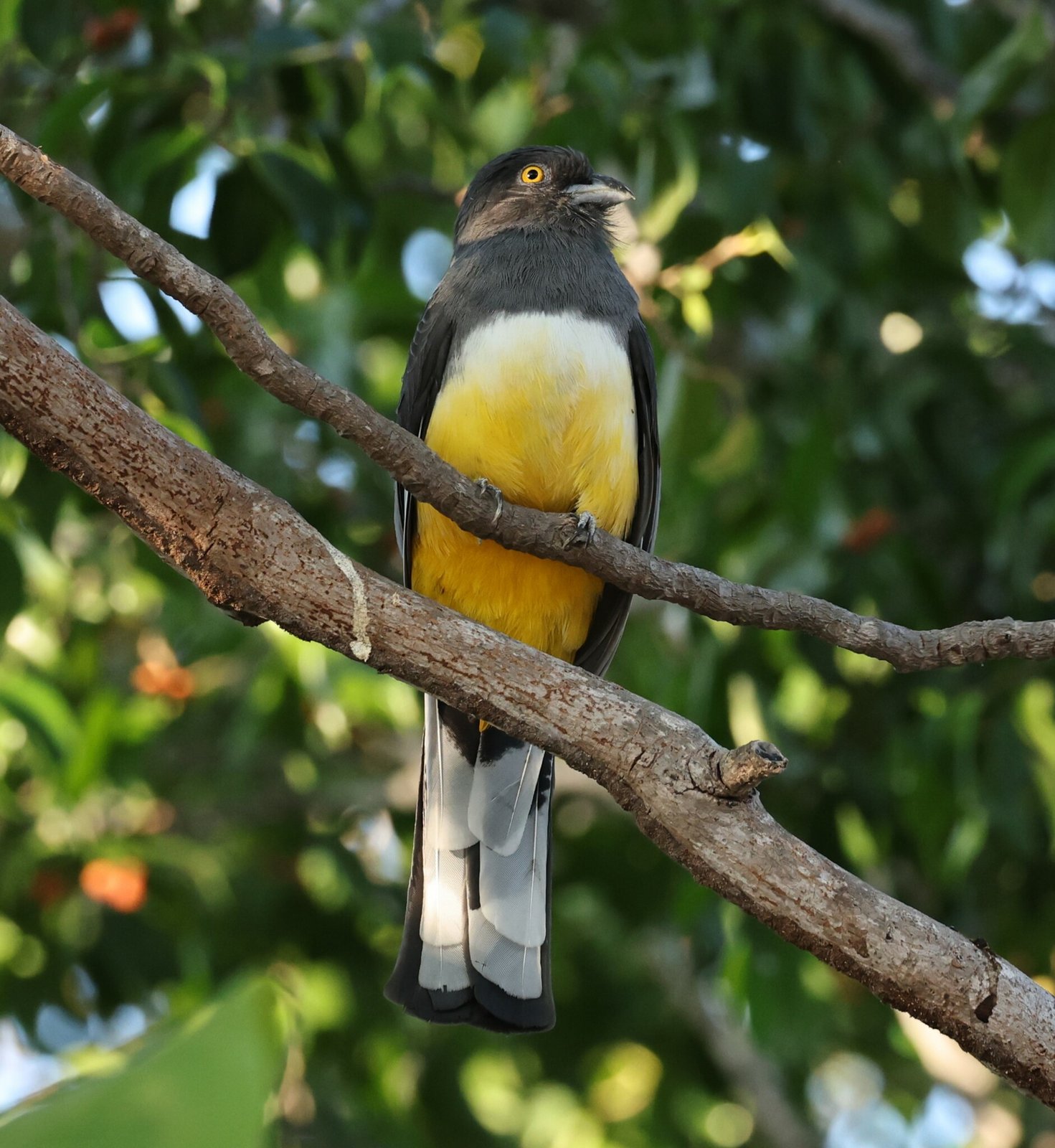
Citreoline Trogon
Trogon citreolus- Pacific tropical dry forest
 Thorn scrub and cactus forest
 Riparian woodland in arid and temperate regions
- Mangrove
- Secondary forest and forest edge
 Plantations and orchards
-
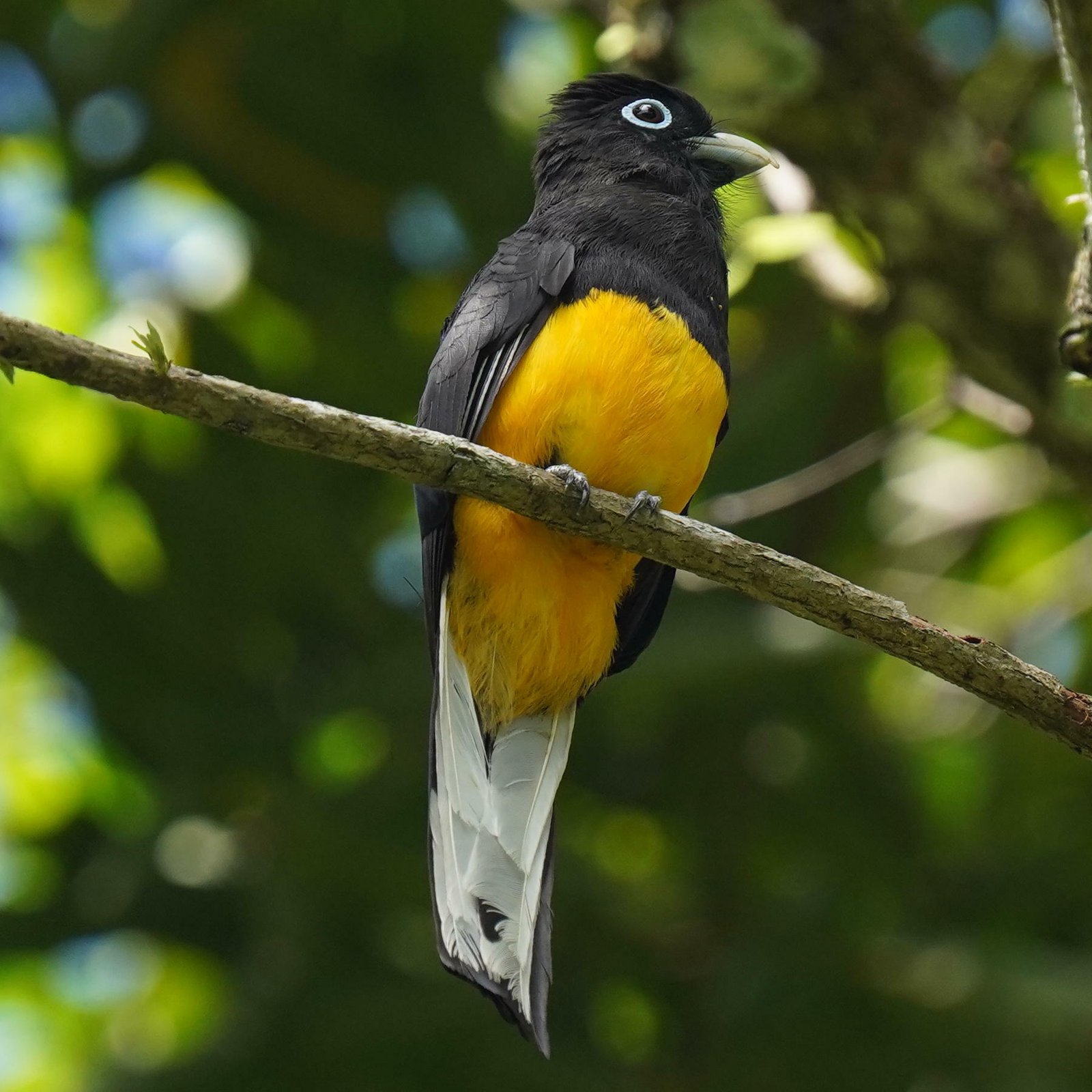
White-tailed Trogon
Trogon chionurus- Lowland rainforest
- Chocó-Darién rainforest
- Foothill (submontane) forest
- Secondary forest and forest edge
-
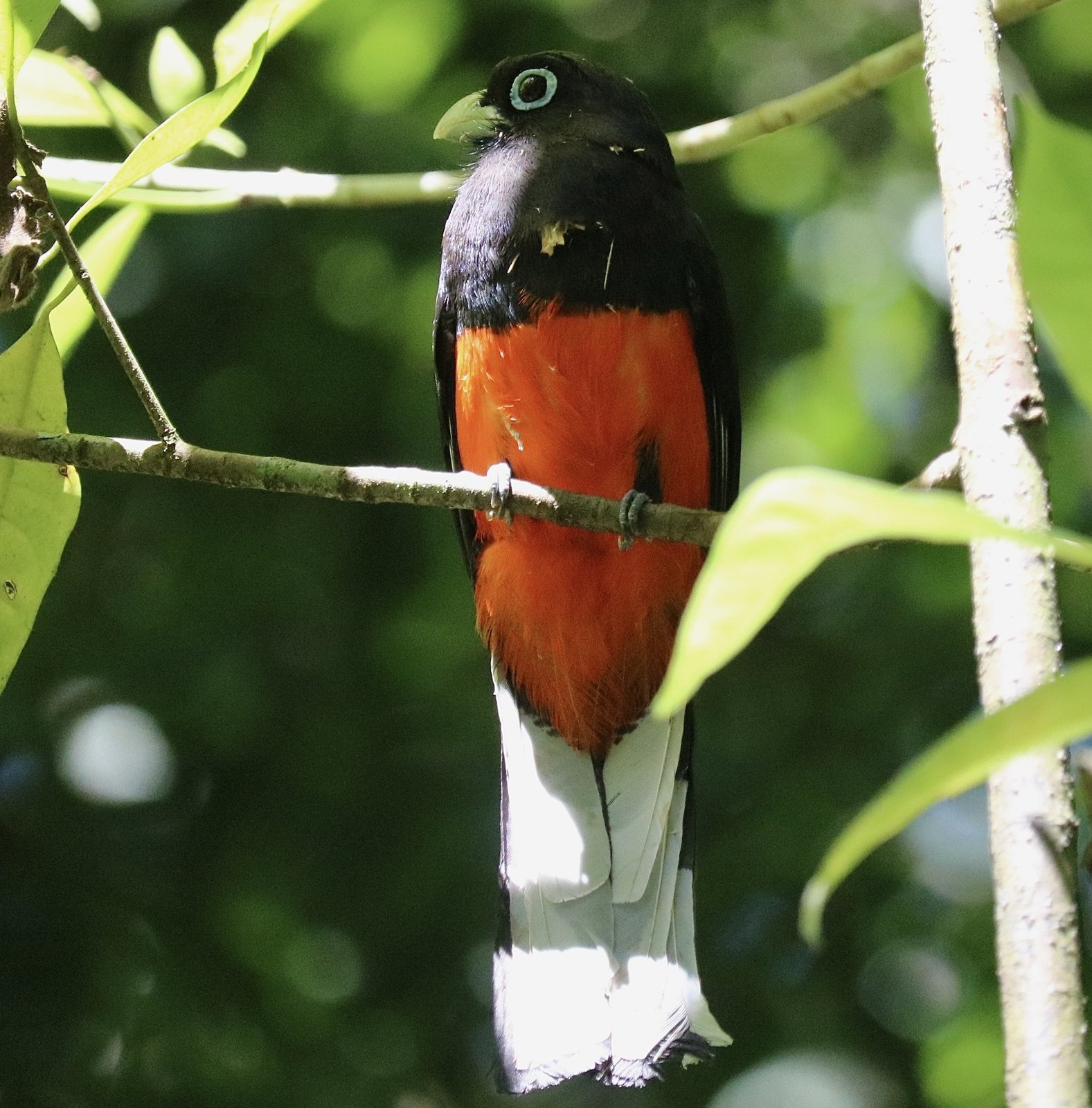
Baird's Trogon
Trogon bairdii- Lowland rainforest
- Foothill (submontane) forest
- Secondary forest and forest edge
-

Gartered Trogon
Trogon caligatus- Lowland rainforest
- Foothill (submontane) forest
- Secondary forest and forest edge
- Yucatán and Caribbean-interior seasonal forest
- Floodplain and gallery forest
- Shade coffee, cacao and agroforestry
-
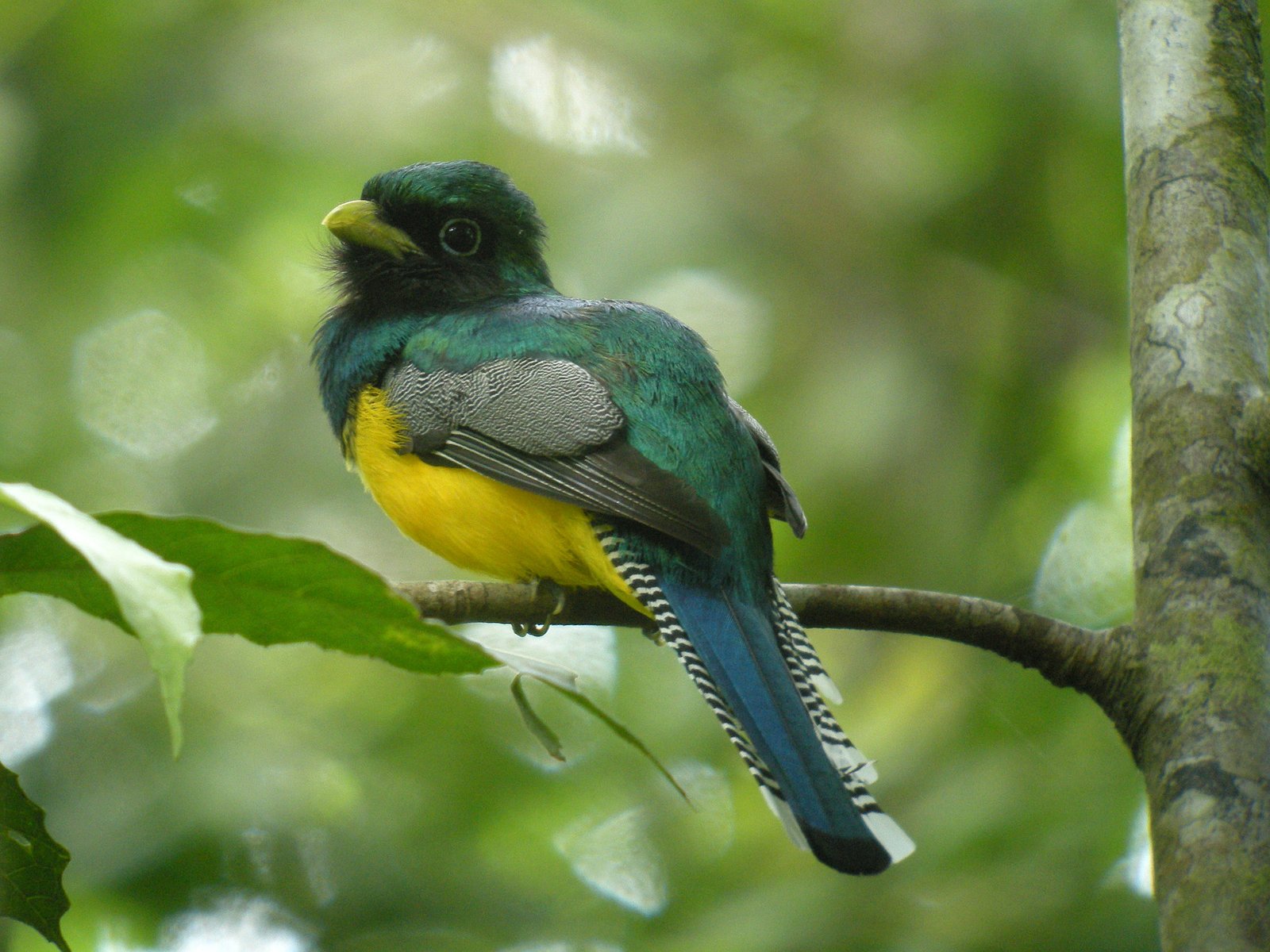
Graceful Black-throated Trogon
Trogon tenellus- Lowland rainforest
- Foothill (submontane) forest
- Chocó-Darién rainforest
- Secondary forest and forest edge
-

Elegant Trogon
Trogon elegans- Pacific tropical dry forest
- Thorn scrub and cactus forest
- Floodplain and gallery forest
- Riparian woodland in arid and temperate regions
-
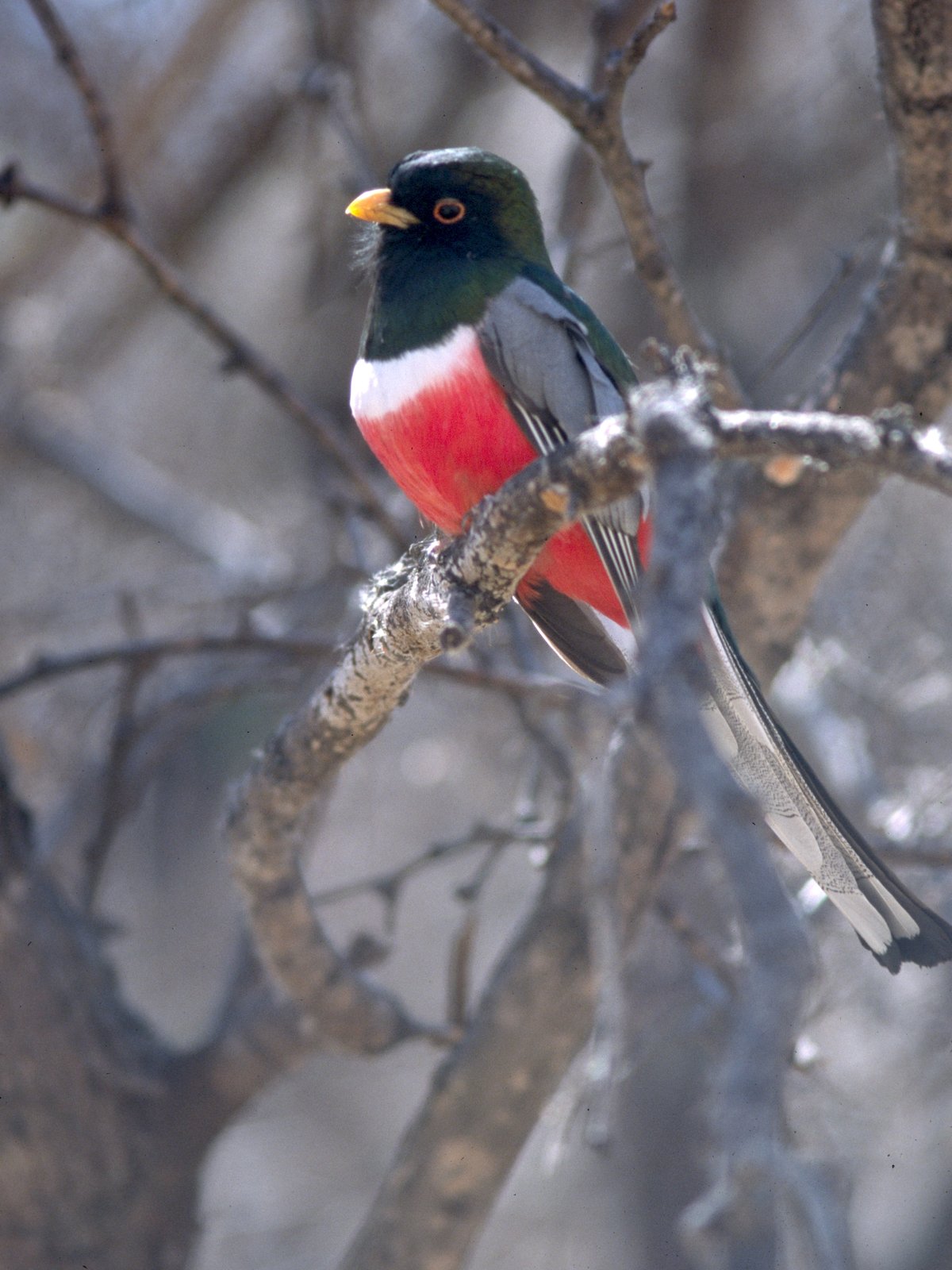
Coppery-tailed Trogon
Trogon ambiguus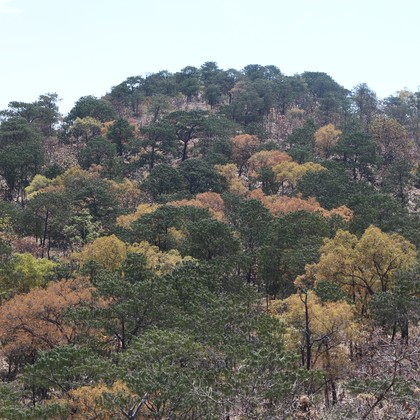 Madrean oak and pine-oak woodland
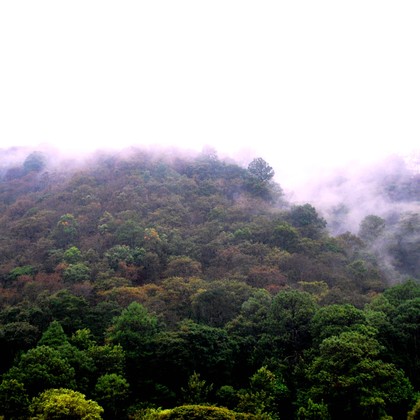 Tropical highland pine-oak forest
- Riparian woodland in arid and temperate regions
- Pacific tropical dry forest
- Thorn scrub and cactus forest
-
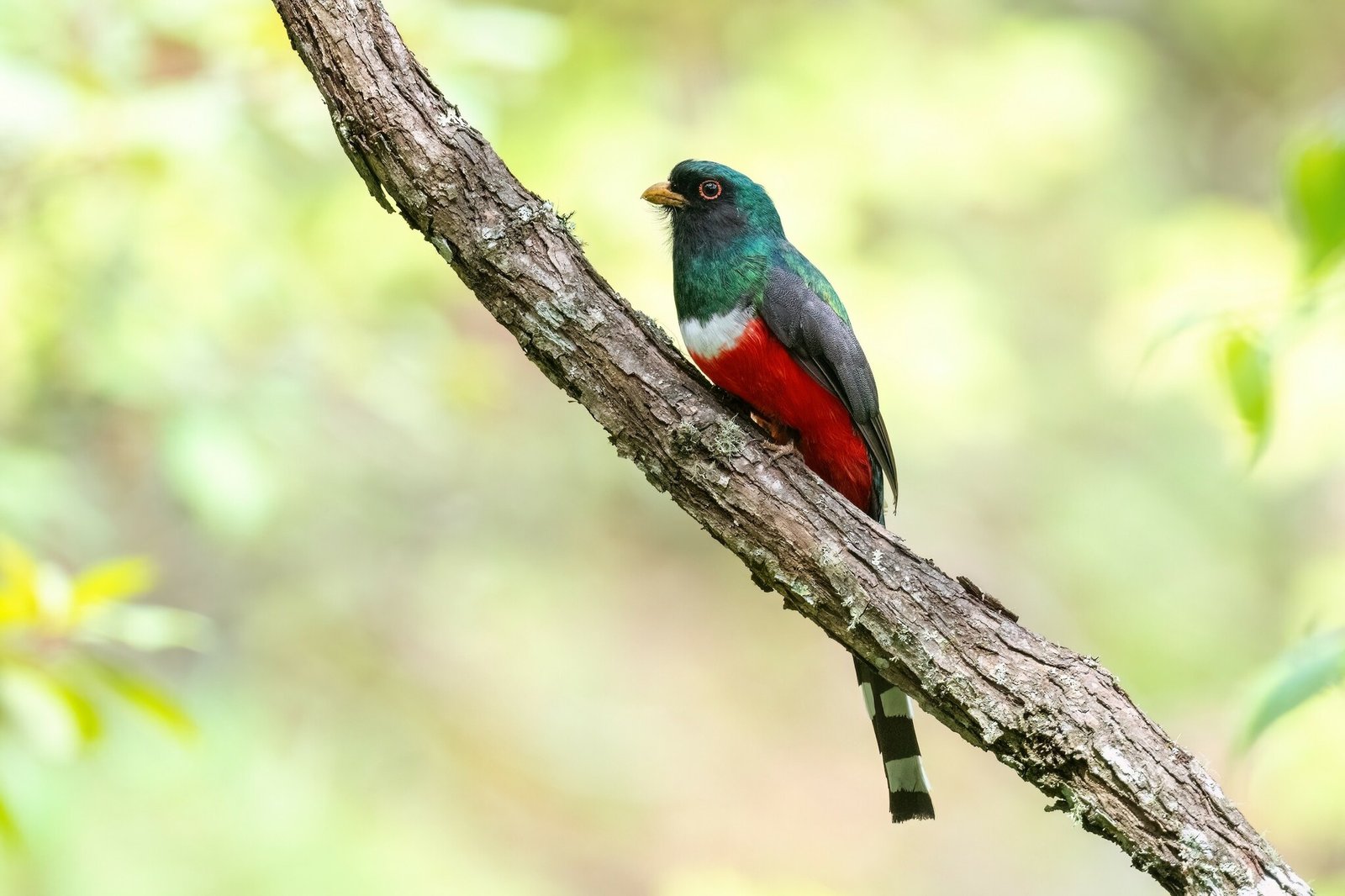
Mountain Trogon
Trogon mexicanus- Tropical highland pine-oak forest
- Madrean oak and pine-oak woodland
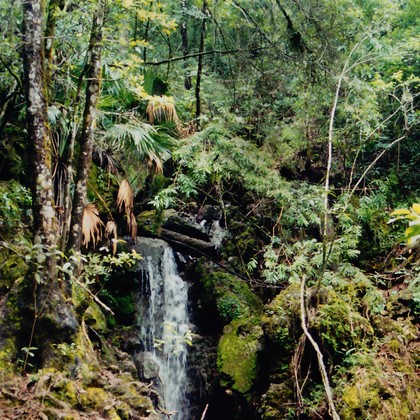 Northern Middle American cloud forest
 High montane conifer forest
-
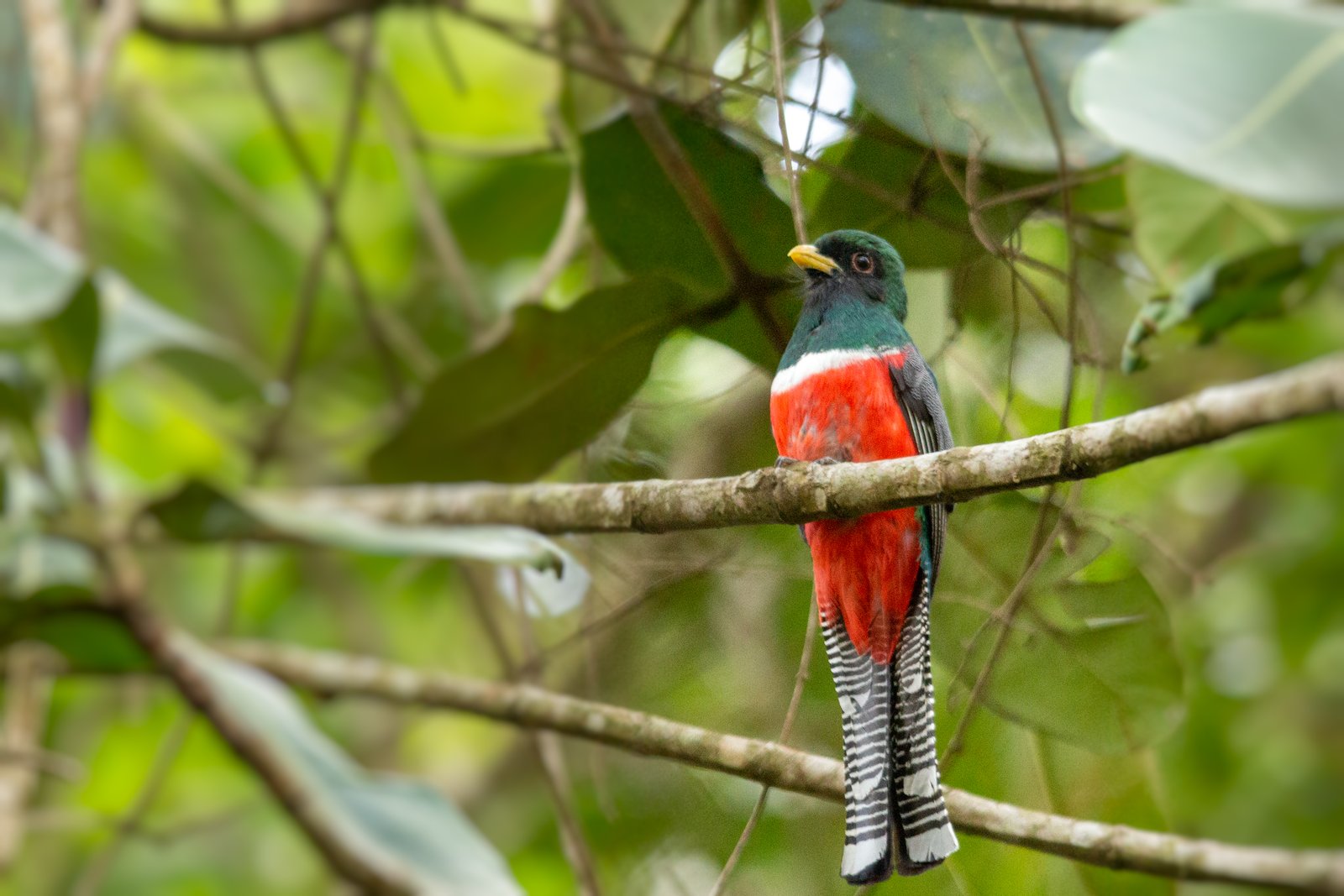
Collared Trogon
Trogon collaris- Northern Middle American cloud forest
- Costa Rica-Panama highland forest
- Foothill (submontane) forest
- Lowland rainforest
- Secondary forest and forest edge
- Tropical highland pine-oak forest
- Shade coffee, cacao and agroforestry