All species › Waterfowl › Ducks, swans and geese › Greater Scaup
Position in the tree Birds Aves › Birds with a flexible palate Neognathae › Fowl Galloanserae
Greater Scaup | Aythya marila
Topper | Porrón bastardo
The Greater Scaup is a diving duck of the far north that breeds all around the North Pole and winters mainly at sea and in coastal waters. It reaches the northern edge of the guide area in small numbers. Because of its close resemblance to the far more numerous Lesser Scaup it is easily overlooked here, but also easily misreported.
Voice
Usually silent in winter. The female has a harsh, deep karr, the displaying male soft, whistled notes.
Recording: Andrew Spencer — CC BY-NC-SA 3.0 · converted to mono · xeno-canto
Identification
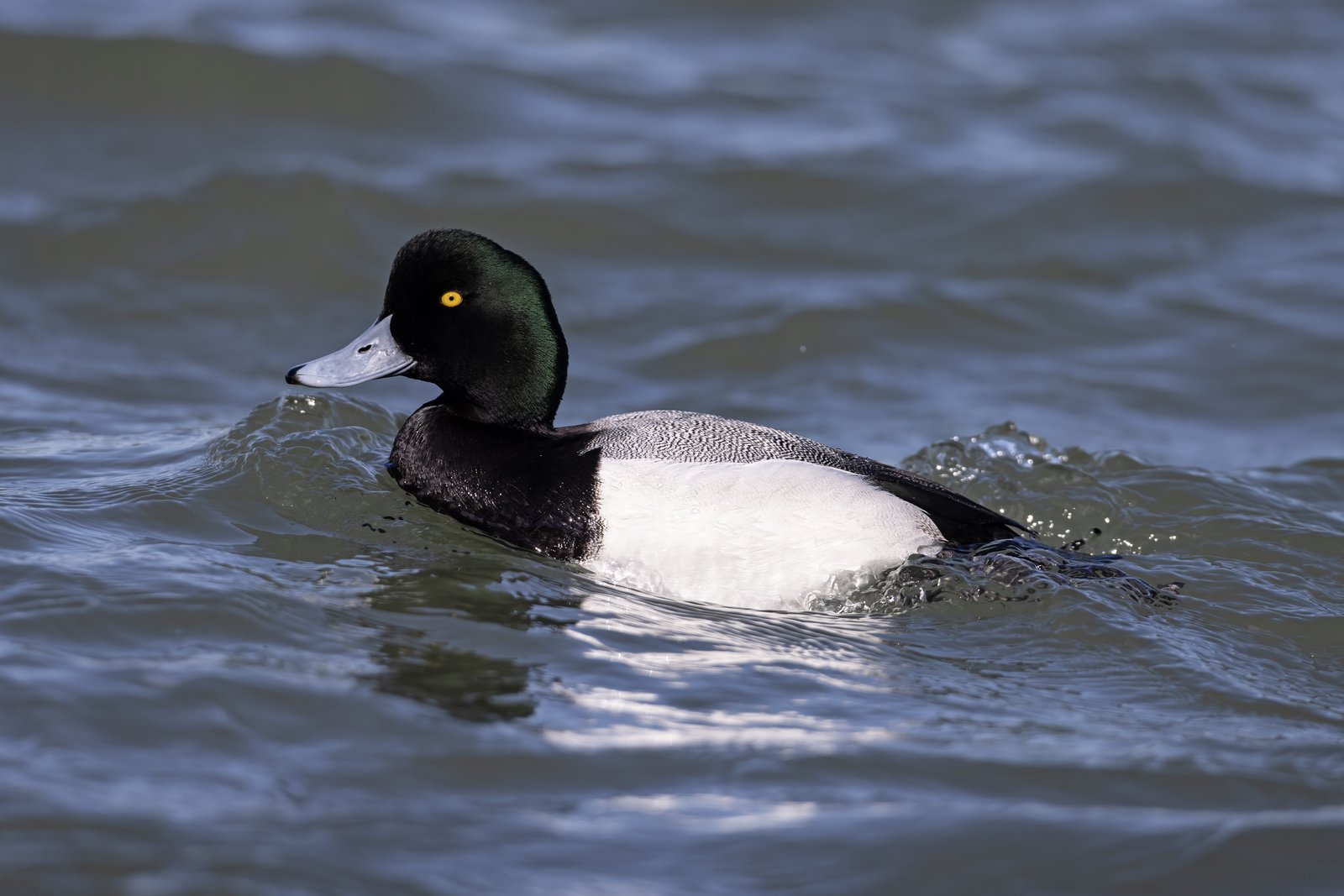
42–51 cm, larger and heavier than Lesser Scaup, with a rounded, unpeaked head and a broad bill with a fairly large black nail. The male has a black head with a green gloss, a black breast and stern, a pale grey, finely vermiculated back and bright white flanks. The eye is yellow. The female is brown with a greyish back and a broad white patch around the base of the bill; in late winter sometimes a pale patch on the ear coverts. In flight a broad white stripe across the secondaries extends far onto the primaries.
Confusion species
Lesser Scaup Aythya affinis has a smaller head peaked at the back of the crown, more purple than green gloss, a narrower bill with a small nail and a slightly darker back; its white wing stripe is mostly confined to the secondaries. Head gloss depends heavily on the light and is not decisive on its own. Ring-necked Duck Aythya collaris has a black back, a white bill ring and a grey wing bar.
Habitat
In winter mainly coastal waters: bays, lagoons, estuaries and harbours, also shallow sea close inshore; inland on large lakes and reservoirs. It dives mainly for shellfish and other invertebrates.
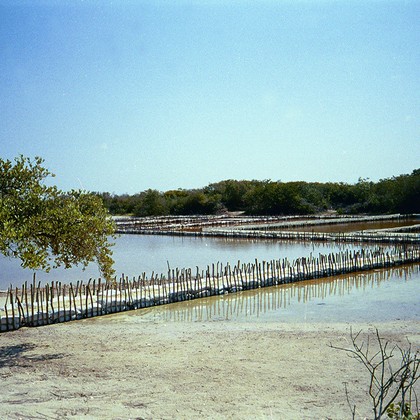
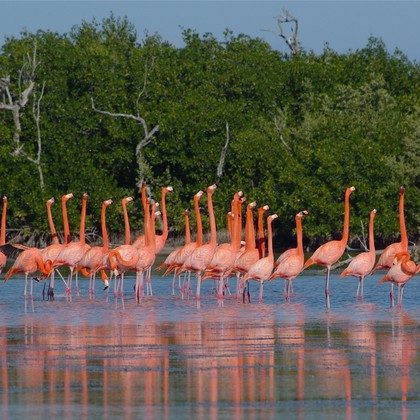
Where the bird is most at home, classified by the vegetation units of Mexico and Central America.

Range and movements
A scarce winter visitor in north-western Mexico, mainly along the coasts of Baja California and Sonora; rare inland in northern Mexico and along the coast of Tamaulipas. Further south there are only a few reports, some of them uncertain because of confusion with Lesser Scaup. Breeds on the tundra and in the northern taiga of Alaska, Canada and Eurasia and winters along the coasts of North America, Europe and East Asia.
- Resident
- Winter visitor (c. Oct–Mar)
- dark = core range, pale = thinly spread
How and when to look
Bays and lagoons on the coast of Baja California in the winter months, among flocks of Lesser Scaup; head shape, bill width and in flight the long white wing stripe are the best features.
Conservation status
Not threatened globally, although the North American population has declined since the 1980s. In the guide area a scarce winter visitor at the northern edge.
Scientific name
Aythya marila | (Linnaeus, 1761)
Linnaeus described the species in 1761 as Anas Marila; because it was later moved to another genus, the author and year stand in brackets. The genus Aythya was introduced in 1822 by Boie. Aythya is from Greek aithuia, an unidentified diving seabird mentioned by Aristotle and Hesychius. marila is Greek for 'charcoal embers' or 'coal dust'. The specimen the first description was based on came from Lapland.