All species › Passerines › Thrushes and allies › Hermit Thrush
Position in the tree Birds Aves › Birds with a flexible palate Neognathae › All other modern birds Neoaves › Landbirds Telluraves › Falcons, parrots and passerines Australaves › Falcons and passerines Eufalconimorphae › Parrots and passerines Psittacopasserae
Hermit Thrush | Catharus guttatus
Heremietlijster | Zorzal cola rufa
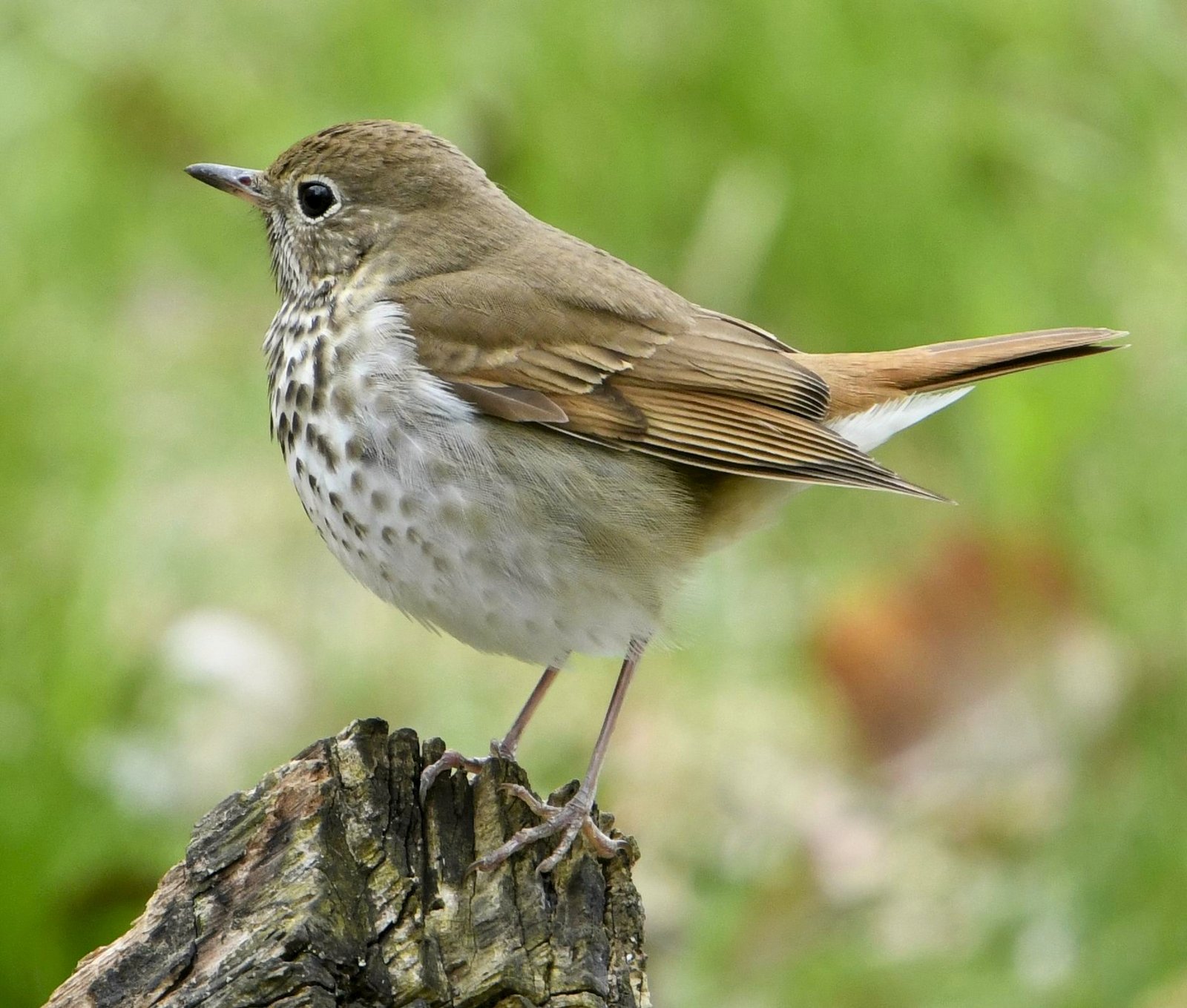
The Hermit Thrush is an olive-brown Catharus thrush with a rufous tail and a spotted breast. It breeds across much of North America and in winter is a common visitor to the forests and scrub of northern and central Mexico; in small numbers it also breeds in the mountains of Baja California. It is the only North American Catharus that winters largely north of the tropics.
Voice
In winter mainly a soft, dry chuk and a rising, nasal zweee. The song, on the breeding grounds and sometimes at the end of winter, begins with a long, pure whistle followed by a rapid, fluty flourish; successive phrases are sung at different pitches.
Recording: Ray Cooke — CC BY-NC 4.0 · shortened to the first 60 s, mono · xeno-canto
Identification
15–18 cm. Head and back olive-brown to greyish-brown; tail and rump distinctly rufous, contrasting with the back. Narrow, crisp white eye-ring. Throat and breast white to pale buff with sharp, round black spots, flanks greyish-brown, belly white. Lower mandible pale with a dark tip; legs pale pink. It has the habit of slowly raising and lowering the tail while flicking the wings. The sexes are alike; western birds are greyer above than eastern ones.
Confusion species
Swainson's Thrush Catharus ustulatus and Gray-cheeked Thrush Catharus minimus are mainly passage migrants and have a tail the same colour as the back; Swainson's Thrush also has buff spectacles. Veery Catharus fuscescens is uniformly reddish-brown above with faint breast spots. Russet Nightingale-Thrush Catharus occidentalis is uniformly russet, without a contrasting tail, and has only faint breast spots. Wood Thrush Hylocichla mustelina is larger, with a rusty head and large black spots extending onto the belly.
Habitat
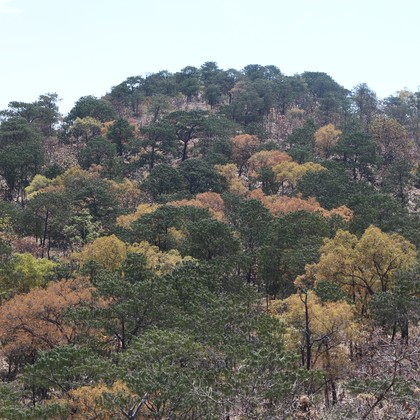
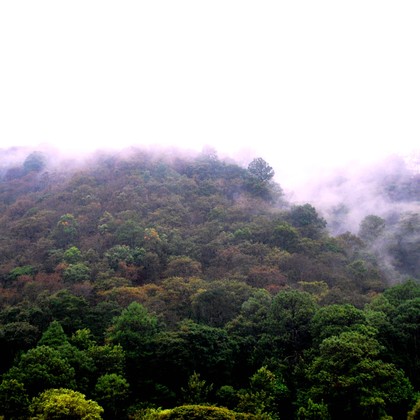
In winter understorey and edges of pine-oak, oak and conifer forest, chaparral, wooded scrub along streams, mature secondary forest, and parks and gardens with dense shrubs; from sea level to high in the mountains. In Baja California it breeds in high-elevation conifer forest. It forages on the ground for insects and in winter eats many berries and other fruits.
Where the bird is most at home, classified by the vegetation units of Mexico and Central America.




Range and movements
Breeds from Alaska across Canada to the north-eastern United States and in the mountains of the western United States; in the guide area in the Sierra de San Pedro Mártir and the Sierra de Juárez in Baja California. Winters from the southern United States through northern and central Mexico to the highlands of Guatemala and El Salvador; rare further south.
- Winter visitor (c. Oct–Mar)
- dark = core range, pale = thinly spread
How and when to look
In winter easily found in parks and wooded gardens in northern and central Mexico, often near fruiting shrubs. The slowly raised rufous tail is a good field mark on a bird sitting quietly in the understorey.
Conservation status
Not threatened (LC). Widespread and common; the breeding population in North America is stable or increasing. The small breeding population in Baja California depends on the high-elevation conifer forest there.
Scientific name
Catharus guttatus | (Pallas, 1811)
Pallas described the species in 1811 as Muscicapa guttata; because it was later moved to another genus, the author and year stand in brackets. The genus Catharus was introduced in 1850 by Bonaparte. Catharus is from Ancient Greek katharos 'pure, clean', a name given for the clean plumage of the orange-billed nightingale-thrush. guttatus is Latin for 'spotted, speckled', after the dark drop-shaped spots on the breast. The specimen the first description was based on came from Kodiak Island, Alaska.