All species › Passerines › Thrushes and allies › Rufous-collared Thrush
Position in the tree Birds Aves › Birds with a flexible palate Neognathae › All other modern birds Neoaves › Landbirds Telluraves › Falcons, parrots and passerines Australaves › Falcons and passerines Eufalconimorphae › Parrots and passerines Psittacopasserae
Rufous-collared Thrush | Turdus rufitorques
Roodkraaglijster | Mirlo cuello rufo
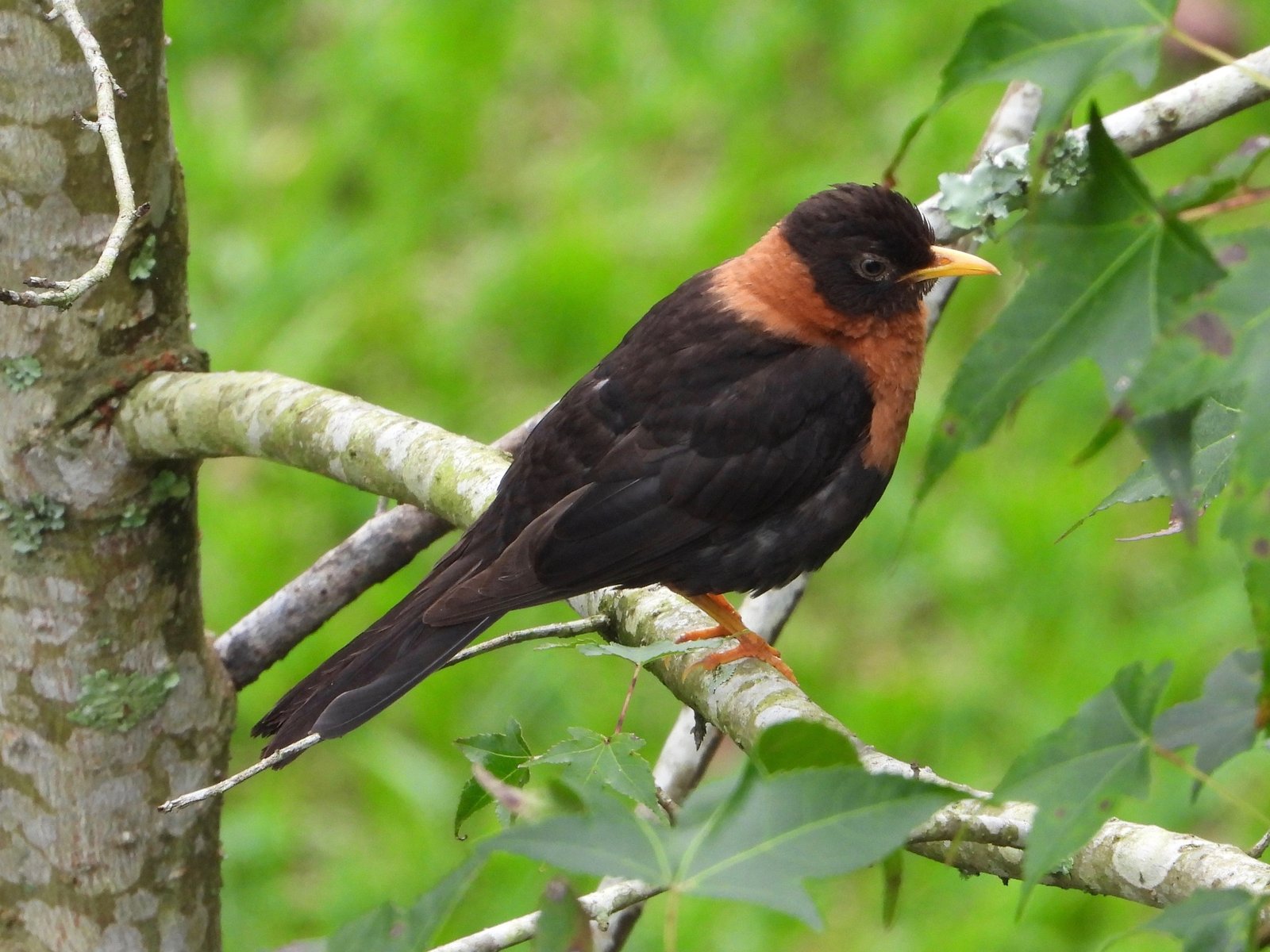
The Rufous-collared Thrush is a Turdus thrush of the highlands of Chiapas and northern Central America. The male is black with a rufous collar and breast and a yellow bill. It lives in semi-open mountain country with trees and is often a common bird in high-elevation villages, towns and parks.
Voice
The song consists of varied, whistled phrases of a few notes, repeated with short pauses, somewhat similar to the song of American Robin. Calls include a dry chuk or tuk-tuk and a high, thin see.
Recording: John van Dort — CC BY-NC-SA 4.0 · shortened to the first 60 s, mono · xeno-canto
Identification
23–25 cm. Male black, with a broad rufous to chestnut band across the throat, side of the neck, nape and upper breast; bill and narrow eye-ring yellow, legs brownish yellow. Female much duller: dark greyish-brown with a duller, orange-brown collar and breast, a streaked throat and a yellowish bill with a dark tip. Juveniles are brown with pale spots on the upperparts and dark spots on the orange-brown underparts.
Confusion species
American Robin Turdus migratorius has a grey back and entirely orange-red breast and belly, without black on the breast below the collar. The male Black Thrush Turdus infuscatus is entirely black without a rufous collar. The female resembles that of Mountain Thrush Turdus plebejus, which is plain olive-brown without an orange tone on breast and collar and has a black bill.
Habitat
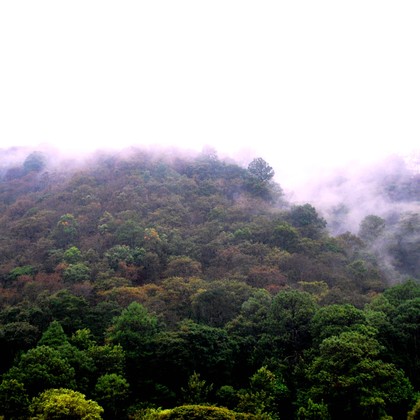
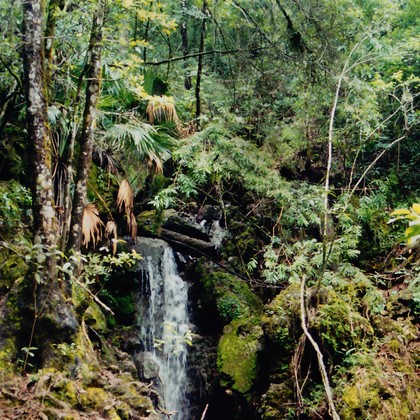
Pine-oak forest, oak forest and the edges of cloud forest, but especially semi-open country with trees: pastures with hedgerows, field edges, orchards, villages, town parks and gardens; mostly between 1500 and 3500 m. It forages on the ground, often on lawns and bare soil, for earthworms and insects, and also eats berries and fruit.
Where the bird is most at home, classified by the vegetation units of Mexico and Central America.


Range and movements
Only in the guide area: the highlands of Chiapas in southern Mexico, Guatemala, north-western El Salvador and western Honduras.
- Resident
- dark = core range, pale = thinly spread
How and when to look
Common in highland towns and villages such as San Cristóbal de las Casas in Chiapas and Quetzaltenango and the surroundings of Antigua in Guatemala. There it is often seen on lawns, sports fields and in parks.
Conservation status
Not threatened (LC). Small range, but common and benefits from the semi-open farmland landscape. Conversion of forest to farmland does the species little harm.
Scientific name
Turdus rufitorques | Hartlaub, 1844
Hartlaub described the species in 1844 and placed it straight away in the genus where it still stands. The genus Turdus was introduced in 1758 by Linnaeus. Turdus is the ordinary Latin word for 'thrush'. rufitorques is Latin, from rufus 'rufous' and torques 'collar', after the male's rufous collar. The specimen the first description was based on came from Guatemala.