All species › Waders, gulls and terns › Skimmers, noddies, terns and gulls › Laughing Gull
Position in the tree Birds Aves › Birds with a flexible palate Neognathae › All other modern birds Neoaves › Birds of the elements Elementaves › Cranes and waders Gruimorphae
Laughing Gull | Leucophaeus atricilla
Lachmeeuw | Gaviota guanaguanare
The Laughing Gull is the most widespread gull in the guide area, present along every coast from Baja California to Panama. It owes its name to its call, a series of laughing notes. In Mexico and Belize it breeds in colonies on islets and beaches, and in winter large numbers of birds from North America join it, travelling south far into South America.
Voice
The best-known sound is a long series of high, laughing calls, ha-ha-ha-haah-haah, drawn out at the end; also a nasal kee-ah and short ka calls.
Recording: David Darrell-Lambert — CC BY-NC-SA 4.0 · converted to mono · xeno-canto
Identification
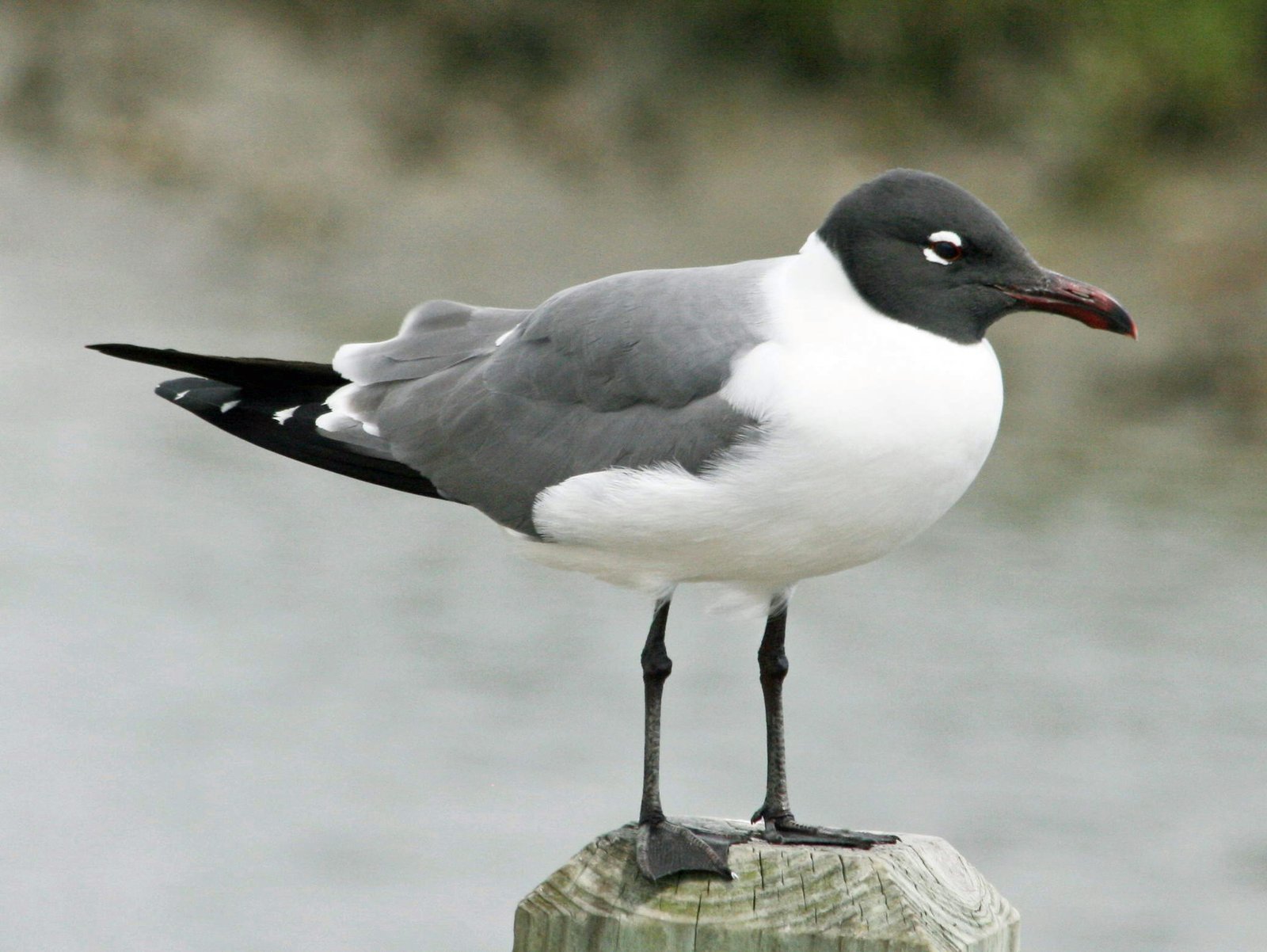
36–42 cm, with long, narrow wings and a long, slightly drooping bill. Adults have a dark slate-grey mantle and wings, black wingtips with at most small white spots, a white trailing edge to the wing and dark legs. In breeding plumage the head is black with a broken white eye-ring and the bill dark red; in non-breeding plumage the head is white with a grey wash on the hindcrown and ear coverts, and the bill is black. Adult plumage is reached in the third year. First-year birds are greyish brown on the head, breast and wings, with a grey mantle and a broad black terminal band on the white tail.
Confusion species
Franklin's Gull Leucophaeus pipixcan is smaller, with a rounder head, a shorter bill, broader white eye-crescents, a dark half-hood in non-breeding plumage and a white band between the grey and the black of the wingtip. Ring-billed Gull Larus delawarensis is larger and paler grey, with a yellow bill with a black ring. Bonaparte's Gull Chroicocephalus philadelphia is smaller and paler grey, with a white leading edge to the primaries.
Habitat
Beaches, harbours, lagoons, estuaries, mudflats and inshore waters, and in winter also rice fields and rubbish dumps near the coast. It breeds on low islets and cays and on bare beaches. It eats fish, crustaceans, insects and refuse, and follows fishing boats.
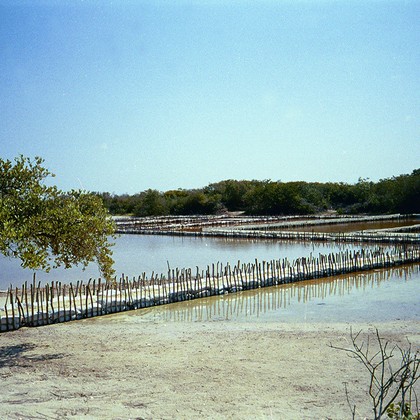
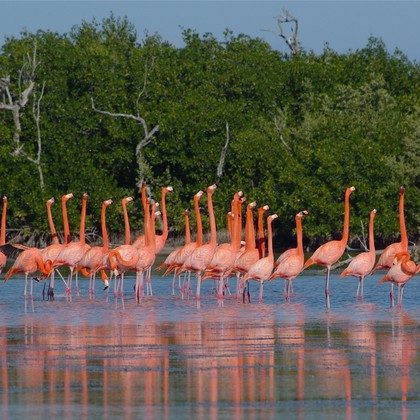
Where the bird is most at home, classified by the vegetation units of Mexico and Central America.




Range and movements
Along the entire Pacific and Caribbean coast of the guide area, from Baja California and Tamaulipas to Panama. It breeds in colonies in the Gulf of California, along the Gulf coast from Tamaulipas to the Yucatán Peninsula and on cays off Belize. In winter and on migration it is numerous everywhere along the coast; scarce inland. Outside the guide area the species breeds along the Atlantic and Gulf coasts of the United States and in the Caribbean, and winters south to Peru and Brazil.
- Resident
- dark = core range, pale = thinly spread
How and when to look
It can be seen in every fishing harbour and on every beach, such as at Mazatlán, Puntarenas or Panama City. In winter the dark grey mantle and the long, drooping black bill give it away among other gulls.
Conservation status
Not threatened globally. The population is large and increasing. In the guide area a breeding bird and a numerous winter visitor.
Scientific name
Leucophaeus atricilla | (Linnaeus, 1758)
Linnaeus described the species in 1758 as Larus Atricilla; because it was later moved to another genus, the author and year stand in brackets. The genus Leucophaeus was introduced in 1855 by Bruch. Leucophaeus is Ancient Greek, from leukos 'white' and phaios 'dusky'. atricilla combines Latin ater 'black' with modern Latin cilla 'tail', after the black tail of young birds; Linnaeus may have meant atricapilla 'black-capped'. The specimen the first description was based on came from the Bahamas.