All species › Parrots › African and New World parrots › Orange-fronted Parakeet
Position in the tree Birds Aves › Birds with a flexible palate Neognathae › All other modern birds Neoaves › Landbirds Telluraves › Falcons, parrots and passerines Australaves › Falcons and passerines Eufalconimorphae › Parrots and passerines Psittacopasserae
Orange-fronted Parakeet | Eupsittula canicularis
Halvemaanparkiet | Perico frente naranja
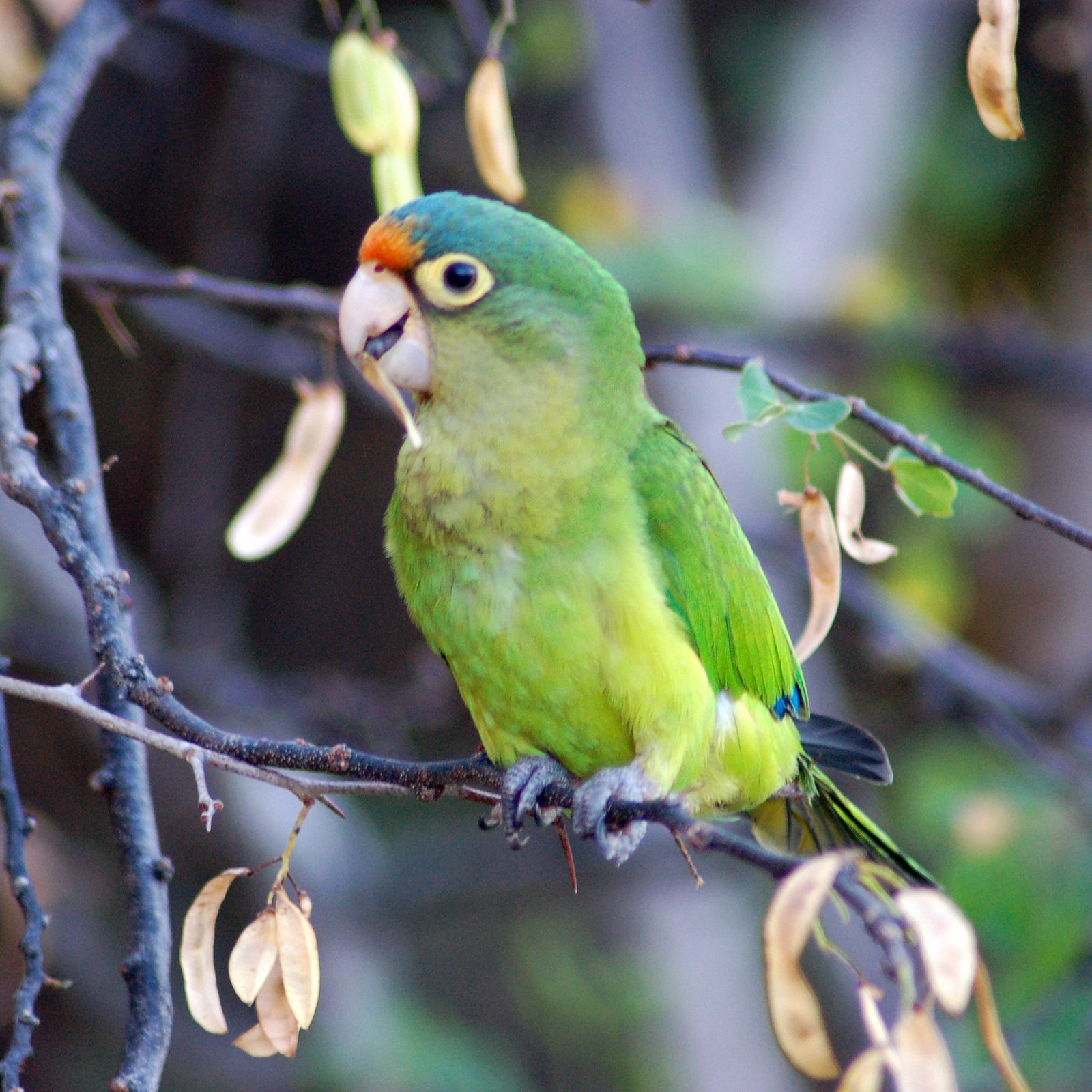
The Orange-fronted Parakeet is a small, long-tailed parakeet with an orange forehead and a blue crown. It lives on the Pacific side of the guide area, from northwestern Mexico to Costa Rica, and there it is the parakeet most often seen in dry forest and semi-open country. Outside the breeding season it roams in noisy groups.
Voice
Shrill and piercing; a sharp, grating kreek or kree-kree, often rapidly repeated in flight. Groups in a tree keep up a constant chatter.
Recording: Alán Palacios — CC BY-NC-SA 4.0 · converted to mono · xeno-canto
Identification
24 cm, with a long, pointed tail. Mostly green, paler and more yellowish-green below, with an olive-brown wash on the throat and breast. The forehead is orange, the forecrown dull blue, and there is a bare yellow to orange-yellow ring around the eye. The primaries and part of the secondaries are blue; from below the flight feathers are greyish-yellow. The bill is pale horn. Male and female are alike; young birds have less orange on the forehead.
Confusion species
The Olive-throated Parakeet Eupsittula nana, on the Caribbean side, has no orange forehead and a darker olive-brown throat and breast. The Green Parakeet Psittacara holochlorus and the Pacific Parakeet Psittacara strenuus are larger, all green and have no orange or blue on the head. The Orange-chinned Parakeet Brotogeris jugularis is smaller, with a short tail, an orange chin spot and brown shoulders. The Mexican Parrotlet Forpus cyanopygius in western Mexico is much smaller and has a short tail.
Habitat
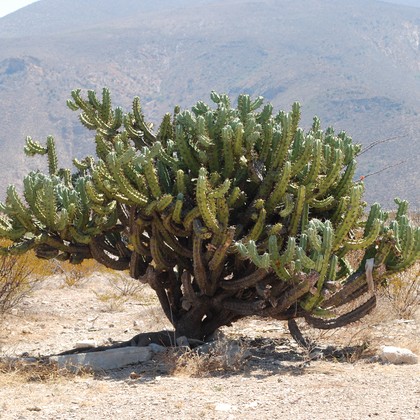
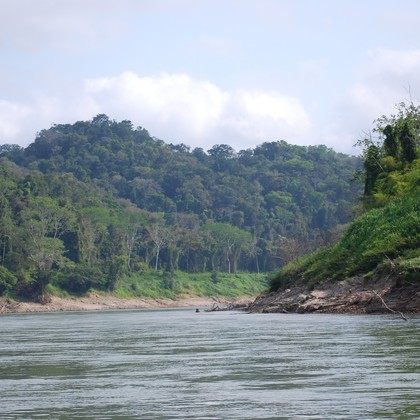
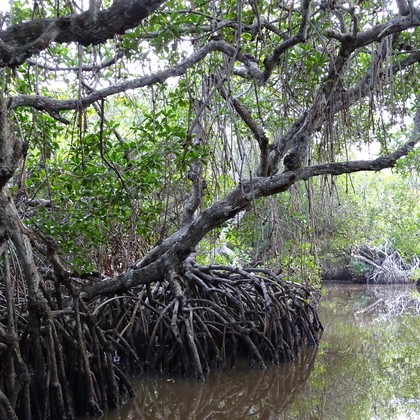
Tropical dry forest, thorn scrub, gallery forest, mangroves and semi-open country with scattered trees, also pasture with trees, orchards and villages; from sea level to about 1500 m. It eats seeds, fruit, flowers and nectar, in the dry season often in flowering trees. It breeds in the dry season in a cavity it digs itself in a termite nest in a tree.
Where the bird is most at home, classified by the vegetation units of Mexico and Central America.




Range and movements
On the Pacific side of Mexico from southern Sinaloa through Nayarit, Jalisco, Colima, Michoacán, Guerrero and Oaxaca to Chiapas, also inland in the Balsas basin and the Central Depression of Chiapas; further through the Pacific lowlands and dry interior valleys of Guatemala, El Salvador, Honduras and Nicaragua to northwestern and central Costa Rica (Guanacaste, Puntarenas and the western Central Valley). It does not occur naturally outside the guide area; a small introduced population lives on Puerto Rico.
- Resident
- dark = core range, pale = thinly spread
How and when to look
In the dry season groups often sit in flowering trees, feeding on nectar and flowers. Flying groups can be recognised by the fast wingbeats, the long pointed tail and the shrill call; the orange forehead is best seen on perched birds. Common in Guanacaste in Costa Rica, for example in Santa Rosa National Park.
Conservation status
Vulnerable. It has declined steeply through trapping for the cage-bird trade, for which it is one of the most frequently caught parakeets in Mexico and Central America, and through loss of dry forest. Still common locally, especially in Nicaragua and Costa Rica.
Scientific name
Eupsittula canicularis | (Linnaeus, 1758) (GBIF: Aratinga canicularis)
Linnaeus described the species in 1758 as Psittacus canicularis; because it was later moved to another genus, the author and year stand in brackets. The genus Eupsittula was introduced in 1853 by Bonaparte. Eupsittula combines Greek eu 'good, true' with Modern Latin psittacula 'little parrot': 'true parakeet'. canicularis is Latin for 'of the Dog Star' or 'of the dog days' (canicula); why Linnaeus chose it is unclear. The specimen the first description was based on came from northwestern Costa Rica.