All species › Passerines › Tyrant flycatchers and allies › Pine Flycatcher
Position in the tree Birds Aves › Birds with a flexible palate Neognathae › All other modern birds Neoaves › Landbirds Telluraves › Falcons, parrots and passerines Australaves › Falcons and passerines Eufalconimorphae › Parrots and passerines Psittacopasserae
Pine Flycatcher | Empidonax affinis
Dennenfeetiran | Mosquero pinero
The Pine Flycatcher is an Empidonax flycatcher found only in the highlands of Mexico and Guatemala. It lives in pine and pine-oak forest and closely resembles the North American Empidonax flycatchers that winter there, but is present all year.
Voice
The call is a short, sharp wheet or pwit. The song is a series of short, clear phrases.
Recording: Scott Olmstead — CC BY-NC-SA 4.0 · shortened to the first 60 s, mono · xeno-canto
Identification
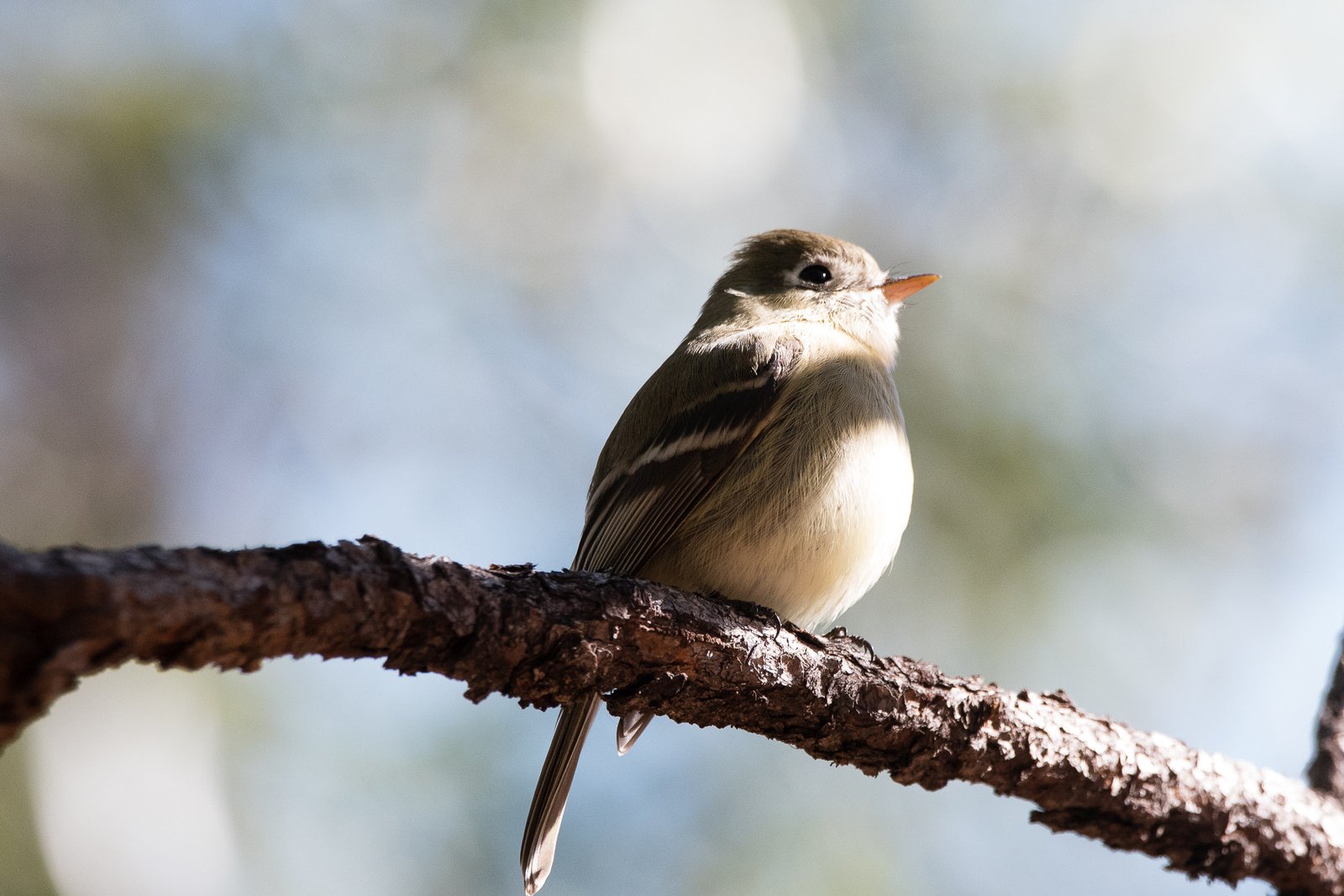
13–14 cm. Bill fairly broad, with a pale lower mandible. Upperparts olive to greyish olive; throat pale grey to yellowish white, breast olive-grey, belly pale yellow. A distinct whitish eye-ring. Wings dark with two pale, often buffy wing-bars. The subspecies differ: birds from the south of the range are yellower and more olive than those from the north. Male and female are alike.
Confusion species
Hammond's Flycatcher Empidonax hammondii and American Dusky Flycatcher Empidonax oberholseri are greyer, with less yellow below, and occur only in winter; Hammond's also has a small dark bill. Western Flycatcher Empidonax difficilis is yellower on the throat and belly, with an eye-ring drawn out into a point behind the eye. White-throated Flycatcher Empidonax albigularis is browner, with a white throat, and lives in damp scrub.
Habitat
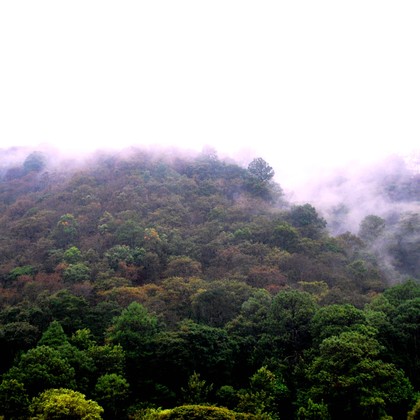
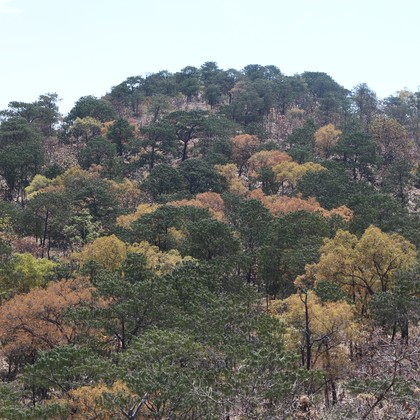
Pine and pine-oak forest and its edges in the mountains, mainly between about 1800 and 3500 m, also open woodland with an understorey of shrubs and grasses. It catches insects from branches at mid-levels and in the lower canopy.
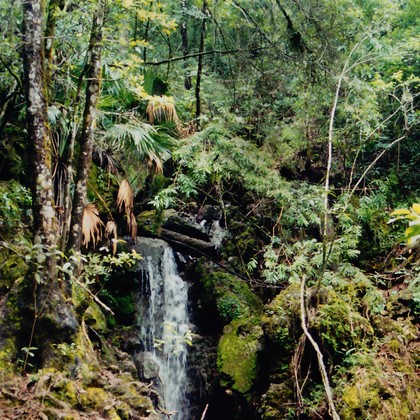
Where the bird is most at home, classified by the vegetation units of Mexico and Central America.

Range and movements
Only in the guide area: the highlands of Mexico, from the Sierra Madre Occidental and Sierra Madre Oriental via the Trans-Mexican Volcanic Belt and the Sierra Madre del Sur to Chiapas, and on into the highlands of Guatemala.
- Resident
- Summer visitor (c. Apr–Sep)
- Winter visitor (c. Oct–Mar)
- Passage (Mar–Apr, Oct–Nov)
- dark = core range, pale = thinly spread
How and when to look
In winter, when the northern Empidonax flycatchers are also present, it is hard to identify; in the breeding season, from April to July, any Empidonax singing in tall pine forest is probably this species.
Conservation status
Not threatened. Locally fairly common in pine and pine-oak forest; sensitive to logging of montane forest.
Scientific name
Empidonax affinis | (Swainson, 1827)
Swainson described the species in 1827 as Tyrannula affinis; because it was later moved to another genus, the author and year stand in brackets. The genus Empidonax was introduced in 1855 by Cabanis. Empidonax is Greek, from empis 'gnat' and anax 'master': 'gnat-king', after its insect hunting. affinis is Latin for 'related', after its resemblance to other Empidonax flycatchers. The specimen the first description was based on came from Temascaltepec, State of Mexico, Mexico.