All species › Passerines › New World sparrows › Rufous-capped Brushfinch
Position in the tree Birds Aves › Birds with a flexible palate Neognathae › All other modern birds Neoaves › Landbirds Telluraves › Falcons, parrots and passerines Australaves › Falcons and passerines Eufalconimorphae › Parrots and passerines Psittacopasserae
Rufous-capped Brushfinch | Atlapetes pileatus
Roodkapstruikgors | Atlapetes gorra rufa
The Rufous-capped Brushfinch is a medium-sized brushfinch with a rufous cap, an olive-grey back and yellow underparts. It lives in pairs or small groups in the undergrowth of montane forest and scrub and regularly joins mixed feeding flocks. The species is endemic to Mexico and so occurs only in the guide area.

Voice
The call is a high, thin tsit, often repeated by members of a group. The song is a short, fast series of high twittering and squeaky notes.
Recording: Manuel Grosselet — CC BY-NC-SA 4.0 · shortened to the first 60 s, mono · xeno-canto
Identification
15–17 cm. Crown and nape rufous; forehead and face dark grey to blackish. Upperparts, wings and tail olive-grey. Throat and underparts yellow, tinged olive on the flanks. Bill conical and dark, legs pinkish brown. The sexes are alike; juveniles are browner, with a duller cap and streaked underparts.
Confusion species
Rufous-capped Warbler Basileuterus rufifrons also has a rufous cap but is smaller and slimmer, with a thin bill, a white supercilium and an often cocked tail. White-naped Brushfinch Atlapetes albinucha has a black head with a white central crown stripe. Chestnut-capped Brushfinch Arremon brunneinucha is larger and has a white throat with a black breast band.
Habitat
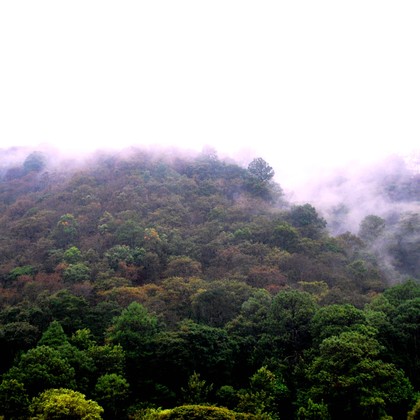
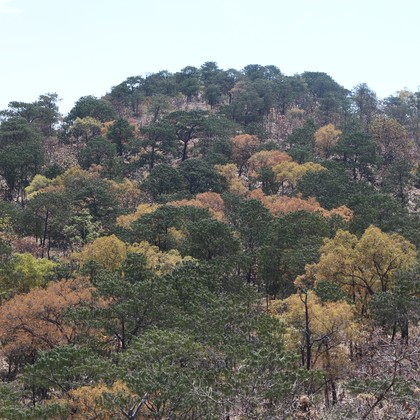
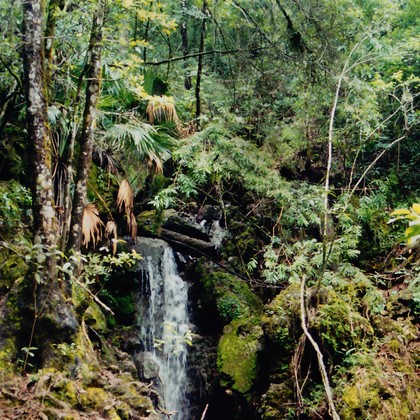
Undergrowth, forest edges and scrubby clearings in pine-oak, oak, fir and pine forest and cloud forest, also rough scrub and old clearings, mostly between about 1500 and 3500 m. It forages low in shrubs and on the ground for insects, seeds and berries.
Where the bird is most at home, classified by the vegetation units of Mexico and Central America.

Range and movements
Endemic to Mexico and thus to the guide area: highlands of the Sierra Madre Occidental from Chihuahua and Sonora and of the Sierra Madre Oriental from Nuevo León and Tamaulipas, south through the Trans-Mexican Volcanic Belt to the mountains of Guerrero and Oaxaca.
- Resident
- dark = core range, pale = thinly spread
How and when to look
Regularly seen in the undergrowth along forest trails in El Chico National Park in Hidalgo and on the slopes of Nevado de Colima, often in mixed flocks with warblers and other brushfinches.
Conservation status
Not threatened (LC). Common in the montane forests of Mexico.
Scientific name
Atlapetes pileatus | Wagler, 1831
Wagler described the species in 1831 and placed it straight away in the genus where it still stands. He introduced the genus Atlapetes in that same work. Atlapetes combines the Titan Atlas of Greek myth, who was turned into a mountain, with Greek petēs 'flier': a 'mountain flier', after the montane habitat. pileatus is Latin for 'capped', after the rufous crown. The specimen the first description was based on came from Mexico (unspecified).