All species › Waterfowl › Ducks, swans and geese › Snow Goose
Position in the tree Birds Aves › Birds with a flexible palate Neognathae › Fowl Galloanserae
Snow Goose | Anser caerulescens
Sneeuwgans | Ánsar nival
The Snow Goose is a North American goose that winters in northern Mexico, mainly on the plateau of Chihuahua and Durango. There flocks of hundreds to thousands of birds feed on farmland and roost on shallow lakes, often together with Greater White-fronted Geese and Sandhill Cranes. Further south it is scarce to rare.

Voice
A high, nasal, barking houk or kowk; flocks keep up a loud clamour audible from far away.
Recording: Stanislas Wroza — CC BY-NC-SA 4.0 · shortened to the first 60 s, mono · xeno-canto
Identification
64–79 cm. A medium-sized goose with a pink bill with a black 'grin patch' along the cutting edges and pink legs. There are two colour morphs. The white morph is all white with black primaries; the head is sometimes stained rusty by iron-rich water. The blue morph is dark greyish-brown with a white head and neck and a variable amount of white on the belly and undertail coverts. Juveniles of the white morph are dingy grey on the head, neck and upperparts and have a dark bill; juveniles of the blue morph are almost uniformly dark slate-grey. It flies in long, wavy lines and V-formations.
Confusion species
Ross's Goose Anser rossii is smaller, with a shorter, rounder head and a short, triangular bill without a grin patch, with warty bumps at the base in older birds; hybrids between the two species occur. White domestic geese lack the black primaries. American White Pelican Pelecanus erythrorhynchos is also white with black wing tips, but is much larger, with a huge yellow bill, and flies with its neck retracted.
Habitat
In winter stubble fields and other farmland, wet grassland, shallow fresh and brackish lakes and temporary pools on the plateau, and locally coastal lagoons. It roosts on open water and flies out to the fields by day. It eats grain, roots and shoots.
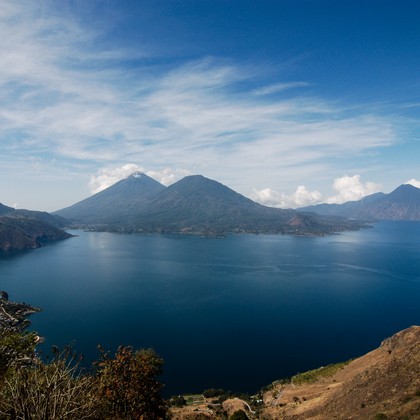
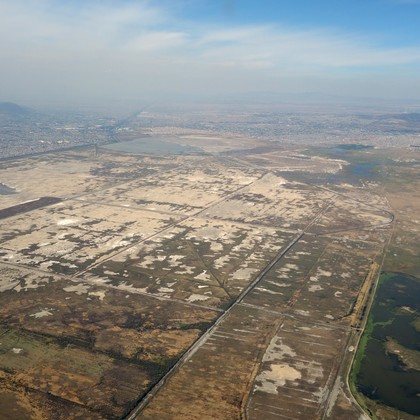
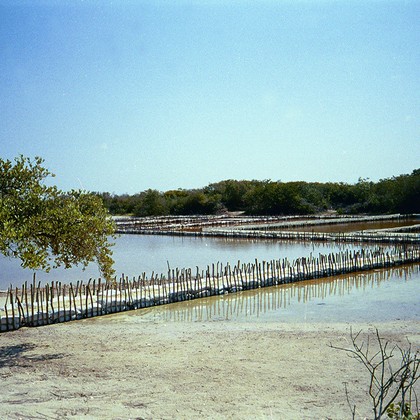
Where the bird is most at home, classified by the vegetation units of Mexico and Central America.


Range and movements
Winters in northern and central Mexico, mainly on the plateau of Chihuahua, Durango and Zacatecas, further in Coahuila, Nuevo León, Tamaulipas, San Luis Potosí, Sonora, Sinaloa and Baja California, and in smaller numbers south to Jalisco, Guanajuato and Michoacán. Further south rare, with records in Yucatán, Belize, Honduras and El Salvador, among other places. Breeds on the tundra of North America and the far north-east of Siberia and winters mostly in the United States.
- Winter visitor (c. Oct–Mar)
- dark = core range, pale = thinly spread
How and when to look
In December and January at the lakes and fields of the Chihuahua plateau, for instance around Laguna de Babícora. The flocks are best seen shortly after sunrise, when they fly from the roost to the fields; blue birds and Ross's Geese are regularly mixed in.
Conservation status
Not threatened globally. The North American population has increased strongly since the 1970s, partly owing to the food available on farmland in the winter quarters. Only a small part of the world population winters in the guide area.
Scientific name
Anser caerulescens | (Linnaeus, 1758)
Linnaeus described the species in 1758 as Anas caerulescens; because it was later moved to another genus, the author and year stand in brackets. The genus Anser was introduced in 1760 by Brisson. Anser is the Latin word for 'goose'. caerulescens is Latin for 'bluish', from caeruleus 'dark blue', after the blue-grey dark morph. The specimen the first description was based on came from Hudson Bay.