All species › Passerines › Mockingbirds and thrashers › Socorro Mockingbird
Position in the tree Birds Aves › Birds with a flexible palate Neognathae › All other modern birds Neoaves › Landbirds Telluraves › Falcons, parrots and passerines Australaves › Falcons and passerines Eufalconimorphae › Parrots and passerines Psittacopasserae
Socorro Mockingbird | Mimus graysoni
Socorrospotlijster | Cenzontle de Socorro
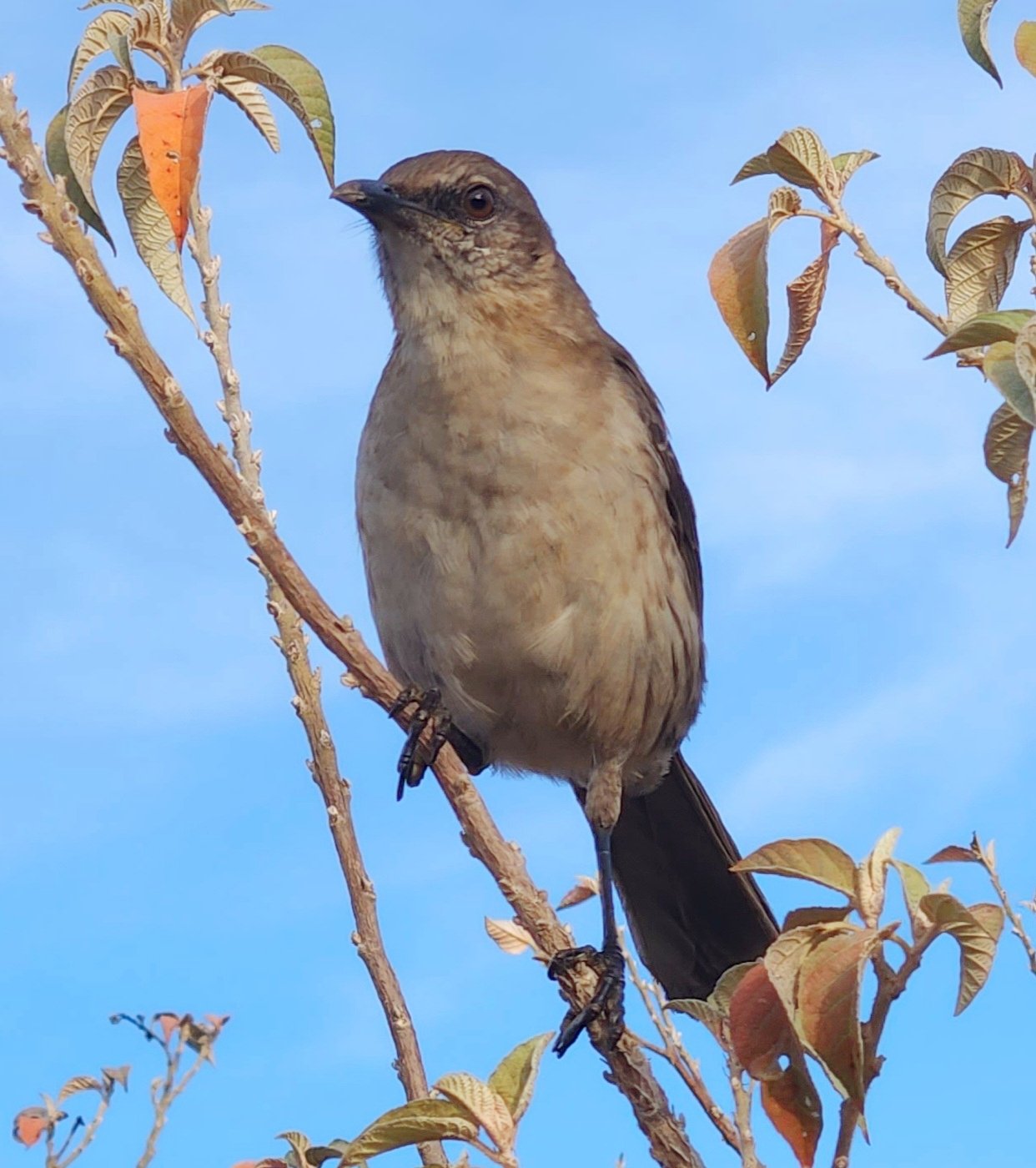
The Socorro Mockingbird is a large, plain grey-brown mockingbird found only on Isla Socorro, the largest of the Revillagigedo Islands in the Pacific Ocean off western Mexico. It is critically endangered: the world population numbers only a few hundred birds.
Voice
The song is a series of varied, whistled and scratchy phrases, slower and less repetitive than that of Northern Mockingbird. The call is a harsh chek and a soft, rasping note.
Recording: Alán Palacios — CC BY-NC-SA 4.0 · converted to mono · xeno-canto
Identification
25–28 cm. Large and sturdy, with a long tail and a fairly long, slightly decurved dark bill. Upperparts plain grey-brown, crown and back with faint dark streaking. Underparts paler greyish buff, with faint dark streaks on the flanks. No white patches in the wing; outer tail feathers with narrow pale tips. Iris dark. Juveniles are more distinctly spotted on the breast. The sexes are alike.
Confusion species
Northern Mockingbird Mimus polyglottos, which became established on Isla Socorro in the twentieth century, is greyer and slimmer, with large white patches in wing and tail and a yellow iris. No other mockingbirds occur on the island.
Habitat
Humid forest and scrub on the slopes of the volcano Cerro Evermann, mainly above about 500 m, with wild figs, Ficus cotinifolia, and Ilex socorroensis; also ravines with dense vegetation and, in smaller numbers, lower scrub. It forages on the ground and in shrubs and eats insects, other invertebrates and fruit.
Where the bird is most at home, classified by the vegetation units of Mexico and Central America.

Range and movements
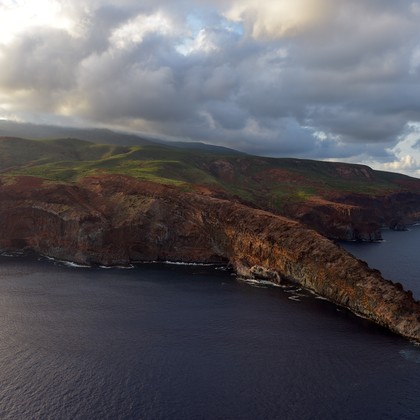
Endemic to Isla Socorro in the Revillagigedo Islands, about 450 km south of the tip of Baja California. It occurs nowhere else.
- Resident
- dark = core range, pale = thinly spread
How and when to look
Isla Socorro is a military area and nature reserve; visits are possible only with a permit, usually during diving expeditions or research trips. Birds are best found in the higher forest, where they can often be approached fairly closely.
Conservation status
Critically endangered (CR). The world population numbers a few hundred birds. Overgrazing by feral sheep long destroyed the forest and scrub; since the sheep were removed the vegetation has been recovering. Feral cats remain a major threat, and the introduced house mouse and the recently established Northern Mockingbird may also have an effect.
Scientific name
Mimus graysoni | (Lawrence, 1871)
Lawrence described the species in 1871 as Harporhynchus graysoni; because it was later moved to another genus, the author and year stand in brackets. The genus Mimus was introduced in 1826 by Boie. Mimus is Latin for 'mimic', after the habit of imitating other sounds. graysoni honours the American artist and ornithologist Andrew Jackson Grayson (1819–1869), who explored western Mexico and the Revillagigedo Islands. The specimen the first description was based on came from Socorro Island, Revillagigedo Islands, Mexico.