All species › Passerines › Mockingbirds and thrashers › Sage Thrasher
Position in the tree Birds Aves › Birds with a flexible palate Neognathae › All other modern birds Neoaves › Landbirds Telluraves › Falcons, parrots and passerines Australaves › Falcons and passerines Eufalconimorphae › Parrots and passerines Psittacopasserae
Sage Thrasher | Oreoscoptes montanus
Bergspotlijster | Cuitlacoche de chías
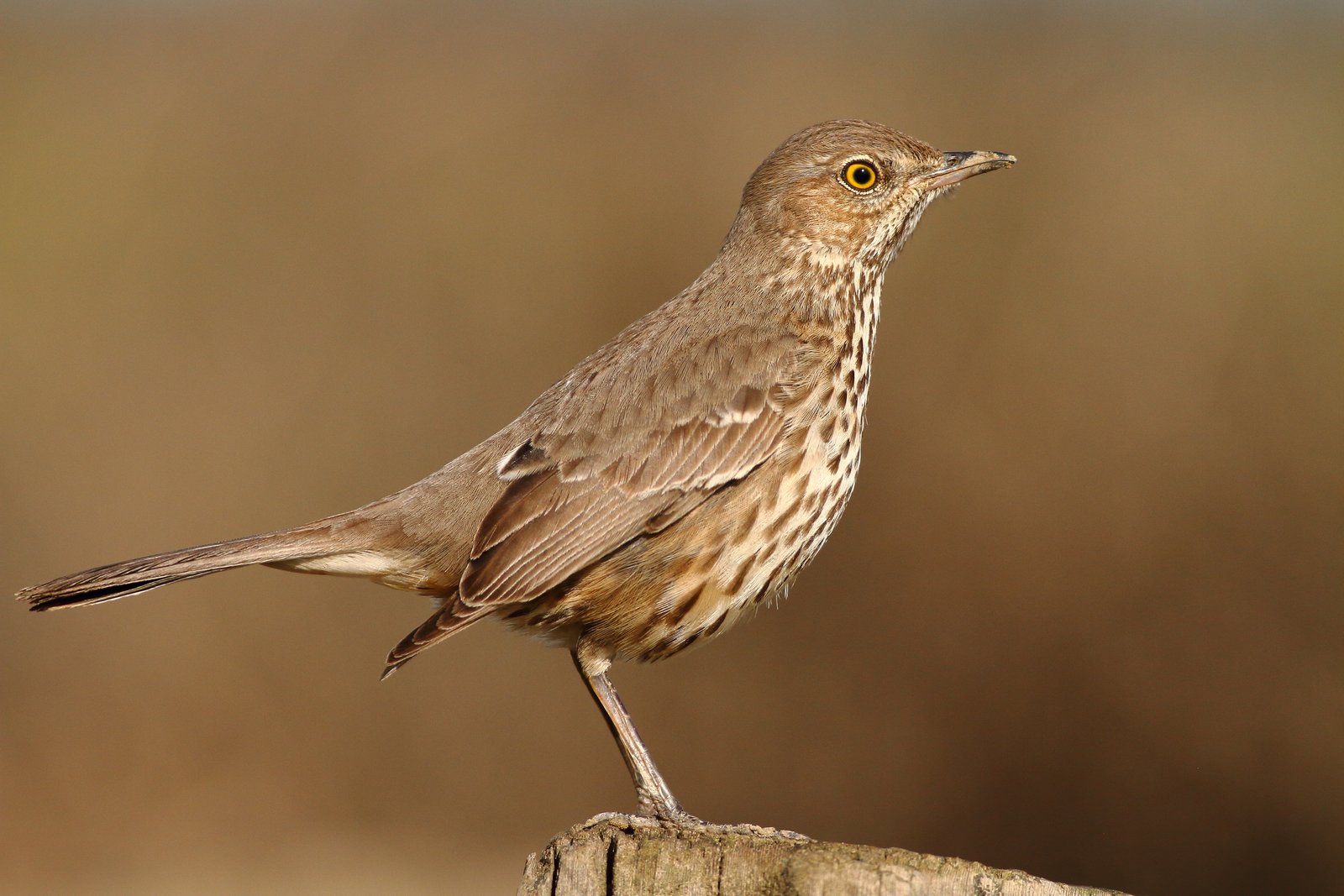
The Sage Thrasher is the smallest thrasher of the guide area, with a short, straight bill, a streaked breast and a yellow iris. It breeds in the sagebrush steppes of western North America and winters in open, dry country in northern Mexico.
Voice
The song is a long, continuous series of rapid, warbling notes without clear pauses; in the guide area heard mainly in late spring, shortly before departure. The call is a low, short chuck.
Recording: Ed Pandolfino — CC BY-NC-SA 4.0 · converted to mono · xeno-canto
Identification
20–22 cm. Rather small and compact for a thrasher, with a short, straight, dark bill and a medium-length tail. Upperparts grey-brown with faint dark streaks. Two narrow white wing bars. Underparts white to pale buff, with distinct dark streaks on breast and flanks. Narrow pale supercilium and a dark malar stripe. Iris yellow. Tail with white corners, visible in flight. In autumn and winter the streaks are fainter and the underparts warmer buff. The sexes are alike.
Confusion species
Bendire's Thrasher Toxostoma bendirei is larger, with a longer, slightly curved bill, no white wing bars and only fine arrowhead spots on the breast. Curve-billed Thrasher Toxostoma curvirostre is much larger, with a long, curved bill and an orange iris. Juvenile Northern Mockingbirds Mimus polyglottos have a spotted breast, but are larger, with a longer tail and large white patches in wing and tail.
Habitat
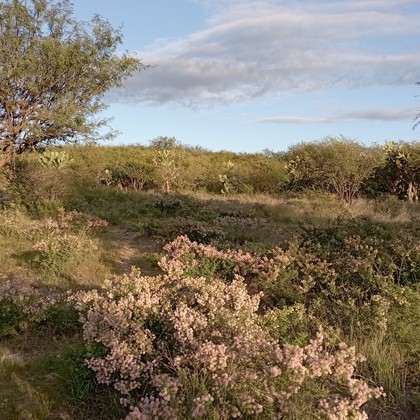
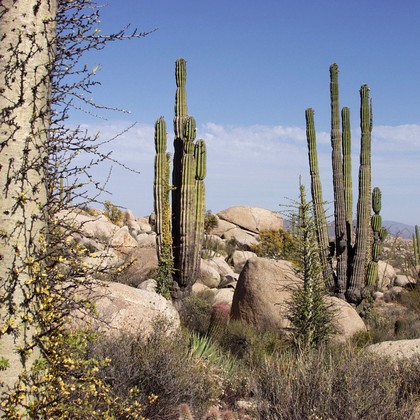
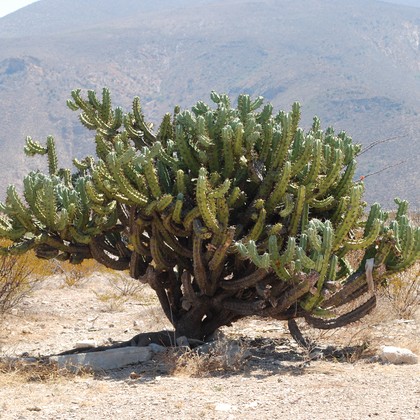
In winter open semi-desert and grassland with scattered shrubs, dry scrub, juniper groves and field margins. It searches the ground for insects and in winter eats many berries, including juniper berries. It runs quickly over open ground and often perches on top of a low bush.
Where the bird is most at home, classified by the vegetation units of Mexico and Central America.


Range and movements
Breeds in the western United States and extreme south-western Canada, mainly in the Great Basin. Winters in the south-western United States and northern Mexico. In the guide area in Baja California, Sonora, Chihuahua, Coahuila, Durango, Zacatecas, Nuevo León and San Luis Potosí, locally further south; numbers vary greatly from year to year.
- Winter visitor (c. Oct–Mar)
- dark = core range, pale = thinly spread
How and when to look
In winter often found near junipers and other berry-bearing shrubs in open country; it regularly perches in view on top of a bush and flicks its tail when disturbed.
Conservation status
Not threatened (LC). Still widespread, but numbers are declining because of the loss of sagebrush steppe in the breeding range through fire, invasive grasses and conversion to farmland.
Scientific name
Oreoscoptes montanus | (Townsend, 1837)
Townsend described the species in 1837 as Orpheus montanus; because it was later moved to another genus, the author and year stand in brackets. The genus Oreoscoptes was introduced in 1858 by Baird. Oreoscoptes is Greek, from oros 'mountain' and skōptēs 'mocker': 'mountain mocker'. montanus is Latin for 'of the mountains'; Townsend originally called the bird the 'mountain mockingbird'. The specimen the first description was based on came from Sandy Creek, Wyoming.