All species › Waders, gulls and terns › Sandpipers and allies › Solitary Sandpiper
Position in the tree Birds Aves › Birds with a flexible palate Neognathae › All other modern birds Neoaves › Birds of the elements Elementaves › Cranes and waders Gruimorphae
Solitary Sandpiper | Tringa solitaria
Amerikaanse bosruiter | Andarríos solitario
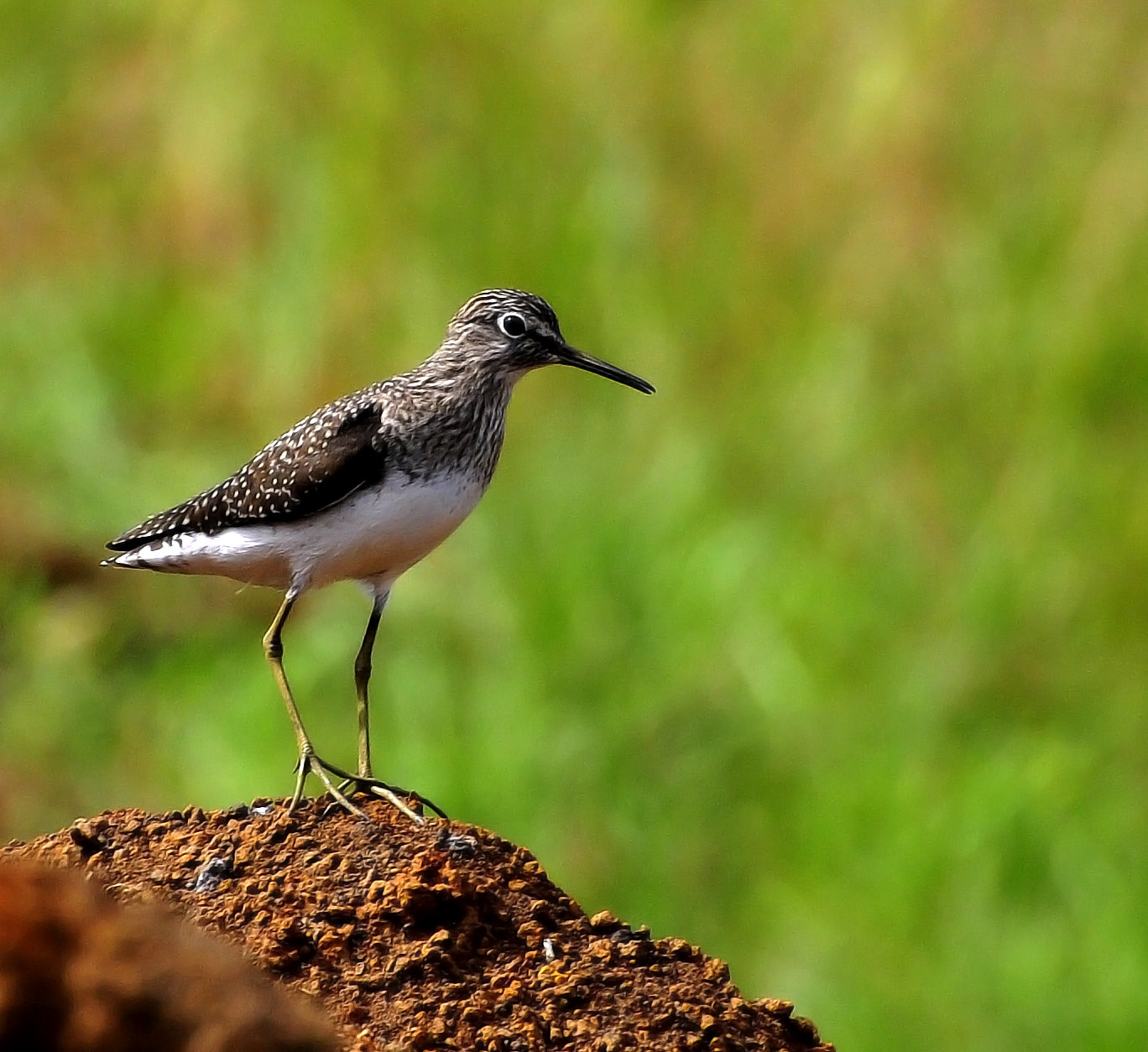
The Solitary Sandpiper is a dark, slender sandpiper of small freshwater pools, usually feeding alone outside the breeding season. It breeds in the boreal forests of Canada and Alaska, where it is the only North American wader to use old songbird nests in trees. In the guide area it is a widespread passage migrant and winter visitor.
Voice
A high, clear peet-weet or peet-weet-weet, higher and sharper than that of Spotted Sandpiper, often on taking flight.
Recording: Stanislas Wroza — CC BY-NC-SA 4.0 · converted to mono · xeno-canto
Identification
18–23 cm, slender, with a straight, dark bill about as long as the head and fairly long, greenish legs. The upperparts are dark olive-brown with fine white spots, the head and breast streaked grey-brown, the belly white. A distinct white eye-ring and a pale line between bill and eye. In flight dark underwings, no wing bar, a dark rump and central tail and barred black-and-white tail sides. It frequently bobs its head and fore-body. Non-breeding birds are greyer and less spotted; juveniles have pale buff spots.
Confusion species
Lesser Yellowlegs Tringa flavipes is paler, with longer, bright yellow legs, a square white rump and no distinct eye-ring. Spotted Sandpiper Actitis macularius is more compact, bobs its rear end, has a white wing bar and flies low on flickering wingbeats.
Habitat
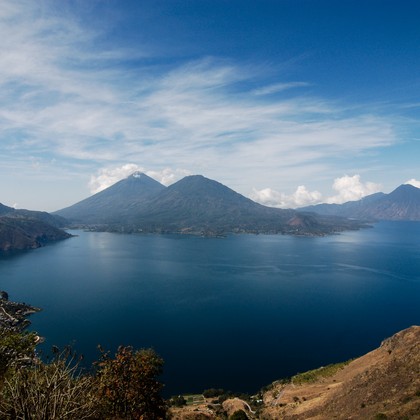
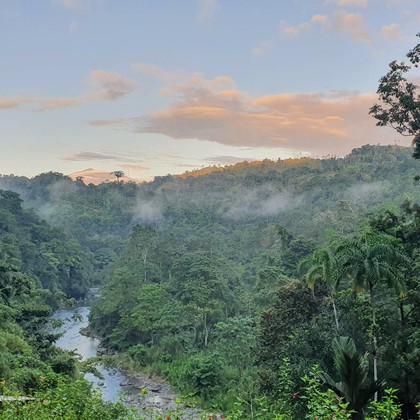
Edges of small ponds, pools and ditches, streams in woodland and pasture, cattle ponds, flooded fields and rice fields; often at places sheltered by trees or shrubs, from the lowlands into the mountains. Rarely on salt water. It walks carefully through shallow water picking insects and small aquatic animals, sometimes stirring the mud with one foot.
Where the bird is most at home, classified by the vegetation units of Mexico and Central America.


Range and movements
Passage migrant and winter visitor throughout the guide area, from northern Mexico to Panama, in winter mainly in southern Mexico and Central America. Outside the guide area the species breeds in the boreal zone of Alaska and Canada and winters from Mexico and the Caribbean to Argentina.
- Winter visitor (c. Oct–Mar)
- dark = core range, pale = thinly spread
How and when to look
Small, tree-lined pools and cattle ponds in pasture are the places to look for this species, usually a single bird. On take-off the high call, the dark underwing and the barred tail sides are distinctive.
Conservation status
Not threatened. Because of its dispersed habits and remote breeding grounds, trends are hard to measure. In the guide area the species depends on small freshwater pools and wet pastures, which are being drained in many places.
Scientific name
Tringa solitaria | Wilson, 1813
Wilson described the species in 1813 and placed it straight away in the genus where it still stands. The genus Tringa was introduced in 1758 by Linnaeus. Tringa is the Neo-Latin name Aldrovandi gave to the green sandpiper, after Ancient Greek trungas, a thrush-sized, white-rumped, tail-bobbing wading bird mentioned by Aristotle. solitaria is Latin for 'solitary', from solus 'alone', after the habit of appearing singly rather than in flocks. The specimen the first description was based on came from the Pocono Mountains, Pennsylvania.