All species › Waterfowl › Ducks, swans and geese › Surf Scoter
Position in the tree Birds Aves › Birds with a flexible palate Neognathae › Fowl Galloanserae
Surf Scoter | Melanitta perspicillata
Brilzee-eend | Negrón careto
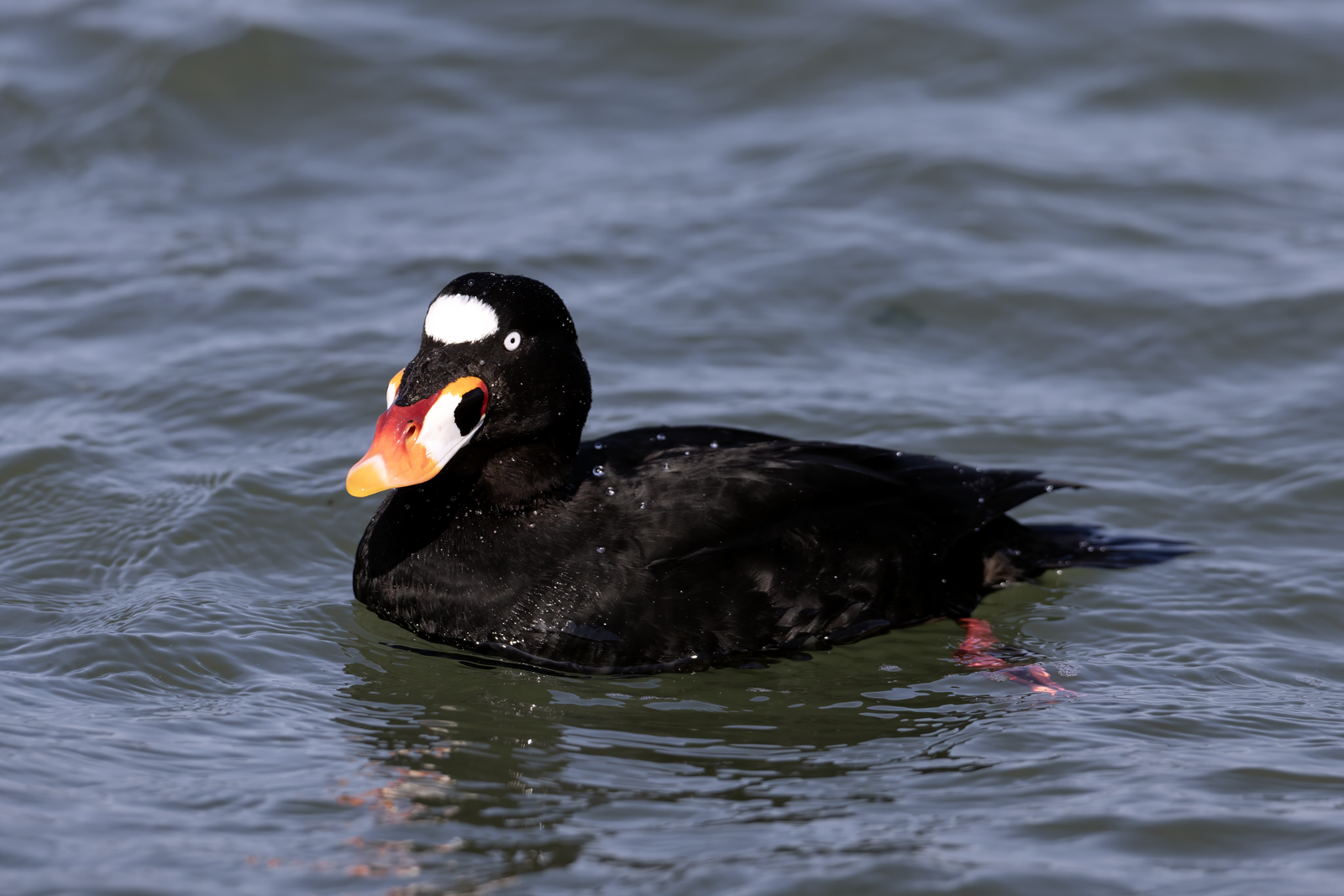
The Surf Scoter is a North American sea duck that winters along the Pacific coast of north-western Mexico, mainly around Baja California and in the Gulf of California. It is the most numerous scoter in the guide area. Flocks sit just beyond the surf and dive for shellfish.
Voice
Usually silent in winter. In flight the wings of the male make a soft whistling or humming sound. In display the male gives a low, gurgling sound, the female a hoarse krah.
Recording: Stanislas Wroza — CC BY-NC-SA 4.0 · converted to mono · xeno-canto
Identification
46–55 cm. A bulky, dark diving duck with a large, wedge-shaped head profile: the flat forehead runs without a break into a heavy bill. The male is all black with a white patch on the forehead and a larger one on the nape, a white eye and a bill in orange, red, yellow and white with a round black spot on the side of the base. The female is dark brown with two faint pale patches on the side of the head, in front of the eye and on the ear coverts, often with a pale patch on the nape; the bill is dark. Juveniles resemble the female, with a paler belly. There is no white in the wing in any plumage.
Confusion species
White-winged Scoter Melanitta deglandi has a white patch on the secondaries in every plumage, which on swimming birds often shows as a narrow white line along the flank; the male has only a small white hook behind the eye. Females and juveniles of both species have two pale head patches, so in those plumages the wing white decides. Young Double-crested Cormorants Nannopterum auritum, which also sit low in the water and dive, have a long neck and a thin, hooked bill.
Habitat
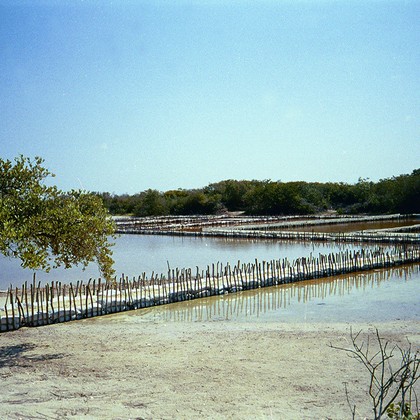
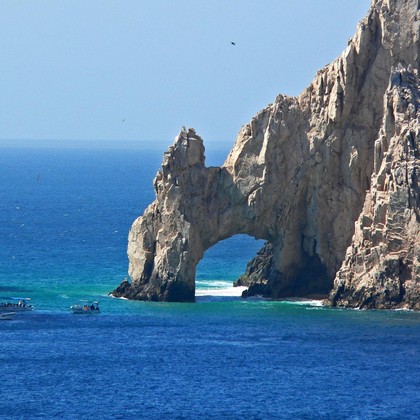
Shallow coastal water beyond the surf, sheltered bays, coastal lagoons and estuaries; rarely on fresh water inland. It dives for mussels and other shellfish, crustaceans and worms.
Where the bird is most at home, classified by the vegetation units of Mexico and Central America.

Range and movements
Winters along both coasts of Baja California and Baja California Sur and in the Gulf of California along Sonora and Sinaloa, south in smaller numbers to Nayarit; rare further south. On the Gulf of Mexico the species winters mainly along the coast of the United States. Breeds on lakes in the boreal forests of Alaska and Canada.
- Winter visitor (c. Oct–Mar)
- dark = core range, pale = thinly spread
How and when to look
The bays and lagoons on the Pacific side of Baja California, such as Bahía de San Quintín and Laguna Ojo de Liebre, where flocks sit beyond the surf; the white nape patch of the male flashes as soon as the bird turns its head.
Conservation status
Not threatened globally. The North American population has declined since the middle of the twentieth century. In the guide area a fairly common winter visitor along the north-west coast.
Scientific name
Melanitta perspicillata | (Linnaeus, 1758)
Linnaeus described the species in 1758 as Anas perspicillata; because it was later moved to another genus, the author and year stand in brackets. The genus Melanitta was introduced in 1822 by Boie. Melanitta is Greek, from melas 'black' and netta 'duck'. perspicillata is modern Latin for 'spectacled', from perspicere 'to see through', after the striking white head markings. The specimen the first description was based on came from Hudson Bay.