All species › Gamebirds › Partridges, pheasants, grouse and allies › Wild Turkey
Position in the tree Birds Aves › Birds with a flexible palate Neognathae › Fowl Galloanserae
Wild Turkey | Meleagris gallopavo
Wilde kalkoen | Guajolote norteño
The Wild Turkey is the largest gamebird of North America and in the guide area a bird of the mountain forests and scrubland of northern Mexico. In central and southern Mexico the species was domesticated more than two thousand years ago; the domestic turkey now found throughout the guide area descends from those southern birds. The Mexican name guajolote goes back to Nahuatl.
Voice
In spring the male gives a loud, rolling gobble, gobble-obble-obble, that carries far, especially at dawn from the roost tree. Also soft clucking and purring notes and a sharp putt when alarmed.
Recording: Stanislas Wroza — CC BY-NC-SA 4.0 · shortened to the first 60 s, mono · xeno-canto
Identification
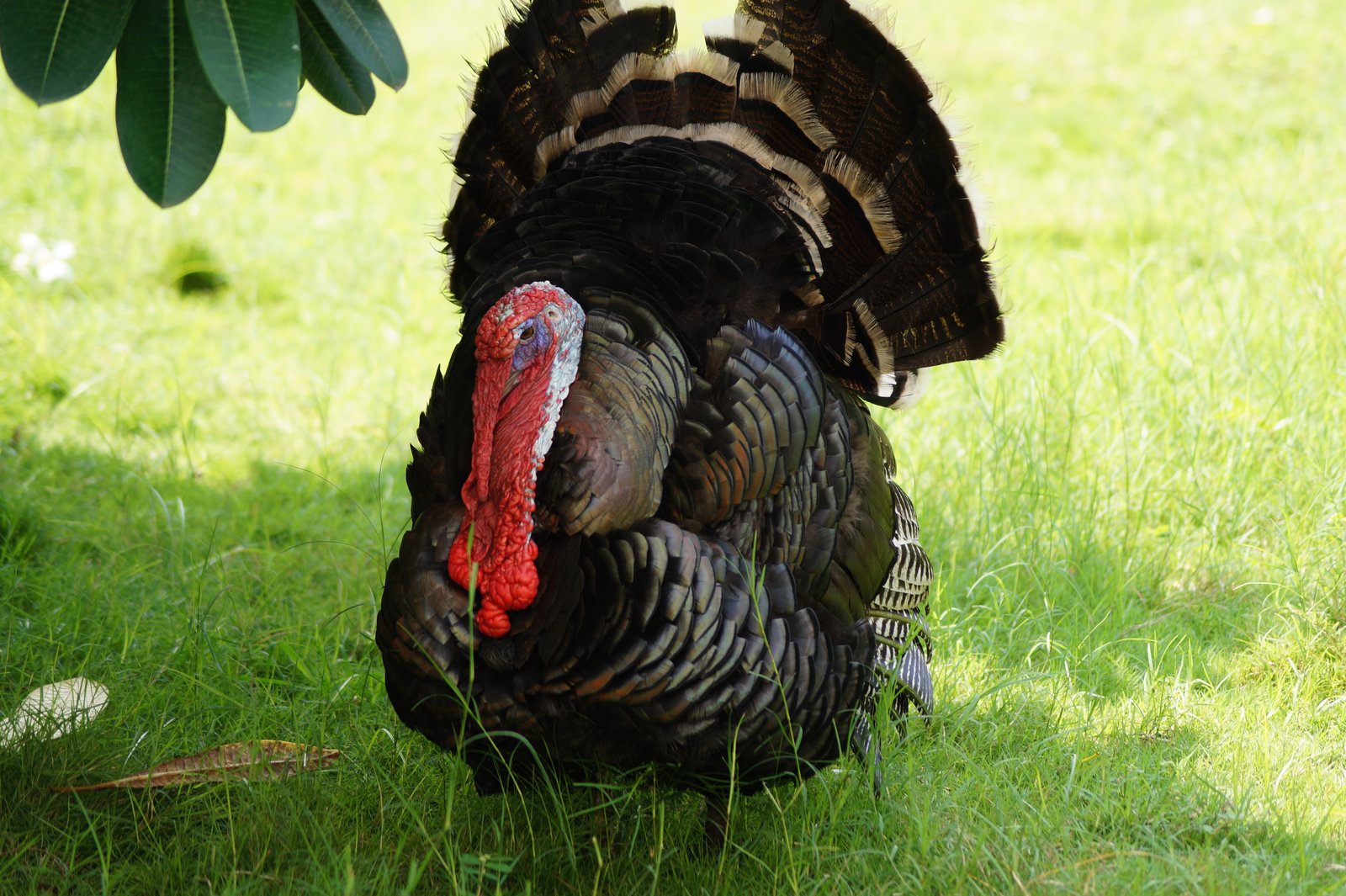
76–125 cm; the male is much larger and heavier than the female. Large and heavy, with a bare blue-and-red head and neck, a fleshy snood over the bill and red wattles on the throat. The plumage is dark brown with a copper and bronze sheen; the flight feathers are barred black and white. The male has a beard of hair-like feathers on the breast and spurs on the legs, and fans its tail in display. The female is duller and smaller, with a more feathered head. Birds of the Sierra Madre Occidental (M. g. mexicana) have white tips to the tail and uppertail coverts, which are paler ochre-brown in the north-east (M. g. intermedia).
Confusion species
Domestic turkeys are often white, pied or dull black and more heavily built; dark domestic birds can be hard to tell from wild ones in the field, but live around farmyards and villages. Ocellated Turkey Meleagris ocellata lives only on the Yucatán Peninsula and has a blue head with orange warts and eyespots on the tail.
Habitat
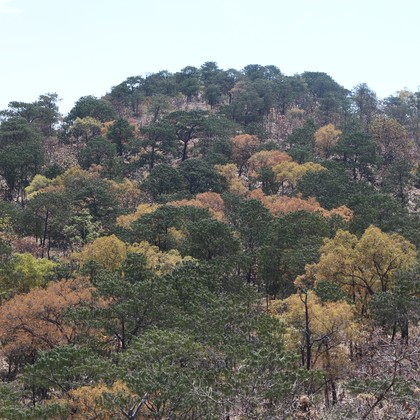
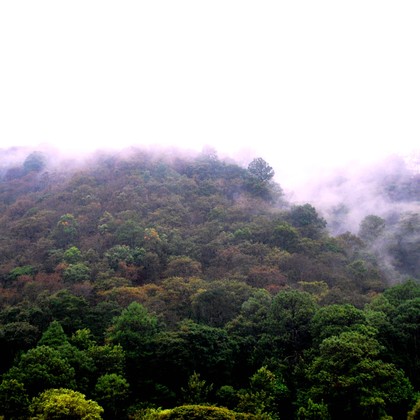
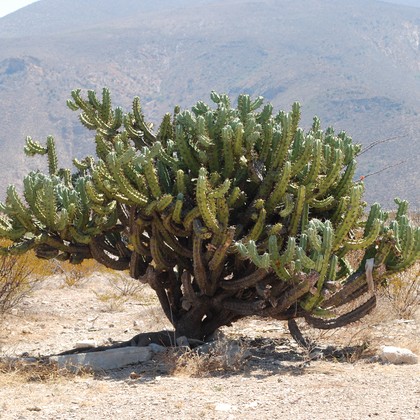
Open oak and pine-oak woodland in the mountains, with clearings and grassy patches, riparian woodland along rivers and streams, and in the north-east thorn scrub and mesquite country with thickets. It also visits pasture and fields at the forest edge. It forages in flocks on the ground for acorns, seeds, fruit and insects and roosts high in trees. The nest is a scrape on the ground in dense cover.
Where the bird is most at home, classified by the vegetation units of Mexico and Central America.


Range and movements
Northern Mexico: the Sierra Madre Occidental in Sonora, Chihuahua, Durango, Sinaloa and Zacatecas south to Jalisco and Aguascalientes (M. g. mexicana), and in the north-east Coahuila, Nuevo León, Tamaulipas and San Luis Potosí (M. g. intermedia). Records further south, including Guanajuato, Hidalgo, Querétaro and Veracruz, mostly involve domestic or released birds; the southern wild form (M. g. gallopavo), the ancestor of the domestic turkey, has probably disappeared from the wild. Outside the guide area in much of the United States and southern Canada.
- Resident
- dark = core range, pale = thinly spread
How and when to look
The best chances are in the pine-oak forests of the Sierra Madre Occidental in Chihuahua and Durango, and on managed ranches in Coahuila and Nuevo León. In spring the gobbling of the males at dawn reveals where the birds roost.
Conservation status
Not threatened globally. In Mexico the species has disappeared from much of its original range through hunting and deforestation. It has returned locally on ranches with managed hunting and through releases.
Scientific name
Meleagris gallopavo | Linnaeus, 1758
Linnaeus described the species in 1758 and placed it straight away in the genus where it still stands. He introduced the genus Meleagris in that same work. Meleagris is the Greek word for 'guineafowl', transferred by Linnaeus to the turkey. gallopavo is Latin, from gallus 'cock' and pavo 'peafowl': 'cock-peacock'. The specimen the first description was based on came from Mexico.