All species › Parrots › African and New World parrots › Yucatan Amazon
Position in the tree Birds Aves › Birds with a flexible palate Neognathae › All other modern birds Neoaves › Landbirds Telluraves › Falcons, parrots and passerines Australaves › Falcons and passerines Eufalconimorphae › Parrots and passerines Psittacopasserae
Yucatan Amazon | Amazona xantholora
Geelteugelamazone | Loro yucateco
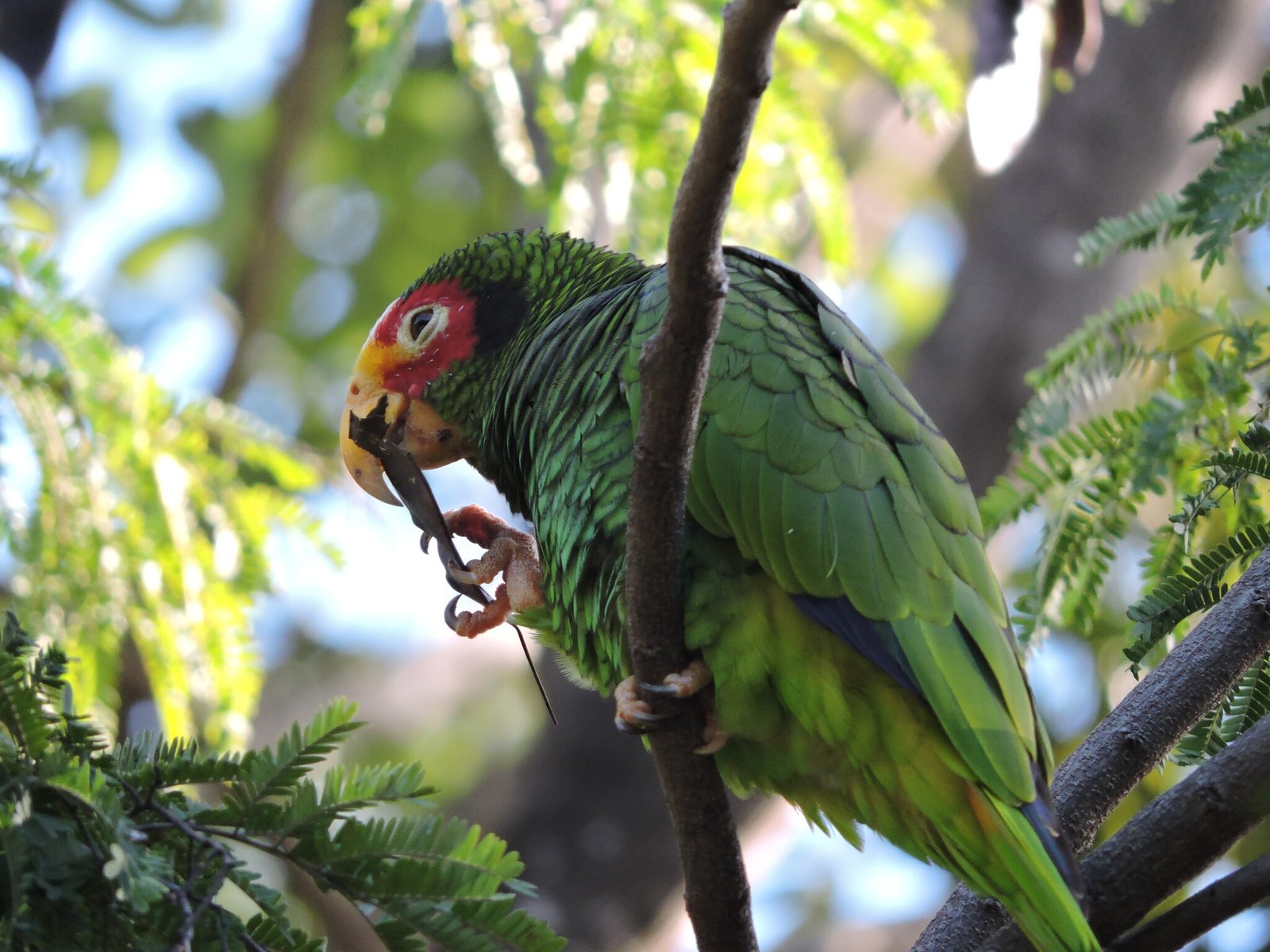
The Yucatan Amazon is a small amazon that lives almost only on the Yucatán Peninsula. It closely resembles the White-fronted Amazon, with which it often occurs, but has yellow lores and a black patch on the ear coverts.
Voice
Shrill, yapping cries and a rolling krrek, similar to those of White-fronted Amazon but slightly higher and sharper; noisy in flight.
Recording: Manuel Grosselet — CC BY-NC-SA 4.0 · shortened to the first 60 s, mono · xeno-canto
Identification
25–28 cm. Green with a short, square tail; the feathers of the neck and mantle have dark edges, giving a scaly pattern. The male has a white forehead, a blue crown, yellow lores, red around the eye and a black ear patch; the primary coverts and alula are red. The female has a blue crown with little or no white, less red around the eye, a less distinct ear patch and no red in the wing. In flight the flight feathers are blue. The bill is yellowish.
Confusion species
White-fronted Amazon Amazona albifrons lacks the yellow lores and black ear patch; in that species the red around the eye extends onto the lores. Red-lored Amazon Amazona autumnalis is larger, with a red forehead and yellow cheeks.
Habitat
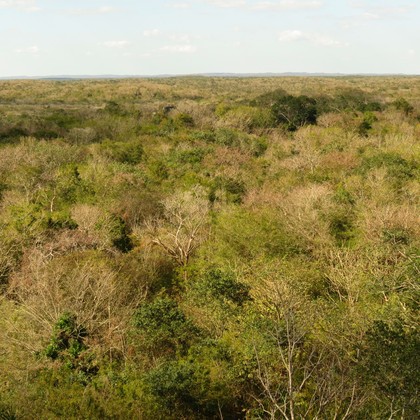
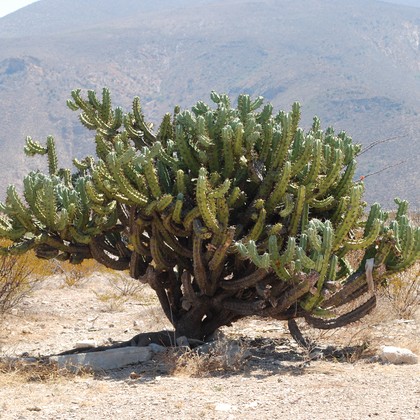
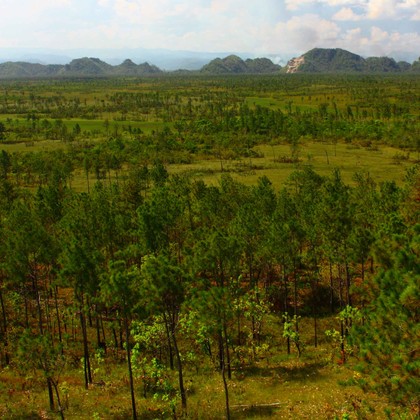
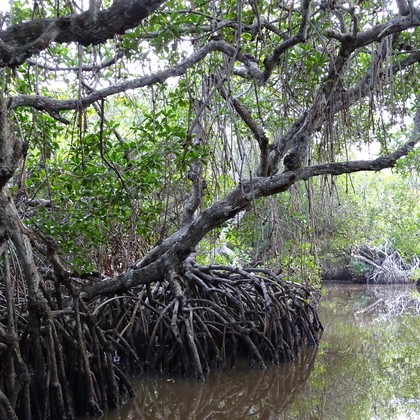
Dry and semi-deciduous forest, scrub and forest edges, pine savanna in Belize, mangroves and farmland with scattered trees; from sea level to about 300 m. It eats seeds, fruit and blossom. It nests in a tree cavity, often an old woodpecker hole.
Where the bird is most at home, classified by the vegetation units of Mexico and Central America.


Range and movements
The Yucatán Peninsula in Mexico (Yucatán, Campeche, Quintana Roo, including Cozumel) and northern Belize; also on Roatán in the Bay Islands of Honduras. Scarce in the northern Petén of Guatemala.
- Resident
- dark = core range, pale = thinly spread
How and when to look
Around Mérida, Celestún and Río Lagartos and at the Maya ruins of Calakmul and Cobá small groups of amazons fly over in the morning; the yellow lores and black ear patch separate it from White-fronted Amazon.
Conservation status
Least Concern. Trapped for the cage-bird trade and sensitive to clearance of dry forest, but still fairly common within its small range.
Scientific name
Amazona xantholora | (Gray, 1859)
Gray described the species in 1859 as Chrysotis xantholora; because it was later moved to another genus, the author and year stand in brackets. The genus Amazona was introduced in 1830 by Lesson. Amazona comes from 'Amazone', the French name Buffon gave to various tropical American parrots because they came from the Amazon region. xantholora is formed from Greek xanthos 'yellow' and Latin lorum 'lore', after the yellow lores. The specimen the first description was based on came from Honduras.