All species › Passerines › Wrens › Yucatan Wren
Position in the tree Birds Aves › Birds with a flexible palate Neognathae › All other modern birds Neoaves › Landbirds Telluraves › Falcons, parrots and passerines Australaves › Falcons and passerines Eufalconimorphae › Parrots and passerines Psittacopasserae
Yucatan Wren | Campylorhynchus yucatanicus
Yucatánwinterkoning | Matraca yucateca
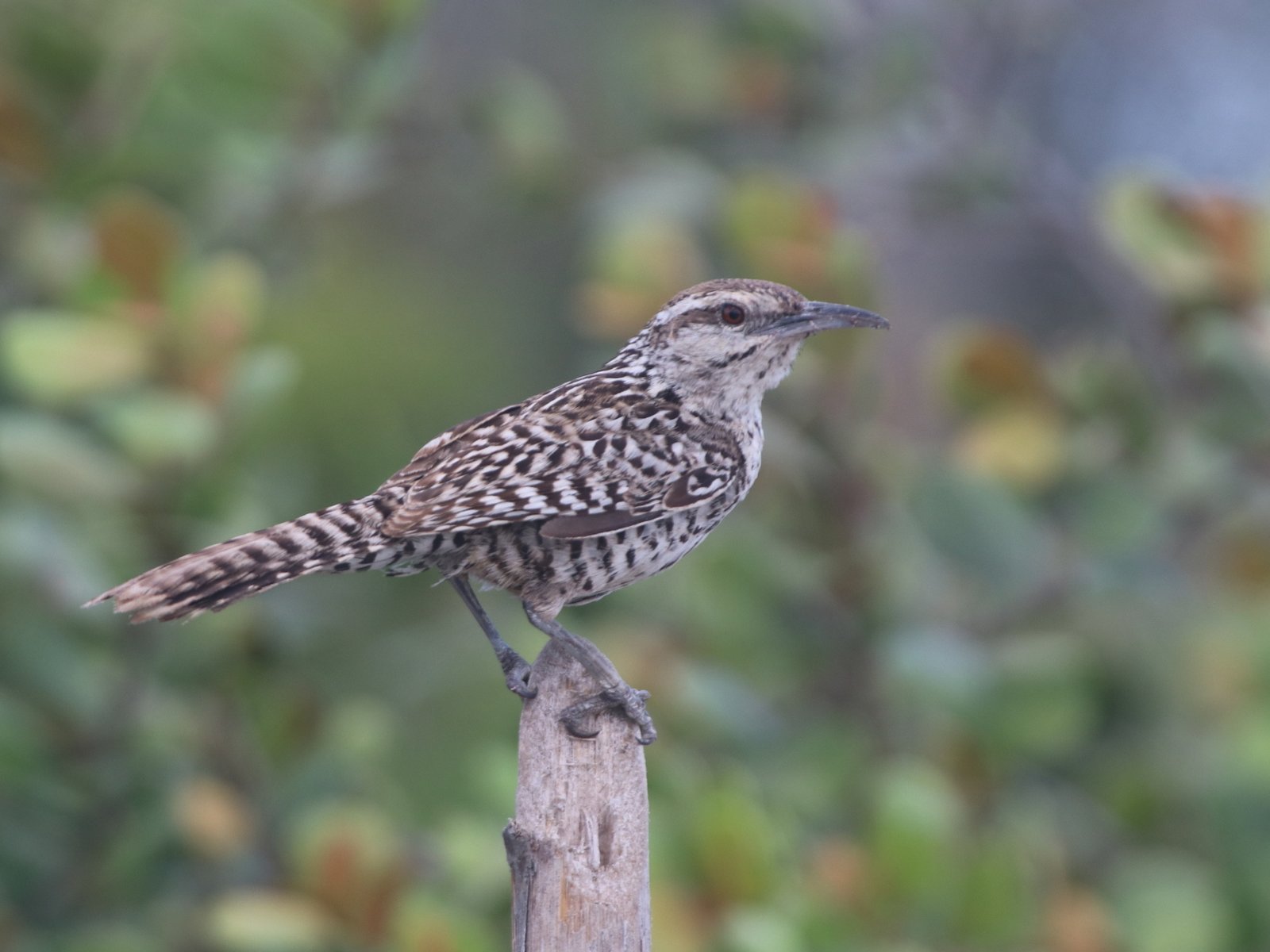
The Yucatan Wren is a large, streaked Campylorhynchus wren with one of the smallest ranges in its genus: a narrow strip of dry coastal scrub in the north of the Yucatán Peninsula. Pairs and family groups keep in contact with loud, grating duets.
Voice
Loud, rattling and grating series, often as a duet or by a group at once; also scratchy calls.
Recording: Ross Gallardy — CC BY-NC-SA 4.0 · converted to mono · xeno-canto
Identification
17–18 cm. Crown brown, with a white supercilium and a dark eyestripe. Back and mantle brown with bold black and white streaks. Underparts white, with fine dark spots and streaks on breast and flanks. Wings and fairly long tail barred, outer tail feathers with white. Bill fairly long and slightly curved. The sexes are alike.
Confusion species
In its habitat it is the only Campylorhynchus. Carolina Wren Thryothorus ludovicianus also occurs on the peninsula but is smaller, with an unstreaked rufous-brown back and buffy underparts. Spot-breasted Wren Pheugopedius maculipectus is smaller, has an unstreaked brown back and lives in more humid forest.
Habitat
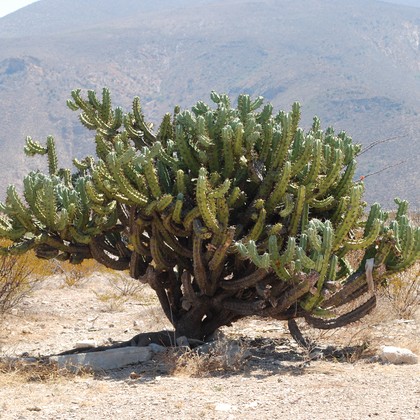
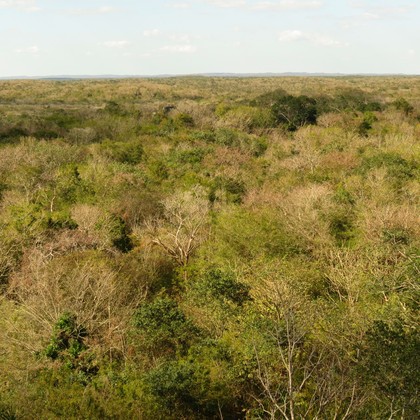
Dry coastal scrub, scrub with cacti and low dry woodland just behind the coast, also on dunes and along lagoons; rarely more than a few kilometres inland. It searches for insects on the ground and in shrubs. The nest is a ball with a side entrance in a cactus or thorny shrub.
Where the bird is most at home, classified by the vegetation units of Mexico and Central America.

Range and movements
Endemic to the north of the Yucatán Peninsula in Mexico: the coastal strip of Yucatán and extreme northern Campeche. Does not occur outside the guide area.
- Resident
- dark = core range, pale = thinly spread
How and when to look
Found in the coastal scrub at Río Lagartos and Celestún, especially in the morning when pairs sing loudly from a cactus or shrub.
Conservation status
Near Threatened. The small coastal range is affected by the building of roads, houses and tourist facilities, and by fires.
Scientific name
Campylorhynchus yucatanicus | (Hellmayr, 1934)
Hellmayr described the species in 1934 as Heleodytes brunneicapillus yucatanicus; because it was later moved to another genus, the author and year stand in brackets. The genus Campylorhynchus was introduced in 1824 by Spix. Campylorhynchus is Greek, from kampulos 'curved' and rhunkhos 'bill', after the slightly decurved bill. yucatanicus refers to the Yucatán Peninsula of Mexico, where the species lives. The specimen the first description was based on came from Río Lagartos, Yucatán, Mexico.