All species › Passerines › Monarch flycatchers
Monarch flycatchers | Monarchidae
Monarchen | Monarcas
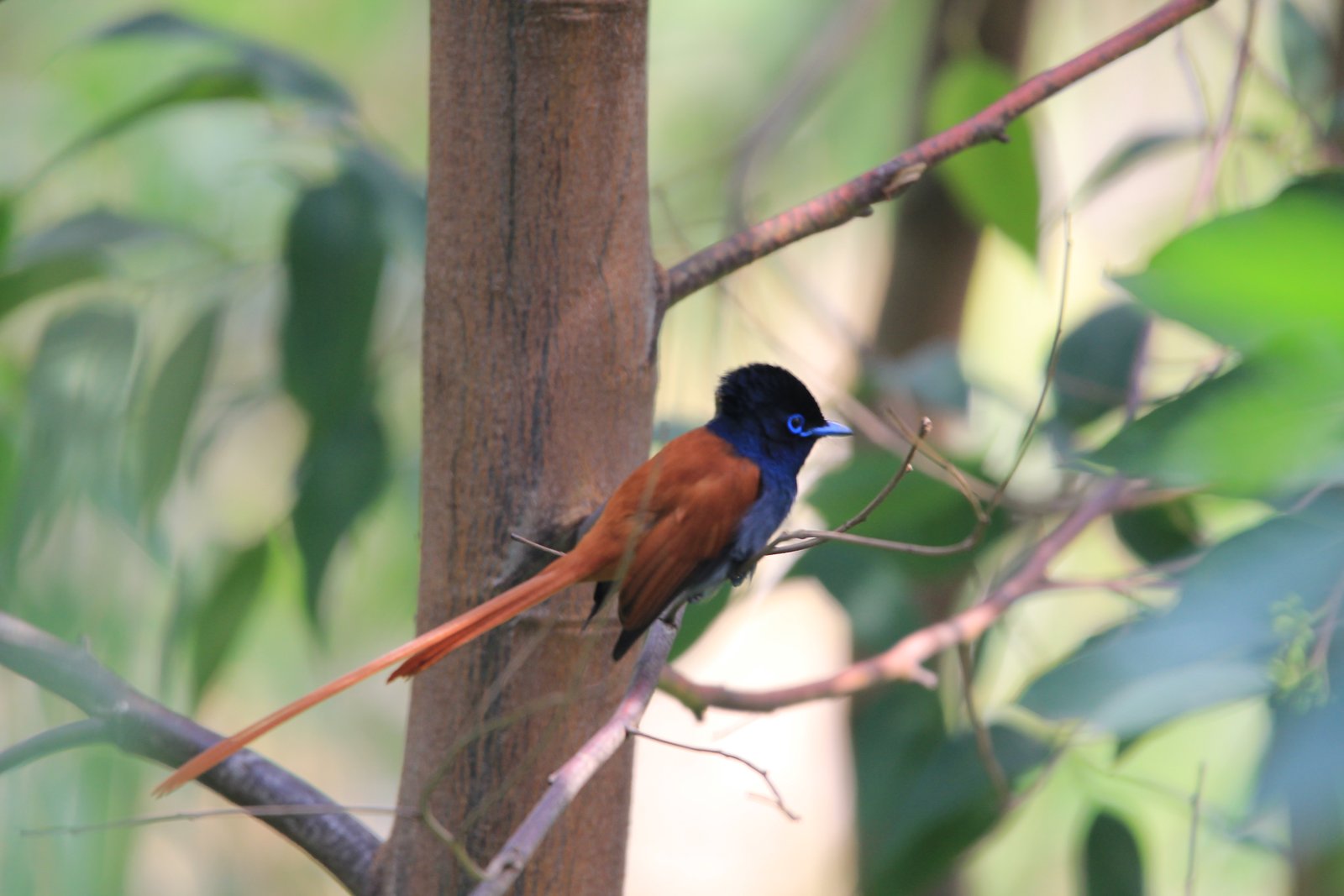
Small to medium-sized, restless insectivores of forest, woodland edge and riparian growth. The bill is broad and flattened, opening to a wide gape fringed with stiff rictal bristles that help secure flying prey. Monarchs forage energetically: short sallies from a perch, gleaning from foliage, and agile fluttering pursuits, often with fanned tail and flicked wings. In the paradise flycatchers (Terpsiphone) the male has a crest, a bright cobalt-blue eye-ring and bill, and greatly elongated central tail feathers. In the African Paradise Flycatcher these can more than double the bird's length, and rufous, white and intermediate morphs occur. Trochocercus is shorter-tailed and more retiring, keeping to denser forest. The nest is a neat, compact cup set on a slender horizontal fork, bound tightly with spider silk and covered outside with lichen, so it looks like a knot on the branch. Both sexes incubate, the long-tailed male included, his streamers trailing over the rim. Calls are harsh, rasping scolds. The song is a brief, ringing whistled trill.
Native species 1 species
Species that occur here by nature: breeding birds, winter visitors and passage migrants. They are arranged by genus, in the sequence of the list.


Vagrants 1 species
Birds blown in from other continents. They have no range here, and so no distribution map.


