All species › Waders, gulls and terns › Plovers and lapwings › European Golden-Plover
European Golden-Plover | Pluvialis apricaria
Goudplevier | Chorlito dorado europeo
A medium-sized, gold-spangled plover of open fields and bare plains, wintering mainly in the north of the region: from the Moroccan cereal plains to the Levant and Iraq. In mild winters most birds stay in western Europe; in hard frosts there, many more come to North Africa.
Voice
A soft, melancholy, monotonous whistle, tluu or pyuu, slightly falling; flocks give a soft murmuring.
Recording: Paul Kelly — CC BY-NC-SA 4.0 · converted to mono · xeno-canto
Identification
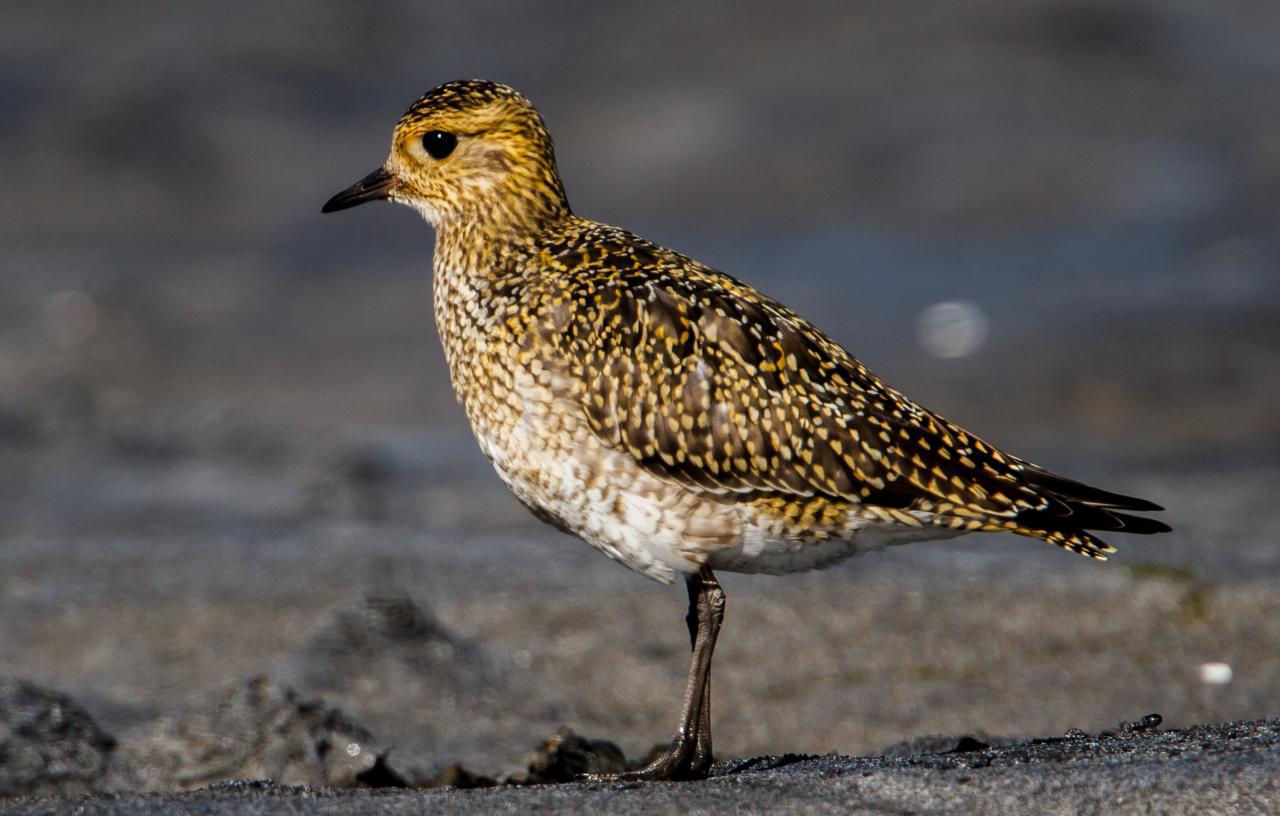
Slim plover with a round head, short black bill and large dark eye. Winter plumage: upperparts brown-black densely spotted golden-yellow, breast buff with spots and streaks, belly white; a faint pale supercilium gives the face a gentle expression. Breeding plumage (on departing birds from March): black from face and throat to belly, bordered by a white band from forehead to flank; northern birds are blacker than southern ones. In flight: white underwing with white axillaries, a narrow white wing bar and no white rump; flies in fast, tight flocks.
Confusion species
Pacific Golden-Plover (Pluvialis fulva) is slimmer and longer-legged, with grey axillaries, a bolder supercilium and long tertials; in Arabia it is commoner than European Golden-Plover. American Golden-Plover (Pluvialis dominica) is greyer, with a clear white supercilium, long wing tips and grey axillaries. Black-bellied Plover (Pluvialis squatarola) is larger and grey, with black axillaries and a white rump. Eurasian Dotterel (Eudromias morinellus) is smaller, with broad pale supercilia meeting on the nape and a pale breast band.
Habitat
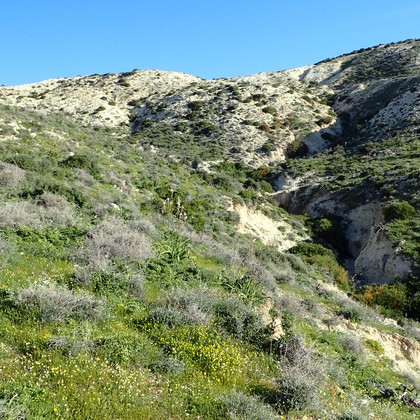
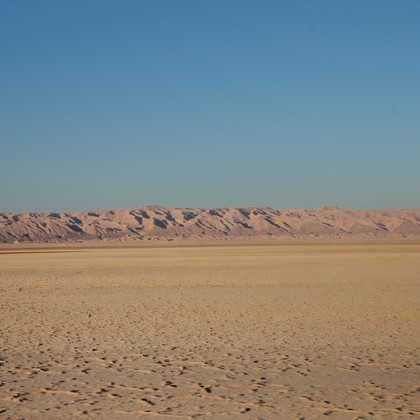
Open fields, fallow land, short-grazed pasture and dry steppe, also the edges of salt lakes and chotts; in North Africa mainly on cereal fields and bare plains, in the Levant on fields in the valleys. Often with Northern Lapwings. Also feeds at night on wet fields and lake shores.
Where the bird is most at home, classified by the habitats of North Africa and the Middle East.

Range and movements
Winter visitor to northern Morocco (the plains of the Gharb, Saïss, Chaouia and Doukkala, more scarcely to the Souss), northern Algeria (coastal plains and high plateaus), northern Tunisia (including around Ichkeul and Kairouan) and scarce in northern Libya and north-west Egypt (around the Nile Delta). In the east in Israel (Hula Valley, Jezreel Valley and northern Negev), Lebanon (Beqaa), Syria, Jordan and Iraq; scarce in Kuwait and north-east Saudi Arabia and rare further into Arabia. Breeds from Iceland and Britain through Scandinavia to central Siberia; winters mainly in western Europe and around the Mediterranean.
- Winter visitor (c. Apr–Sep)
- Passage (Mar–Apr, Oct–Nov)
- dark = core range, pale = thinly spread
How and when to look
Look for flocks from December to February on the cereal plains around Meknes and Fez or in the Hula Valley in Israel. Scan flocks of lapwings on fields: golden plovers often walk among them or take off with them. In Arabia every golden plover is worth checking against the much commoner Pacific.
Conservation status
Not globally threatened; the European breeding population has declined locally through drainage, afforestation and heavy grazing of moorland and heath. In the region it is hunted on its wintering plains, especially in North Africa and the Levant, and loses feeding habitat to agricultural intensification.
Scientific name
Pluvialis apricaria | (Linnaeus, 1758)
Linnaeus described the species in 1758 as Charadrius apricarius; because it was later moved to another genus, the author and year stand in brackets. The genus Pluvialis was introduced in 1760 by Brisson. Pluvialis is Latin for 'relating to rain', from pluvia 'rain', from the old belief that these plovers flocked when rain was imminent. apricaria is Latin, from apricari 'to bask in the sun', from apricus 'sunny'. The specimen the first description was based on came from Lapland.