All species › Waterfowl › Ducks, geese and swans › Lesser Whistling Duck
Lesser Whistling Duck | Dendrocygna javanica
Indische fluiteend | Suirirí indio
The smallest whistling duck of the region, a brown, upright duck with rufous wing panels that is very common in South and South-East Asia. It rarely wanders west: there are only a few records in the region, from the Arabian Peninsula to Israel.
Voice
A high, squeaky, repeated see-sik, see-sik, busy and twittering from a flushed group. The wings also make a soft whistling sound in flight.
Recording: David Darrell-Lambert — CC BY-NC-SA 4.0 · converted to mono · xeno-canto
Identification
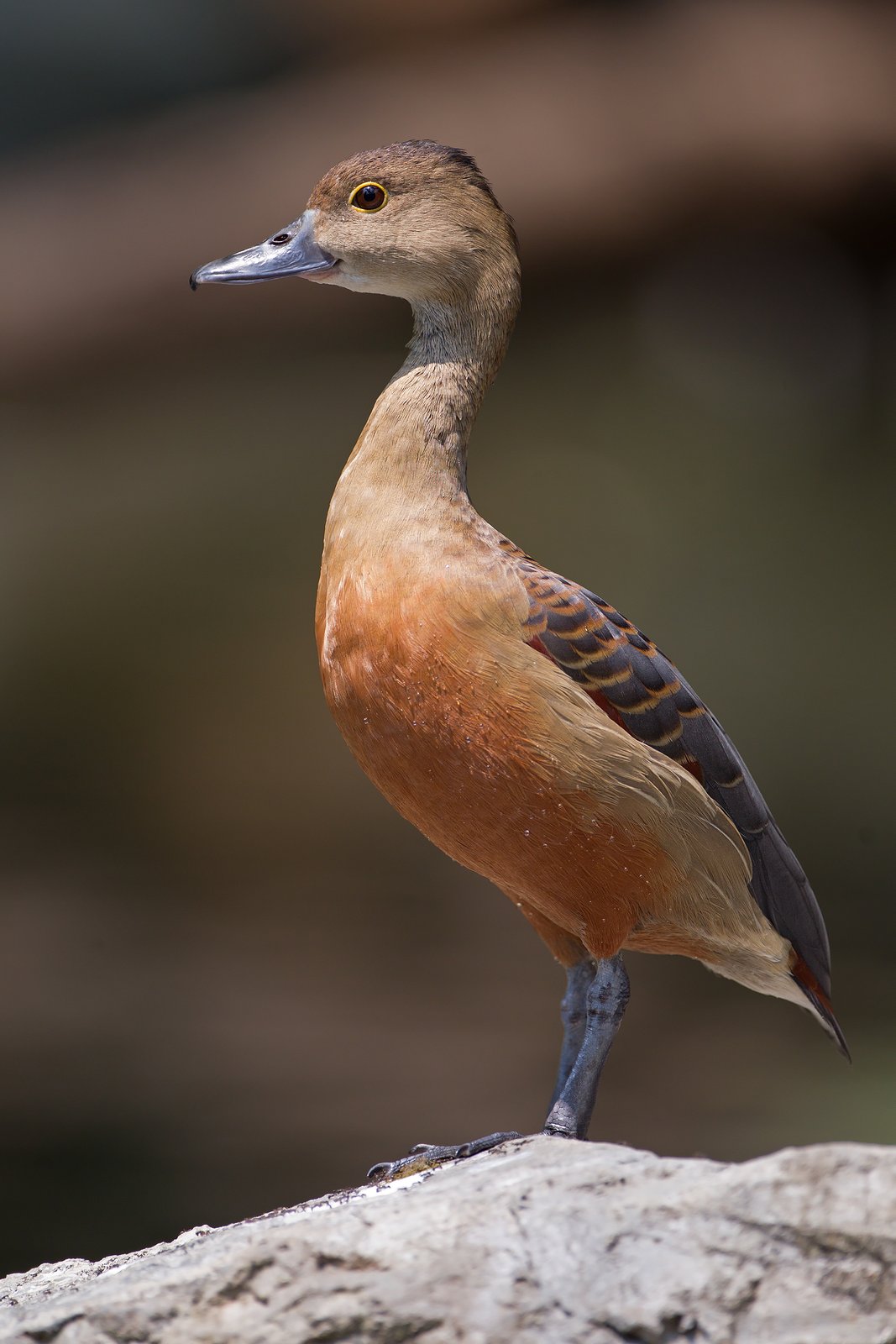
38–42 cm, slim and long-necked with long dark grey legs. Head and neck dull grey-brown with a dark brown crown and a narrow yellow eye-ring; breast and belly warm ochre-brown, flanks with narrow pale stripes. Back dark brown with pale fringes. In flight dark wings with chestnut lesser coverts and chestnut uppertail coverts; the wings are broad and rounded and produce a whistling sound. Sexes alike; juveniles are duller.
Confusion species
Fulvous Whistling Duck (Dendrocygna bicolor) is larger and paler orange-brown, with a white U on the rump and conspicuous creamy flank plumes; it lacks the rufous wing panel. White-faced Whistling Duck (Dendrocygna viduata) has a white face and a black belly. Ruddy Shelduck (Tadorna ferruginea) is much larger and has white wing panels.
Habitat
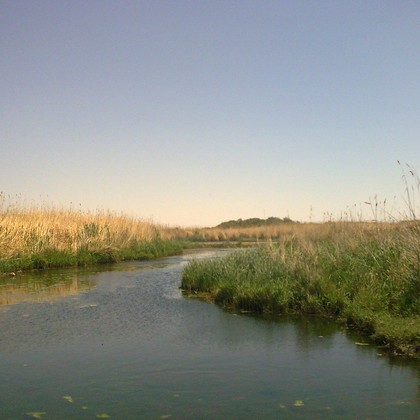
Freshwater marshes, lakes covered with water hyacinth or lotus, ponds and rice fields, often close to trees in which it rests or sometimes nests. It feeds by dabbling or diving for seeds, aquatic plants and small invertebrates. Vagrants in the region have been seen on park ponds, sewage farms and settling pools.
Where the bird is most at home, classified by the habitats of North Africa and the Middle East.

Range and movements
Within the region a vagrant with a few records in Oman, Saudi Arabia and Israel. Beyond it found from Pakistan and India across Sri Lanka and Bangladesh to southern China, Indochina and the Greater Sundas. After the monsoon it wanders widely at times.
How and when to look
A chance find. The best odds are in eastern Arabia, especially the ponds and sewage farms of Oman and the Emirates in winter. Look for the small size, rufous wing panels and chestnut rump; with a tame bird, escape must be considered.
Conservation status
Not threatened and numerous in South Asia, although it is hunted in many places and suffers from wetland loss. In the region a very rare vagrant.
Scientific name
Dendrocygna javanica | (Horsfield, 1821)
Horsfield described the species in 1821 as Anas Javanica; because it was later moved to another genus, the author and year stand in brackets. The genus Dendrocygna was introduced in 1837 by Swainson. Dendrocygna comes from the Greek dendron, 'tree', and the Latin cygnus, 'swan' — 'tree swan', because some whistling ducks perch or nest in trees. javanica means 'of Java'. The specimen the first description was based on came from Java, Indonesia.