All species › Waterfowl › Ducks, geese and swans › Mute Swan
Mute Swan | Cygnus olor
Knobbelzwaan | Cisne vulgar
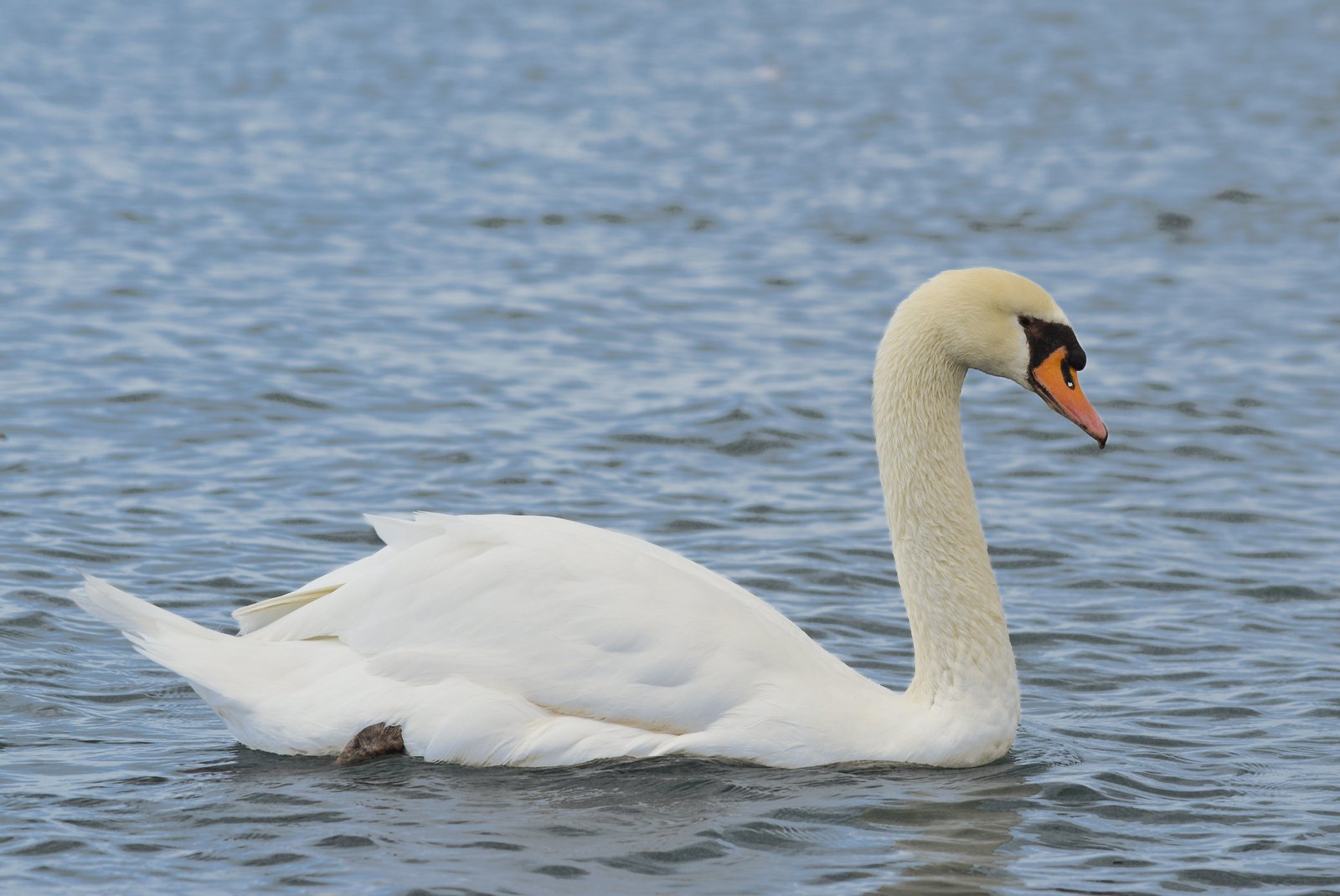
The familiar white park swan of Europe, with an orange bill and a black knob. In North Africa and the Middle East it is a scarce winter visitor from the Black Sea and Caspian region, moving south mainly after severe winters.
Voice
Not actually mute: a hissing hhorr when threatened and a soft, hoarse grunting between partners. The most striking sound is the rhythmic singing vaon-vaon-vaon of the wings of a bird passing overhead, which carries a long way.
Recording: Stanislas Wroza — CC BY-NC-SA 4.0 · converted to mono · xeno-canto
Identification
140–160 cm, very large and pure white, with an orange-red bill, a black bill base and a black knob that is larger in the male. It swims with the neck in an S-curve and the wings often arched over the back; the tail is pointed and slightly cocked. Juveniles are dingy grey-brown with a greyish-pink bill lacking a knob, turning white during their second calendar year. In flight the wings make a rhythmic throbbing sound.
Confusion species
Whooper Swan (Cygnus cygnus) and Bewick’s Swan (Cygnus columbianus) have a black bill with yellow at the base, a straight neck and a flat tail, and they call in flight, whereas Mute Swan only throbs with its wings. Young Mute Swans differ from young Whoopers in their greyish-pink bill with a black base and their S-shaped neck.
Habitat
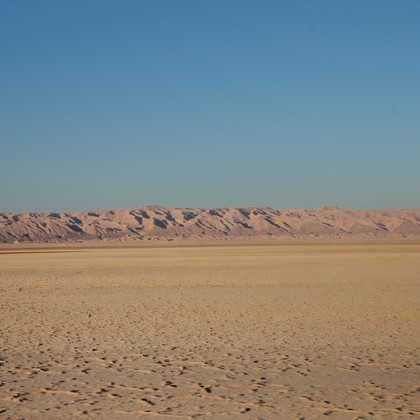
In winter on large lakes, lagoons, river deltas and brackish coastal waters with submerged vegetation, where it upends with its long neck to a depth of about a metre. Also on reservoirs and in sheltered coastal bays.
Where the bird is most at home, classified by the habitats of North Africa and the Middle East.


Range and movements
Within the region a scarce winter visitor in the north-east: in Iraq (the Mesopotamian marshes and the northern lakes), in Syria and in small numbers in Israel. In Egypt scarce on the Nile Delta lakes, and in Libya, Tunisia, Algeria and Morocco only a rare visitor. On the Arabian Peninsula a vagrant, with records in Saudi Arabia, Oman and the United Arab Emirates. Beyond the region it breeds from western Europe to Central Asia, with winterers on the Black Sea, the Caspian and in Turkey; introduced on other continents.
- Resident
- Summer visitor (c. Oct–Mar)
- Winter visitor (c. Apr–Sep)
- Passage (Mar–Apr, Oct–Nov)
- dark = core range, pale = thinly spread
How and when to look
The best chances come with harsh winters in eastern Europe and Turkey, when birds move south to Syria, Iraq and Israel. With any Mute Swan in the south of the region it is worth checking for rings and tameness, as the species is widely kept in parks.
Conservation status
Not threatened; numerous in Europe and locally increasing. In the region a small, fluctuating winter population on the north-eastern edge and a rare visitor elsewhere; hunting, lead poisoning and wetland loss in Iraq play a role.
Scientific name
Cygnus olor | (Gmelin, 1789)
Gmelin described the species in 1789 as Anas Olor; because it was later moved to another genus, the author and year stand in brackets. The genus Cygnus was introduced in 1764 by De Garsault. Cygnus is Latin for 'swan', a variant of cycnus and borrowed from Greek kyknos with the same meaning. olor is also Latin for 'swan', so the name states the meaning twice. The specimen the first description was based on came from Russia and Siberia.