All species › Owls › Typical owls › Short-Eared Owl
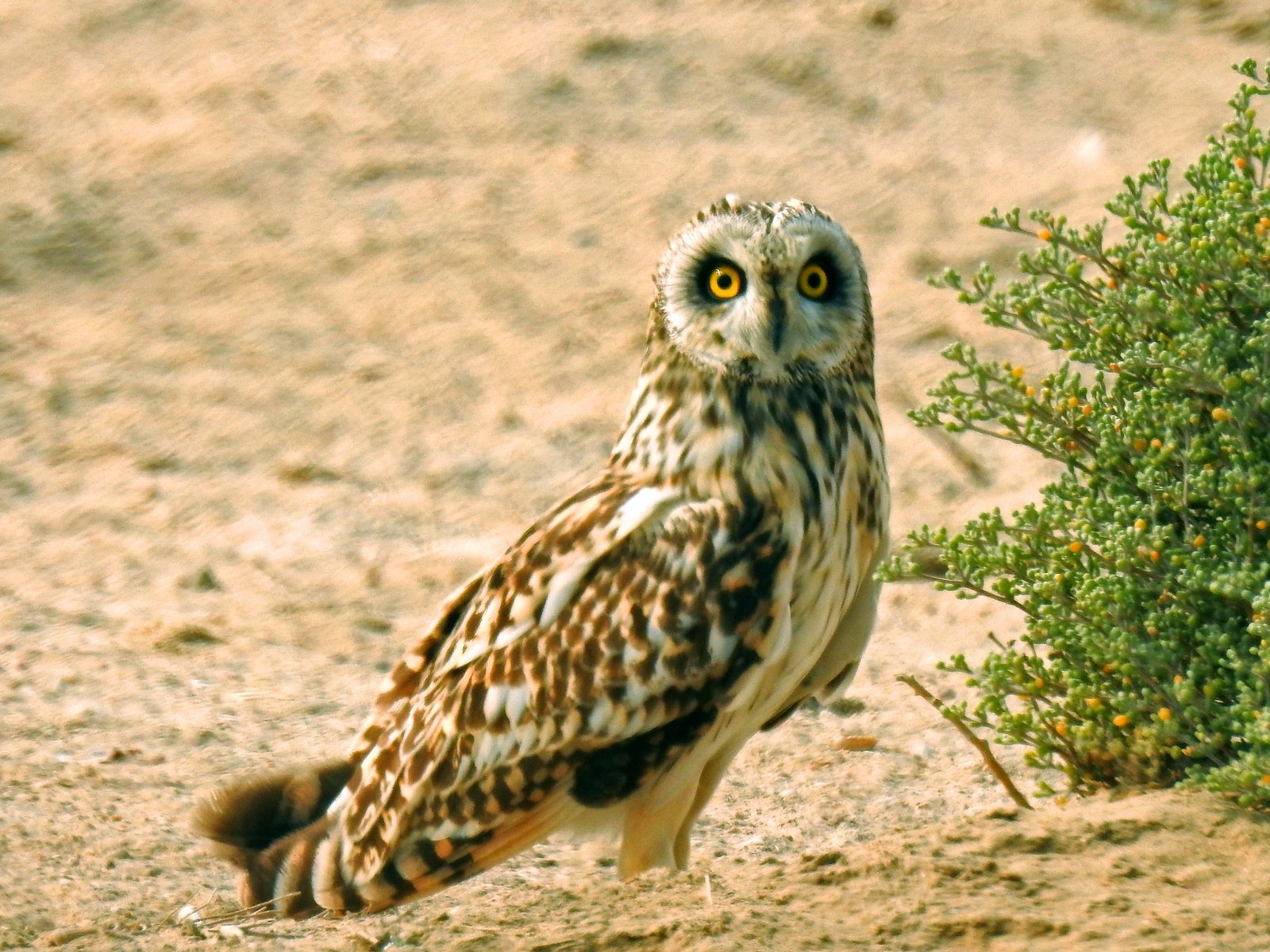
Short-Eared Owl | Asio flammeus
Velduil | Búho campestre
A pale, long-winged owl of open country, often hunting by day or at dusk low and buoyantly over fields, steppe and marsh edges. In the region it is a winter visitor and passage migrant from Europe and Asia, scattered from Morocco to the Persian Gulf in varying numbers.
Voice
Usually silent in the region. Sometimes a hoarse, barking chef-af when disturbed.
Recording: Kevin Guille — CC0 · converted to mono · xeno-canto
Identification
Medium-sized, with a round head, very short ear tufts and bright yellow eyes set in black patches, giving a fierce look. Upperparts buff-brown with dark spots, underparts pale buff with dark streaks on the breast and an almost unstreaked belly. In flight: long, narrow wings with an ochre patch on the primaries, a dark carpal patch, a black wingtip and a clear white trailing edge; the tail is coarsely barred. Flies with stiff, deep beats alternating with glides on raised wings.
Confusion species
Long-eared Owl (Asio otus) has long ear tufts, orange eyes, a streaked belly throughout, less white in the wing and a more finely barred wingtip; it hunts almost only in darkness. Marsh Owl (Asio capensis) of north-west Morocco is uniformly dark brown with dark eyes. Female Hen Harriers (Circus cyaneus) hunt in the same way but have a small head and a white rump.
Habitat
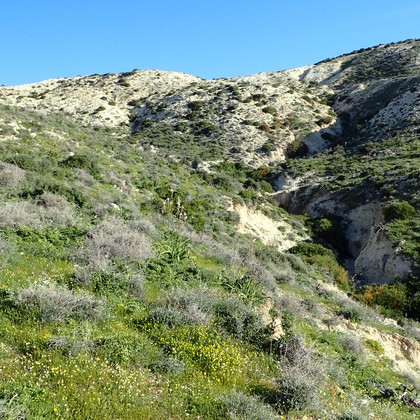
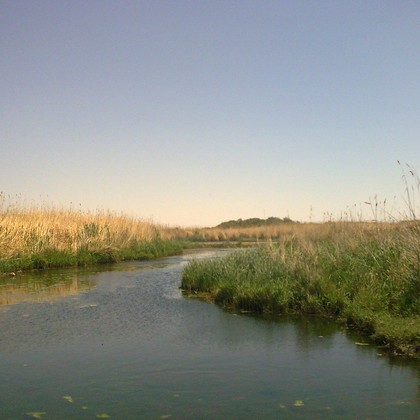
Open, low-growing country: grassy steppe and semi-desert, fields and fallow, irrigated farmland, saltmarsh, dunes, reed edges and wet meadows by lagoons and lakes. Roosts by day on the ground in cover, sometimes several together. Hunts mainly voles and other small rodents, so numbers vary with rodent years.
Where the bird is most at home, classified by the habitats of North Africa and the Middle East.

Range and movements
A scattered winter visitor throughout North Africa: in Morocco (especially the Atlantic lowlands and coastal wetlands), northern Algeria, Tunisia, the Libyan coast and Egypt (the Nile delta and its lakes, and the Nile valley). In the Middle East it winters in Israel (especially the Hula valley, the Jezreel valley and the fields of the northern Negev), Jordan, Lebanon, Syria and Iraq. On the Arabian Peninsula a scarce winter visitor and passage migrant in Kuwait, Saudi Arabia, Bahrain, Qatar, the Emirates and Oman, and rare in Yemen. On migration also over the sea and at Saharan oases. Beyond the region it breeds in Europe, Asia and North and South America.
- Resident
- Winter visitor (c. Apr–Sep)
- Passage (Mar–Apr, Oct–Nov)
- dark = core range, pale = thinly spread
How and when to look
In the Hula valley and the fields around Beit She’an in Israel hunting birds are often seen in late afternoon in winter. In Egypt try the fields and marsh edges around Lake Burullus and the Fayoum. Search over coastal grassland at sunset; by day a bird may flush right at your feet.
Conservation status
Globally not threatened, but declining in Europe through the loss of grassland and marsh. In the region wintering birds suffer from the loss of fallow land and wet grassland, rodent poison and hunting.
Scientific name
Asio flammeus | (Pontoppidan, 1763)
Pontoppidan described the species in 1763 as Strix Flammea; because it was later moved to another genus, the author and year stand in brackets. The genus Asio was introduced in 1760 by Brisson. Asio is the Latin name of a horned or eared owl. flammeus is Latin for 'flame-coloured'. The specimen the first description was based on came from Sweden.