All species › Waders, gulls and terns › Pratincoles and coursers › Burchell's Courser
Burchell's Courser | Cursorius rufus
Rosse renvogel | Corredor Rufo
Burchell's Courser is a slim, long-legged courser of bare plains in the arid west of southern Africa, rufous-sandy with a blue-grey hindcrown. It is virtually endemic to the region and wanders unpredictably, so it may be regular in an area one year and absent the next.

Voice
A harsh, repeated kwerrk or wark-wark, mainly in flight, and a softer whistled kweet on taking off.
Recording: Lynette Rudman — CC BY-NC-SA 4.0 · converted to mono · xeno-canto
Identification
21–23 cm. The upperparts are plain rufous sandy brown; the forecrown is rufous and the hindcrown blue-grey, bordered by a white and a black stripe that run from behind the eye to meet on the nape. The throat is pale, the breast and flanks warm rufous, grading into a narrow black band across the belly with a white lower belly and white undertail coverts below. The legs are long and whitish, the bill short, slightly decurved and black. In flight the black primaries and a broad white trailing edge to the secondaries stand out. The sexes are alike; juveniles are spotted above with a vaguer head pattern.
Confusion species
Temminck's Courser Cursorius temminckii is smaller, has a rufous rather than grey hindcrown, a larger black belly patch, a dark underwing and no white trailing edge to the wing. Double-Banded Courser Smutsornis africanus is scaly pale sandy with two narrow black breast bands. Three-Banded Courser Rhinoptilus cinctus and Bronze-Winged Courser Rhinoptilus chalcopterus are larger, darker and live in woodland.
Habitat
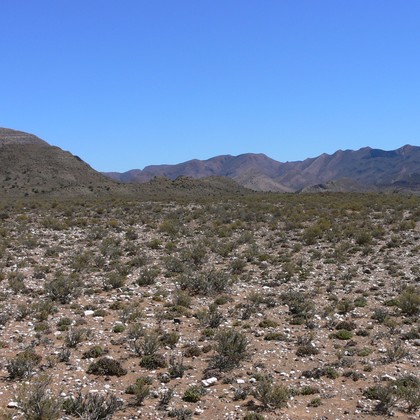
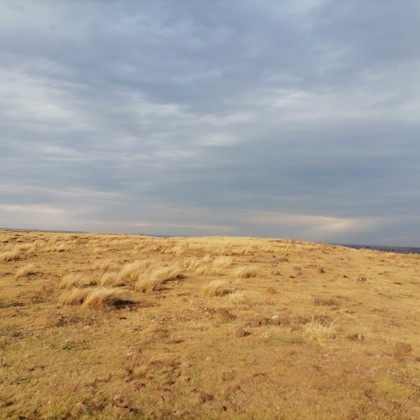
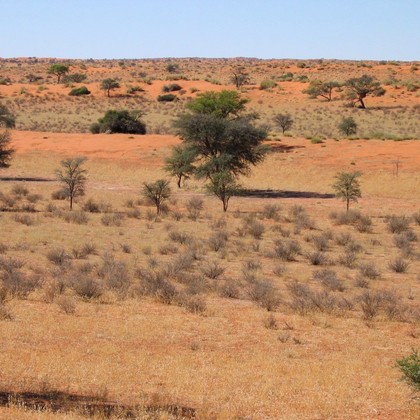
Bare or closely grazed plains, the open dwarf shrubland of the Karoo, dry pans, short grassland of the western highveld, burnt ground and fallow fields. It runs in short sprints, stops abruptly and picks insects such as termites and beetles from the ground. It lives in pairs or small groups and moves around after rain or fire. The two eggs are laid on bare ground.
Where the bird is most at home, classified by the vegetation units of southern Africa.
Range and movements
The core range lies in South Africa (Nama Karoo, Northern Cape, western Free State and North West), Namibia (mainly the central plateau and the south) and southern and western Botswana; rare in the far south-west of Angola. It does not occur outside the region: southern Africa is its entire world range.
- Resident
- dark = core range, pale = thinly spread
How and when to look
Drive slowly along gravel roads through the Karoo or southern Namibia and scan the bare plains; the birds stand still and upright and only draw attention when they start to run. Small groups turn up locally after rain or a grass fire. On a flushed courser look for the white trailing edge to the secondaries, which rules out Temminck's Courser.
Conservation status
Not globally threatened, but in South Africa it is on the regional Red List because of a suspected decline, possibly due to bush encroachment in the Karoo and changes in grazing. Because of its nomadic habits numbers are poorly known.
Scientific name
Cursorius rufus | Gould, 1837
Gould described the species in 1837 and placed it straight away in the genus where it still stands. The genus Cursorius was introduced in 1790 by Latham. Cursorius comes from Latin cursor 'runner', from currere 'to run', after the habit of chasing insects on foot across dry open ground. rufus is Latin for 'red, rufous' — for the rufous, sandy plumage. The specimen the first description was based on came from Potchefstroom, North West.