The habitats of southern Africa
Every species in this guide is linked to the habitats where it most occurs in southern Africa, classified at the macrogroup level of the International Vegetation Classification (IVC), as mapped for Africa by Sayre et al. (2013). It has ten main groups, from open sea to built-up land, and beneath them a series of more specific formations — from thornveld to miombo to fynbos. Each bird carries at most three of those: not everywhere it has ever turned up, but where it truly belongs.
Select a habitat to read its description.
Forest A
Closed forest covers only a small share of this region's surface, scattered as islands within savanna and grassland: montane forest on the inland escarpments, narrow coastal forest along the Indian Ocean, and ribbon-like riverine forest along permanent watercourses. Species richness per unit area runs higher here than in the surrounding open vegetation, and a number of birds occur almost exclusively within these islands.
-
 Afromontane forest A1
View over indigenous forests of Devils Peak. Cape Town.
143 species
Afromontane forest A1
View over indigenous forests of Devils Peak. Cape Town.
143 species
Moist, species-rich forest on the slopes of the inland highlands and mountain ranges, from the Cape's yellowwood forests to the mistbelt forests of the eastern escarpment (IVC: Southern/Northern Afrotemperate Forest, Southern/Northern Mistbelt Forest). A number of birds — including several parrots and turacos — depend for their survival on these scattered, often heavily fragmented forest remnants.
-
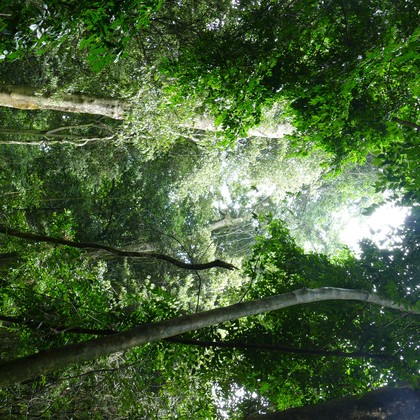 Subtropical lowland and coastal forest A2
Dlinza Forest, Eshowe, KwaZulu-Natal, SOUTH AFRICA
237 species
Subtropical lowland and coastal forest A2
Dlinza Forest, Eshowe, KwaZulu-Natal, SOUTH AFRICA
237 species
Warm, moist lowland forest along the Indian Ocean coast and in the lower-lying parts of Zimbabwe and Malawi, with a tree flora of its own that differs from the higher montane forest (IVC: Zimbabwean-Malawian Subtropical Forest, Southern Indian Ocean Coastal Forest, Maputaland Sand Forest). Heavily fragmented by logging and farming, and for a few species one of the most threatened habitats in the region.
-
 Riverine forest A3
Looking downstream on the Blyde River, flanked by Matumi trees. On its left flank is Tshwateng peak, part of the Mogologolo massif. The viewpoint is near Swadeni resort in the Blyde River Canyon Natur
295 species
Riverine forest A3
Looking downstream on the Blyde River, flanked by Matumi trees. On its left flank is Tshwateng peak, part of the Mogologolo massif. The viewpoint is near Swadeni resort in the Blyde River Canyon Natur
295 species
Ribbon-like forest along permanent rivers and dry riverbeds, with tall trees that keep reaching water even as the surrounding savanna dries out (IVC: Southern African Riparian Phreatophyte Vegetation). This narrow habitat supplies the tallest trees and the densest cover of any open savanna, and is indispensable as a nest site for a number of larger raptors and owls.
Savanna and woodland B
The dominant vegetation of the region: a grassy or shrubby understorey with a scattered to near-closed tree layer. Within this one broad category the IVC classification distinguishes a series of separate macrogroups — from thornveld to miombo to mopane — each carrying its own bird community; see the formations below. Savanna and woodland cover by far the largest part of Angola, Zambia, Malawi, Mozambique, Zimbabwe, Botswana and the north of Namibia and South Africa.
-
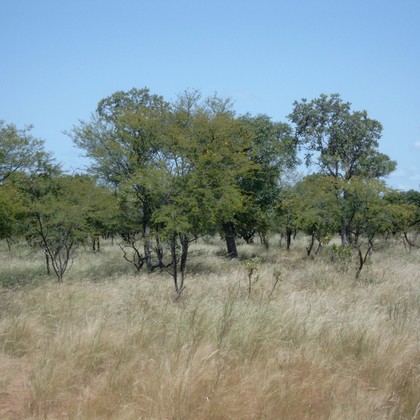 Acacia savanna and thornveld B1
Acacia savanna south of Fada N'Gourma, Burkina Faso.
209 species
Acacia savanna and thornveld B1
Acacia savanna south of Fada N'Gourma, Burkina Faso.
209 species
Shrubby to open thornveld on the drier, calcareous soils of the south and west of the region, dominated by species of the genus Vachellia (formerly Acacia) (IVC: Dry Acacia Woodland & Savanna, Dry Acacia-Terminalia-Combretum Woodland & Savanna). The most widespread and species-rich savanna type for birds in this region, from small songbirds to eagles.
-
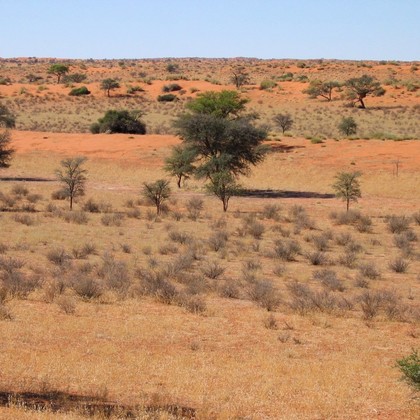 Kalahari thornveld B2
Road C14, Kalahari, Namibia
86 species
Kalahari thornveld B2
Road C14, Kalahari, Namibia
86 species
Open thornveld on the reddish-brown dunes and plains of the Kalahari, with the camel thorn (Vachellia erioloba) as the characteristic, widely spaced tree (IVC: Kalahari Camel Thorn Woodland & Savanna, Southern Kalahari Dunefield Woodland & Savanna). The scattered large trees here carry a disproportionate share of nests — from weavers to raptors — in an otherwise near-treeless landscape.
-
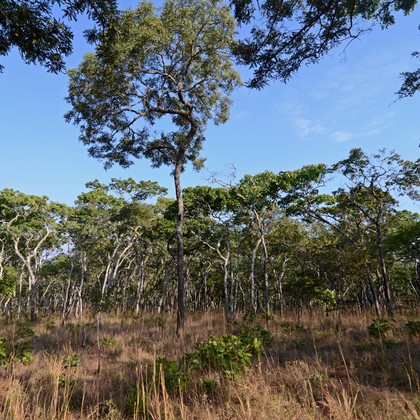 Miombo woodland B3
Nkhotakota Game Reserve, Malawi
171 species
Miombo woodland B3
Nkhotakota Game Reserve, Malawi
171 species
Near-closed broadleaf woodland savanna on nutrient-poor soil, dominated by trees of the genus Brachystegia (IVC: Wet Miombo, Dry Miombo). The dominant landscape of Angola, Zambia, Malawi and parts of Mozambique, with its own, partly endemic bird community not found in the thornveld further south.
-
 Mopane woodland B4
Mopane forest in autumn colours, Lilongwe, Malawi
71 species
Mopane woodland B4
Mopane forest in autumn colours, Lilongwe, Malawi
71 species
Often near-monospecific woodland of Colophospermum mopane, on the warmer, lower-lying ground of the north of the region (IVC: Limpopo Mopane, Zambezi Mopane, Namibia-Angola Mopane). For a number of species — including hole-nesters dependent on mopane trees damaged by elephants — the only habitat within this region.
-
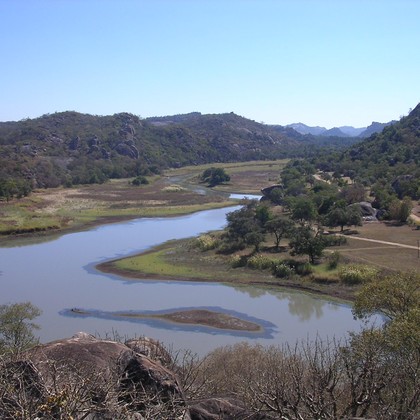 Mixed broadleaf woodland B5
Maleme Dam from the southeast, Matobo National Park, Zimbabwe
217 species
Mixed broadleaf woodland B5
Maleme Dam from the southeast, Matobo National Park, Zimbabwe
217 species
Mixed, broadleaf woodland savanna not dominated by a single genus of tree, from the Combretum-Terminalia woodland of the middle of the region to the Baikiaea woodland of western Zimbabwe, Botswana and south-western Zambia (IVC: Southern African Broadleaf Savanna, Dry Combretum-Mixed Woodland & Savanna, Baikiaea Woodland & Savanna). A transitional landscape between thornveld, miombo and mopane, with a correspondingly mixed bird community.
Fynbos and renosterveld C
A shrubland found almost exclusively in the south-west of South Africa, on the nutrient-poor soils of the Cape Floristic Region — the smallest of the world's six floral kingdoms and, at the same time, one of the richest in species per unit area. For birds this area matters for a series of species found nowhere else in the world.
-
 Fynbos C1
Fynbos near Franschhoek
41 species
Fynbos C1
Fynbos near Franschhoek
41 species
Needle-leaved, hard-leaved vegetation on the nutrient-poor sandstone soils of the Cape mountains and coastal plain, characterised by restios, ericas and proteas. For birds this is the habitat of a small number of endemic nectar- and seed-eaters that depend directly on the flowering of these plants.
-
 Renosterveld C2
Fynbos near Franschhoek
14 species
Renosterveld C2
Fynbos near Franschhoek
14 species
Shrubland on the more fertile shale soils of the Cape interior, naturally grassy-shrubby in character and heavily affected by conversion to cropland — less than a third of the original extent remains. A number of species once common here now depend heavily on the last, fragmented remnants.
-
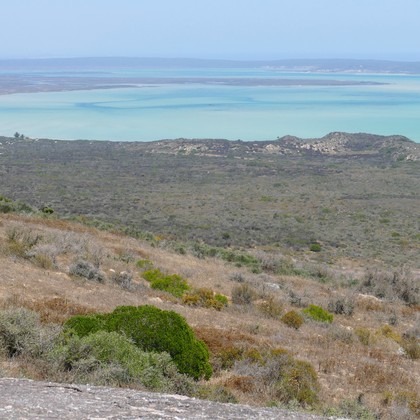 Strandveld and coastal fynbos C3
Seeberg Point of View, West Coast National Park, Western Cape, SOUTH AFRICA
6 species
Strandveld and coastal fynbos C3
Seeberg Point of View, West Coast National Park, Western Cape, SOUTH AFRICA
6 species
Low, dense shrubland directly along the Cape coast, on calcareous dune sand, and the adjoining dense coastal thicket (IVC: Strandveld, Cape Thicket). A transitional zone between fynbos and the sea, with a bird community that mixes elements of both habitats.
Grassland D
Open, treeless to near-treeless vegetation on the higher inland plateaus, with a grassy ground layer kept free of trees by frost, drought and regular natural or set fire. Grassland is the habitat of a number of the region's most threatened birds, because it converts so readily to cropland and pasture.
-
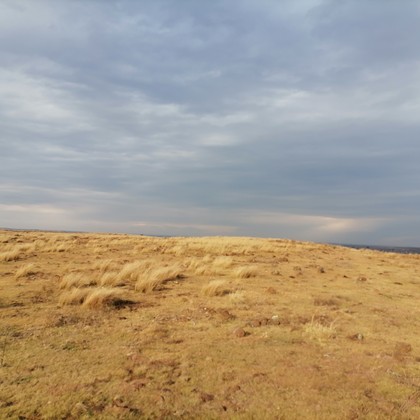 Highveld grassland D1
Bo-op Elandskop, 1 763 m, net buite Petrus Steyn / Mamafubedu, Vrystaat, Suid-Afrika
140 species
Highveld grassland D1
Bo-op Elandskop, 1 763 m, net buite Petrus Steyn / Mamafubedu, Vrystaat, Suid-Afrika
140 species
Grassland on the inland plateaus at 1,200 to 1,800 metres, from the moister eastern highveld to the drier western highveld (IVC: Dry Highveld Grassland, Moist Highveld Grassland, Sub-Escarpment Grassland). The most heavily converted habitat in the region: the great majority is now cropland or pasture, with corresponding consequences for the grassland birds still dependent on it.
-
 Drakensberg and montane grassland D2
Monks Cowl
92 species
Drakensberg and montane grassland D2
Monks Cowl
92 species
Grassland above 1,800 metres on the slopes and plateaus of the Drakensberg massif and the other inland mountain ranges, grading into alpine moorland above the tree line (IVC: Drakensberg Grassland, Southern Afromontane Grassland, African Subalpine Grassland & Moorland). Colder and with a shorter summer than the lower-lying highveld grassland, with a number of species found only at this altitude.
Karoo and desert E
Dry to very dry shrubland and bare ground in the rain shadow west of the inland mountain ranges, from the semi-desert of the Nama Karoo to the true desert of the Namib. Vegetation and fauna here are adapted to unpredictable, scant rainfall, and bird densities are generally low but the species strongly tied to this environment.
-
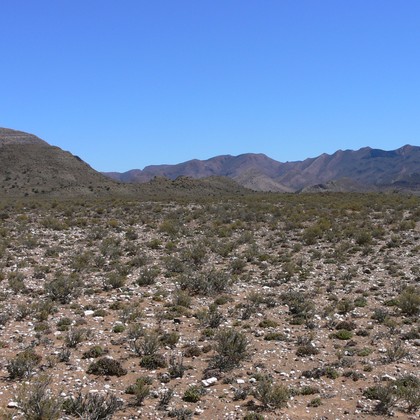 Nama Karoo E1
Landscape Anysberg Nature Reserve , Kannaland Local Municipality, Western Cape, South Africa
86 species
Nama Karoo E1
Landscape Anysberg Nature Reserve , Kannaland Local Municipality, Western Cape, South Africa
86 species
Shrubland and open grassland on the shale and dolerite soils between the Cape mountain ranges and the Orange River, with taller, more scattered vegetation than the adjoining Succulent Karoo (IVC: Upper Karoo Semi-Desert Scrub & Grassland, Lower Karoo Semi-Desert Scrub & Grassland, Bushmanland Semi-Desert Scrub & Grassland). The region's largest semi-desert, with low but strongly seasonal bird densities.
-
 Succulent Karoo E2
Vue de Northern Cape en Afrique du Sud.
25 species
Succulent Karoo E2
Vue de Northern Cape en Afrique du Sud.
25 species
Low-growing, extremely species-rich succulent vegetation along the west coast and north-west of South Africa, concentrated in the winter-rainfall zone (IVC: Richtersveld, Namaqualand Hardeveld, Namaqualand Sandveld, Knersvlakte, Trans-Escarpment Succulent Karoo). Globally the richest succulent-plant region outside the tropics, with a limited but strongly tied bird community.
-
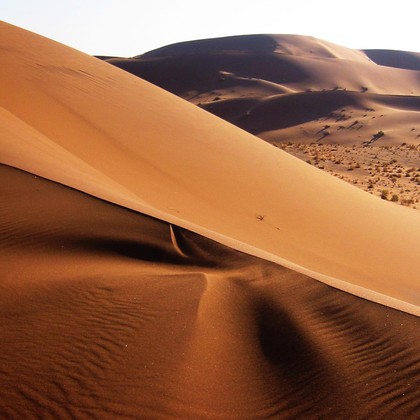 Namib Desert E3
Sand dunes in Namib Desert , Namibia
11 species
Namib Desert E3
Sand dunes in Namib Desert , Namibia
11 species
The world's oldest desert, from the bare dune sea in the south to the rocky desert and fog-dependent vegetation of the north (IVC: Namib Sand Sea, Northern/Southern Namib Desert, Kaokoveld Semi-Desert Scrub). Bird densities here are the lowest in the entire region, but a number of species are adapted solely to this extreme aridity and occur nowhere else.
Rocky habitats F
Bare to sparsely vegetated rock, from low-lying kopjes to high mountains, and the sea cliffs where rock rather than beach forms the boundary with the ocean. Rock formations offer nest sites and vantage points absent from the more open, or conversely more densely vegetated, land around them.
-
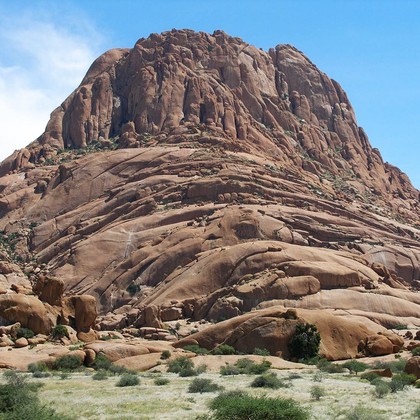 Mountains and rock outcrops F1
75 species
Mountains and rock outcrops F1
75 species
Bare to sparsely vegetated rock formations inland, from isolated kopjes within the savanna to the high mountain ranges of the Cape, the Drakensberg and Namibia (IVC: Southern African Temperate Inselberg Vegetation, Zimbabwean Inselberg Vegetation, Namibian Inselberg Vegetation). Provide nest sites on cliffs and crevices absent from the flatter landscape around them.
-
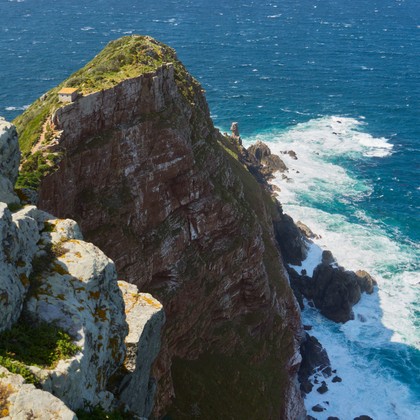 Coastal rocks and islands F2
Steep sea cliffs of the Cape Peninsula dropping to the Atlantic Ocean, with a small building visible on the headland above.
48 species
Coastal rocks and islands F2
Steep sea cliffs of the Cape Peninsula dropping to the Atlantic Ocean, with a small building visible on the headland above.
48 species
Rocky coastline and the islands off this region's coast, from the guano islands of the Benguela Current to scattered rock formations along the Indian Ocean. Outside the scope of the IVC's vegetation classification, but for a number of breeding seabirds the only suitable breeding ground in this region.
Inland wetlands G
Permanent or seasonal fresh to brackish water inland: rivers, lakes, dams, marshes and pans. In a predominantly dry region, inland water forms a disproportionately important habitat, with densities and species counts far above the surrounding dry land.
-
 Rivers, marshes and vleis G1
Aerial Okavango Delta
274 species
Rivers, marshes and vleis G1
Aerial Okavango Delta
274 species
Permanent water and the marshes along it: rivers, meandering floodplains and the extensive inland deltas such as the Okavango (IVC: African Temperate Freshwater Marsh, Okavango-Cuvelai Phreatophyte Vegetation, Karoo Flooded Riparian Woodland). In a predominantly dry region these zones form a disproportionately important habitat, with densities and species counts far above the surrounding dry land.
-
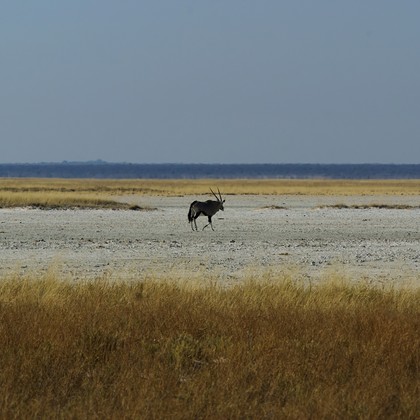 Salt pans G2
A Gemsbok or Southern oryx on Fisher's Pan in eastern Etosha National Park, Namibia
25 species
Salt pans G2
A Gemsbok or Southern oryx on Fisher's Pan in eastern Etosha National Park, Namibia
25 species
Seasonal, alkaline pans that fill temporarily after rain, from the vast Etosha Pan to the many smaller salt pans of the Kalahari and the inland highveld (IVC: Etosha Salt Pan, Kalahari Salt Pan, Bushmanland-Highveld Salt Pan, Lowveld-Limpopo Salt Pan). When flooded, they draw large numbers of waterbirds, including the only breeding opportunity for flamingos in this region.
Marine and coastal habitats H
The Atlantic and Indian Oceans along the region's coast, from the cold, nutrient-rich Benguela Current in the west to the warmer waters of the east. For breeding seabirds, this coastline matters chiefly for the islands that lie off it (see Coastal rocks and islands).
-
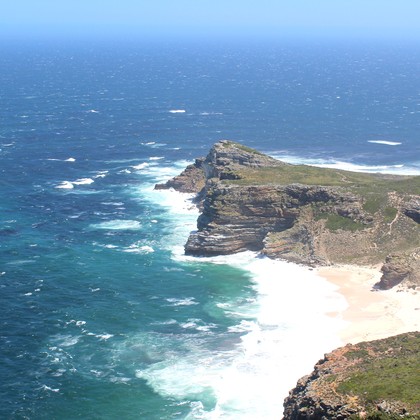 Open sea H1
Cape of Good Hope and Dias Beach on the south-westerly tip of Africa some 50 km south of Cape Town which was originally named the "Cape of Storms" by the Portuguese explorer Bartolomeu Dias . Nominall
103 species
Open sea H1
Cape of Good Hope and Dias Beach on the south-westerly tip of Africa some 50 km south of Cape Town which was originally named the "Cape of Storms" by the Portuguese explorer Bartolomeu Dias . Nominall
103 species
The open Atlantic and Indian Oceans along the region's coast, from the cold, nutrient-rich Benguela Current in the west to the warmer waters of the east. Outside the scope of the IVC's vegetation classification.
-
 Mangrove and coastal marsh H2
uMthoma Aerial Boardwalk, Western Shores, iSimangaliso Wetland Park, St Lucia, KwaZulu-Natal, SOUTH AFRICA
86 species
Mangrove and coastal marsh H2
uMthoma Aerial Boardwalk, Western Shores, iSimangaliso Wetland Park, St Lucia, KwaZulu-Natal, SOUTH AFRICA
86 species
Mangrove forest and the adjoining coastal marshes along the warmer, sheltered stretches of the Indian Ocean coast, grading into salt marsh at the drier margins (IVC: Indian Ocean Mangrove, African Cape Coastal Salt Marsh, Tropical African Coastal Salt Marsh). A nursery for fish and shellfish, and so an important foraging ground for herons, storks and waders.
Cultivated land I
Land converted for crops or livestock: maize fields, vineyards, orchards and grazed grassland. In parts of the region farmland has replaced large areas of original grassland and fynbos, and a number of species from those habitats use it as a supplement or, where the original habitat is lost, as the only alternative left.
-
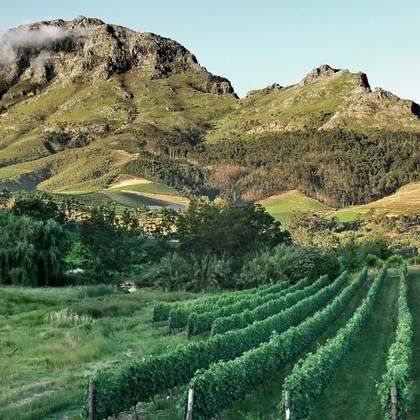 Farmland I1
Vineyards in the South African wine region of Stellenbosch
95 species
Farmland I1
Vineyards in the South African wine region of Stellenbosch
95 species
Land converted for crops or livestock: maize fields, vineyards, orchards and grazed grassland. In parts of the region this replaces large areas of original grassland and fynbos, and a number of species from those habitats use it as a supplement or, where the original habitat is lost, as the only alternative left.
Urban and built-up habitats J
Towns, villages and the gardens, parks and buildings within them. A limited number of species have adapted strongly to people and reach higher densities in built-up land than in any natural habitat.
-
 Gardens and built-up land J1
Kirstenbosch botanical gardens in Cape Town RSA
117 species
Gardens and built-up land J1
Kirstenbosch botanical gardens in Cape Town RSA
117 species
Gardens, parks and the built-up areas of towns and villages. A limited number of species have adapted strongly to people and reach higher densities here than in any natural habitat.
Classification: Sayre, R. et al. (2013), <em>A New Map of Standardized Terrestrial Ecosystems of Africa</em> (NatureServe / USGS / American Association of Geographers), based on the macrogroups of the International Vegetation Classification (IVC). Formations outside the scope of this vegetation classification (open sea, coastal rocks, farmland, built-up land) follow a separate classification written for this guide. The names and descriptions were translated and written for this guide.