All species › Even-toed ungulates › Deer
Deer | Cervidae
Hertachtigen | Cérvidos
An antler is not horn but bone, and it is made anew each year. It grows from a permanent stump on the forehead, under a skin of finely haired velvet that supplies it with blood; when growth is complete the blood supply is cut off, the velvet dies and is rubbed away against bushes, after which the dead bone is carried through the rut and afterwards shed. The growth costs a great deal of calcium and follows the length of the day. Only the males carry antlers, the reindeer excepted; in one species now established in Europe antlers are absent altogether and the males carry long projecting canines instead. Beyond that they are ruminants without upper incisors, with long legs and a springing, bounding gait, and with scent glands in front of the eyes, on the legs and between the hooves. In most species the rut goes with calling, thrashing and fighting. The calf is spotted and lies motionless in cover for its first weeks.
Native species 7 species
Species that occur here by nature, including those released to bring back a population that had gone. They are arranged by genus, in the sequence of the list.
Roe deer, elk and reindeer | Capreolinae
1 species




Cervus 2 species
-

Red deer
Cervus elaphus Broadleaved deciduous woodland
 Mixed deciduous and coniferous woodland
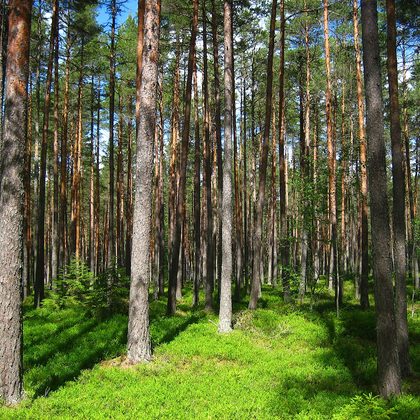 Coniferous woodland
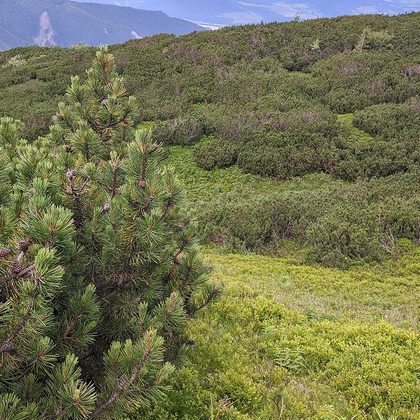
 Temperate shrub heathland
 Alpine and subalpine grasslands
 Woodland fringes, clearings and tall forb stands
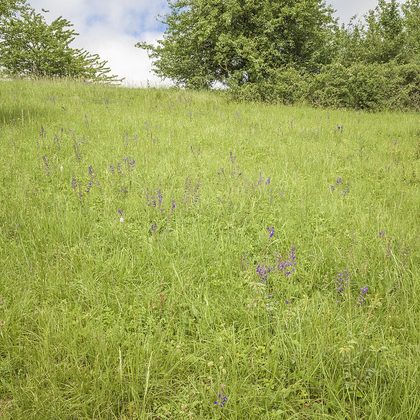 Mesic grasslands
-
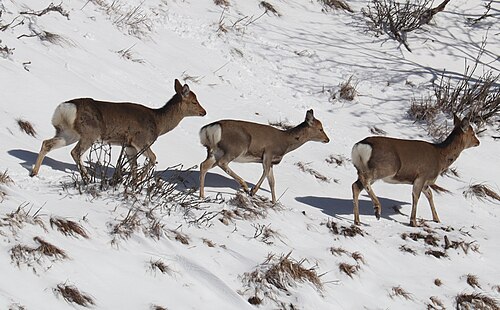
Sika deer
Cervus nippon- Coniferous woodland
- Mixed deciduous and coniferous woodland
- Broadleaved deciduous woodland
- Temperate shrub heathland
 Raised and blanket bogs
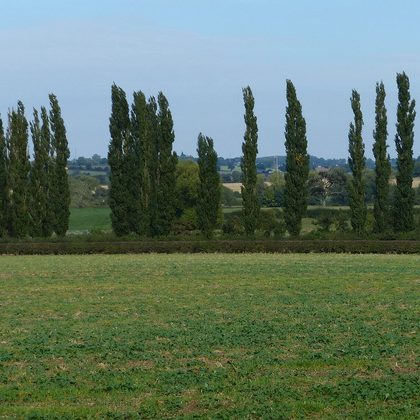 Lines of trees, small woods, felled and early-stage woodland
Dama 2 species
-

Fallow Deer
Dama dama- Broadleaved deciduous woodland
- Mixed deciduous and coniferous woodland
- Lines of trees, small woods, felled and early-stage woodland
 Sparsely wooded grasslands
- Mesic grasslands
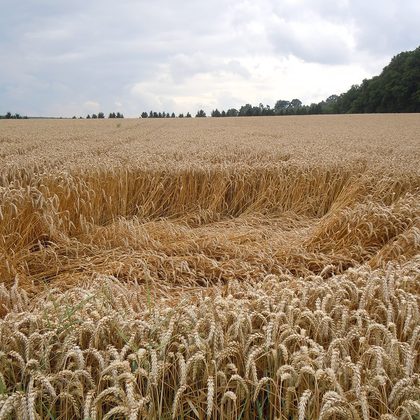 Arable land and market gardens
-
Persian fallow deer
Dama mesopotamica- Broadleaved deciduous woodland
 Broadleaved evergreen woodland
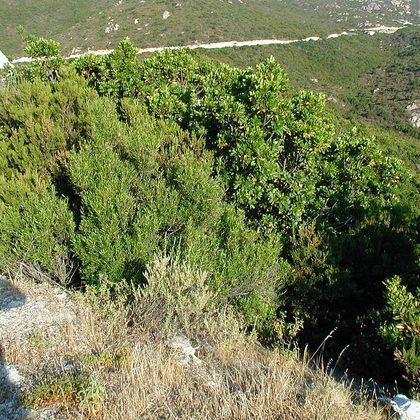 Maquis, arborescent matorral and thermo-Mediterranean brush
 Riverine and fen scrub
Introduced species 4 species
Species that do not occur here by nature but were brought in or escaped and have held on since. They follow the sequence of the list, not the genera.
-

Chital
Axis axis- Broadleaved deciduous woodland
 Dry grasslands
- Maquis, arborescent matorral and thermo-Mediterranean brush
- Lines of trees, small woods, felled and early-stage woodland
-

Water Deer
Hydropotes inermis Sedge and reedbeds without free-standing water
 Littoral zone of inland surface waterbodies
 Seasonally wet and wet grasslands
- Arable land and market gardens
- Riverine and fen scrub
- Broadleaved deciduous woodland
-
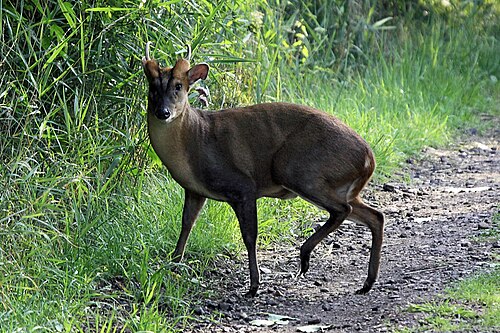
Reeve's muntjac
Muntiacus reevesi- Broadleaved deciduous woodland
- Mixed deciduous and coniferous woodland
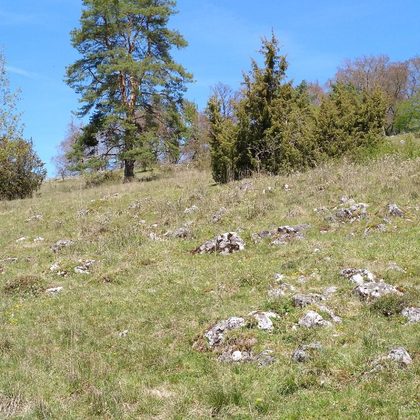 Temperate and mediterranean-montane scrub
 Hedgerows
- Lines of trees, small woods, felled and early-stage woodland
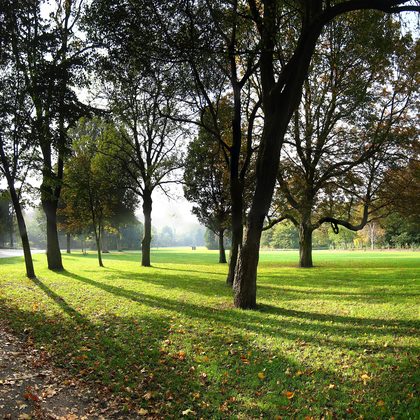 Cultivated areas of gardens and parks
-

White-tailed deer
Odocoileus virginianus- Mixed deciduous and coniferous woodland
- Broadleaved deciduous woodland
- Coniferous woodland
- Arable land and market gardens
- Mesic grasslands
- Lines of trees, small woods, felled and early-stage woodland